Loss-making institutions under scrutiny as Samia receives audit findings
President Samia Suluhu Hassan, receives the 2024/25 financial year report from the Controller and Auditor General (CAG), Charles Kichere, at State House on March 30, 2026. PHOTO | STATE HOUSE
Dar es Salaam. President Samia Suluhu Hassan yesterday received three key oversight reports which reveal, among others, that the performance of several public entities still leave a lot to be desired.
The three reports show that several public entities were still incurring significant financial losses, raising fresh concerns over efficiency, accountability and the management of taxpayer funds despite sustained government support.
The reports, presented for the 2024/25 financial year by the Controller and Auditor General (CAG), the Prevention and Combating of Corruption Bureau (PCCB) and the Public Procurement Regulatory Authority (PPRA), paint a mixed picture of progress alongside persistent structural weaknesses across the public sector.
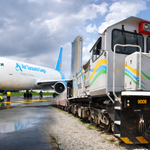
At the centre of the findings are major state-owned enterprises, including Air Tanzania Company Limited (ATCL) and the Tanzania Railways Corporation (TRC), which continue to post heavy losses attributed to operational inefficiencies, weak management systems and limited integration of information and communication technology (ICT) to enhance transparency and accountability.
According to the reports, a total of 22 state-owned commercial entities recorded losses over one or two consecutive years, reflecting deeper structural and operational challenges that remain unresolved.
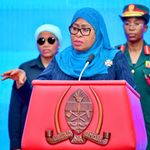
But in a quick reaction, President Hassan acknowledged progress in public financial management while stressing the need for stronger accountability mechanisms.
“The CAG’s report shows that in 2022/23, the number of clean audit certificates increased compared to 2021/22. This is a positive step,” she said. “However, the report also provides recommendations to address remaining gaps, which the government will act upon.”
She noted that, for the first time, the PPRA report was presented alongside those of the CAG and PCCB, a move aimed at strengthening transparency, particularly given the significant share of government funds spent through procurement.
“Tanzanians have the right to know how government funds are spent. These institutions play a critical role in ensuring that taxpayers’ money is used efficiently and effectively,” she said.
President Hassan emphasised that the three institutions form the backbone of good governance: the CAG audits public resources, PCCB combats corruption, and PPRA ensures value for money in procurement processes.
“Accountability is not optional; it is a responsibility,” she said. “The government will take decisive action wherever negligence or misconduct is identified.”
She assured that the government will carefully review the recommendations contained in the reports and take necessary measures to strengthen financial discipline, improve efficiency and ensure better utilisation of public resources.
Losses
The national carrier, ATCL, remains one of the most prominent loss-making entities. The CAG report shows that by June 2025, the airline accumulated losses of approximately Sh748 billion since its revival. In the 2024/25 financial year alone, losses surged by 108 percent to reach Sh191.19 billion.
This comes despite continued government subsidies to support salaries and operational costs, raising questions about the long-term sustainability of the airline’s business model.
CAG, Charles Kichere, attributed the losses largely to a sharp increase in operating costs, which rose by Sh134 billion to reach Sh675 billion, significantly outpacing revenue growth.
Operational performance also fell short of expectations. The audit revealed that 87 routes operated by ATCL recorded an average passenger load factor of just 55 percent, pointing to inefficiencies in route planning and market alignment.
Cargo operations were similarly affected, with 94 percent of cargo flights concentrated on short- and medium-haul routes rather than more profitable long-haul destinations.
Additionally, cargo aircraft were frequently underutilised or grounded, yet continued to incur leasing and insurance costs estimated at Sh3.35 billion without generating revenue.
The report further highlighted weak internal controls, including about Sh20 billion in ticket sales handled through agents without confirmation that passengers actually received the tickets.
Frequent flight delays and cancellations also undermined customer confidence and revenue performance.
However, Mr Kichere noted that ATCL still has the potential to become profitable if decisive reforms are implemented, including improved route planning, stronger management systems, enhanced ICT integration and tighter accountability in resource utilisation.
For TRC, the audit pointed to ongoing operational challenges, particularly within the ageing metre gauge railway (MGR) network. Declining cargo volumes on the MGR have reduced revenues and increased reliance on government subsidies, even as the newer standard gauge railway (SGR) shows signs of improved performance.
Mr Kichere said that the corporation recorded 328 railway accidents during the review period, resulting in losses of approximately Sh3 billion. These incidents were largely attributed to inadequate infrastructure maintenance.
The CAG urged TRC to strengthen routine maintenance systems and explore insurance coverage for critical assets as a way of minimising financial risks associated with accidents and operational disruptions.
Anti-corruption drive intensifies
On the anti-corruption front, PCCB director general, Chrispin Chalamila, said the agency identified irregularities in 913 out of 1,864 projects reviewed during the 2024/25 financial year.
Out of these, 66 projects have been subjected to formal investigations.
The monitored projects are valued at Sh14.3 trillion, up from Sh11.4 trillion in the previous financial year, indicating an expansion in the scope of oversight.
Key projects under review include the Building a Better Tomorrow (BBT) initiative, water infrastructure projects managed by the Rural Water Supply and Sanitation Agency (Ruwasa) worth Sh187.1 billion, and road projects under the Tanzania Rural and Urban Roads Agency (Tarura) valued at Sh43 billion.
Other projects include compensation for residents affected by the expansion of Serengeti National Park and the construction of dormitories in Katavi and Rukwa regions.
Presenting the report, PPRA director general, Denis Simba, said it was prepared in accordance with Section 30 of the Public Procurement Act, Cap 410, and covers ministries, government agencies, public entities and local government authorities.
He noted that in the 2024/25 financial year, compliance levels rose to 79 percent, up from 76 percent in the previous year, attributing the increase to the implementation of the 2023 procurement law and the National e-Procurement System (NEST).
“The use of technology has improved efficiency by reducing the time taken to complete tendering processes and increasing the number of tenders advertised,” he said.
According to the report, the number of tenders increased from 53,221 in 2023/24 to 99,823 in 2024/25, while the number of participating bidders nearly doubled.
Further findings pointed to delays in project implementation, payments made for unexecuted work and irregularities in tender awards.
Mr Simba said PPRA has begun addressing these challenges through measures such as real-time monitoring systems and further enhancements to NEST using advanced technologies, including data analytics and artificial intelligence.
He added that the authority will continue to strengthen transparency and accountability while promoting the participation of special groups, including youth, women, the elderly and persons with disabilities, in procurement opportunities.
Register to begin your journey to our premium contentSubscribe for full access to premium content