Low PPP preparation funding carries great risk, experts warn
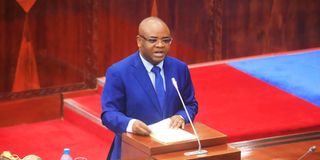
The Minister of State in the President’s Office (Planning and Investment), Prof Kitila Mkumbo, who presented his docket’s budget for 2026/27 in Parliament in Dodoma PHOTO | FILE
Dar es Salaam. Tanzania’s economy, currently estimated at about $90 billion, is projected under national development frameworks to grow towards $1 trillion in the coming decades. However, experts are warning that persistent underfunding of public–private partnership (PPP) project preparation could undermine this ambition.
They argue that limited budget allocations for early-stage PPP work may weaken the country’s ability to structure bankable infrastructure projects capable of attracting large-scale private investment.
The concerns centre on the “project preparation” phase, which includes feasibility studies, financial modelling, legal structuring, environmental assessments and risk allocation analysis. Experts say this stage determines whether projects move from ideas into viable investment opportunities.
The issue has gained attention after a Sh144.85 billion budget, comprising Sh126.83 billion for recurrent expenditure and Sh18.83 billion for development projects, was tabled before Parliament last week by the Minister of State in the President’s Office (Planning and Investment), Prof Kitila Mkumbo, and subsequently passed by the House.
Despite the scale of national development ambitions, experts note that PPP project preparation has received an average of only Sh1 billion annually over the past five years.
Under the Fourth Five-Year Development Plan (FYDP IV), covering 2026 to 2031, total implementation costs are estimated at Sh477 trillion. Around 70 per cent of this is expected to come from the private sector, while PPP projects are projected to mobilise over Sh170 trillion.
Wajibu Institute Executive Director and former Controller and Auditor General Ludovick Utouh said Parliament must improve its understanding of PPP financing.
“The tested principle says you should use money to make money. If we want PPPs to be an assured source of financing for development, then we must invest properly in project preparation,” he said.
Mr Utouh added that Parliament has a key role in ensuring adequate budget allocations.
“If MPs understand PPPs better, they will be able to advise government more effectively on budget priorities.”
Mr Utouh also said Tanzania must adjust its approach to private sector participation.
“We should agree that PPP is about involving the private sector in national development. The attitude, belief and trust towards the private sector must change.”
A lecturer at the University of Dodoma and PPP specialist, Abihud Bongole, said private sector financing is expected to play a dominant role in development planning.
He said under FYDP IV and Vision 2050, the private sector is expected to mobilise about 70 per cent of total resources.
“It is a huge financing requirement that demands strong public awareness and proper preparation systems.”.
He added that international practice recommends allocating about two per cent of project costs to preparation work.
Another expert, Mr David Rwehikiza, said project preparation is central to both government-initiated and privately proposed PPP projects.
“Feasibility studies and financial modelling are not optional. They determine whether a project is viable or not,” he said.
Mr Rwehikiza warned that underfunding weakens both solicited and unsolicited PPP proposals.
“If you do not fund preparation, you are effectively limiting project delivery.”
Senior academic Haji Semboja said Tanzania must align PPP preparation with international standards.
Institute of Finance Management lecturer Euseby John said low budget allocation for project preparation undermines long-term development planning.
In Parliament, Mr Deogratius Massaburi (Kivule-CCM) said current allocations for PPP preparation are not aligned with project needs.
“If we are talking about multi-trillion-shilling projects, then preparation funding must reflect that reality,” he said.
He suggested strengthening institutional coordination and improving efficiency in PPP management.
Despite concerns, PPP Centre executive director David Kafulila said reforms are ongoing to improve the investment environment.
He said legal reforms are being implemented to reduce bureaucracy and improve efficiency in collaboration with the Attorney General’s Office.
“We are working to ensure projects reach bankable status faster,” Mr Kafulila said.
He added that Tanzania has trained 75 PPP specialists and is building technical capacity.
Major PPP projects under preparation include the Dar es Salaam Ring Roads, Igawa–Tunduma highway and Kibaha–Chalinze–Morogoro roads, coordinated through Tanzania National Roads Agency.
Experts say closing the financing gap for project preparation will be critical to achieving long-term development targets and attracting private investment at scale.
Register to begin your journey to our premium contentSubscribe for full access to premium content