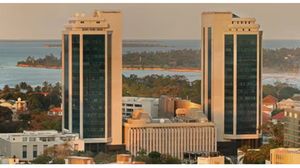
Dar es Salaam. Raised in a modest family in Manyara Region, Marietha Gurahe once made the difficult decision to leave behind her home, relatives and friends, carrying only hope and determination as she travelled to Dar es Salaam in search of a better life.
She had no guaranteed job and no close relatives in the city to depend on. What drove her forward was a strong desire for independence and a belief that success does not come from waiting, but from daring to act.
When she arrived in the commercial capital, she did not find the “streets of gold” that many people imagine. Instead, she faced the harsh reality of stiff competition, high living costs and the daily struggle to earn a living.
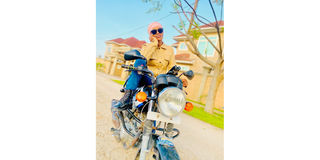
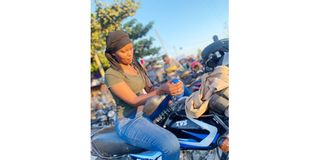
Within those challenges, however, Marietha began to build a new chapter of her life. Today, she is among the few female bodaboda (motorcycle taxi) riders operating in Kibada, Kigamboni District, where she has become a symbol of courage and determination.
Her journey from Manyara to the shores of the Indian Ocean has transformed her into a role model for women who aspire to achieve financial independence.
Marietha says the idea of becoming a bodaboda rider began in 2022 after a period of deep reflection about her future. She had previously been engaged in other work, but opportunities became scarce and the income she earned was no longer sufficient to sustain her.
“One night I lay in bed thinking deeply about my life. I asked myself whether I should continue waiting for opportunities or take action and start working for myself instead of depending on someone else,” she recalls.
The following morning she woke up with a clear decision. She began visiting local bodaboda stands, asking riders to allow her to practise riding their motorcycles. Although she had learned how to ride while still living in Manyara, she wanted to improve her skills.
“I had not learned to ride motorcycles with the intention of making a living from it,” she says. “But once I decided to become self-employed, I needed courage to use the opportunity that could change my life.”
After several days, she bought a motorcycle on a contract from a rider she knew for Sh1.5 million. The purchase gave her greater control over how she managed her earnings and expenses.
Marietha Gurahe
“At that moment I felt I had taken a major step in life. I told myself that I was now working for my own future and for my younger siblings back home,” she says.
The early days were not easy. She admits that she initially lacked knowledge about proper motorcycle maintenance, which caused frequent breakdowns.
“I only knew how to ride. I did not understand the importance of regular maintenance. That experience taught me a lesson because without proper maintenance you end up making losses,” she explains.
Eventually she sold the motorcycle and entered a new contract arrangement similar to those commonly used by male riders. Convincing people to trust her proved difficult because she was a woman. However, she persuaded a retired client to invest in a motorcycle for her business.
The arrangement required her to remit Sh10,000 every day for 13 months, but she completed the contract within 10 months.
Marietha says many male riders were surprised by how quickly she cleared the contract. She explains that the secret was discipline and setting clear priorities.
“They often ask how I managed to finish earlier than many men,” she says. “The truth is that I set goals for myself and avoided unnecessary spending.”
Her decision to work as a bodaboda rider was not welcomed by everyone. Some people laughed at her, while others insisted that the job was unsuitable for women.
“They told me I would fail and that I might cause accidents because I am a woman. But I believed in myself. If I can ride, then I can do the job,” she says.
At the beginning many passengers refused to ride with her, particularly men who doubted her ability.
“Some people openly said they could not ride with a woman. Others simply walked away after seeing me at the stand,” she says.
Despite the rejection, she remained determined, believing that patience and consistency would eventually change people’s perceptions.
Working as a bodaboda rider also comes with risks. Like her male counterparts, she faces dangers such as accidents, theft and security threats, but she says women in the field often face additional challenges linked to social attitudes.
She recalls incidents where passengers or bystanders questioned her presence in the profession, including one occasion when a passenger’s wife assumed she was her husband’s partner rather than a motorcycle rider.
Although such experiences can be discouraging, Marietha says she has learned to respond calmly or simply ignore the remarks.
Over time, the situation gradually improved. Passengers who chose to ride with her discovered that she provided careful and reliable service, and many later became regular clients.
“I made sure that I worked responsibly. I did not want anyone to say that a woman rider caused problems or delayed passengers,” she says.
Her growing reputation eventually earned her trust and respect within the community.
During her work, however, she once suffered a serious setback when she was involved in a road accident caused by a bajaji driver making an improper turn near the Mjimwema traffic lights. The crash left her with a fractured leg and forced her to remain at home for more than four months.
“It was a difficult period, but I thank God that I had savings which helped me take care of myself,” she says.
Before the accident she had developed a strict habit of saving Sh20,000 every day from her earnings, setting aside part of her income after covering fuel and daily expenses.
Today Marietha says the job has enabled her to support herself and contribute to her family’s wellbeing, including paying school fees for two younger siblings.
“What matters is earning an honest income,” she says. “I do not focus on what people say. My work has helped my family and soon I hope to begin building my own house.”
Marietha believes society must change its perception of jobs that are often labelled as suitable only for men or women. In her view, ability is determined not by gender but by determination and commitment.
Register to begin your journey to our premium contentSubscribe for full access to premium content