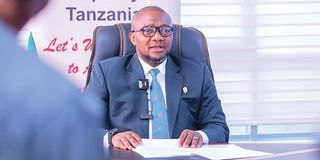
Dodoma. The minister for Health, Mr Mohamed Mchengerwa, has directed regional medical officers to step up surveillance, screening and follow-up of leprosy patients as Tanzania intensifies efforts to eliminate the disease by 2030.
Speaking during the commemoration of World Leprosy Day yesterday, Mr Mchengerwa said regional and council health authorities must ensure that all households in areas where cases are detected are closely monitored, with family members screened and those eligible given preventive treatment to break the chain of transmission.
“I ask the regional medical officers to ensure that all households in areas where new leprosy patients are detected are monitored, that all household members are screened, and that all those suffering from leprosy are identified and receive treatment,” he said.
Tanzania has achieved the World Health Organisation benchmark for eliminating leprosy in 2006.
According to the minister, the number of new leprosy cases in Tanzania has fallen by 37 percent over the past decade, from 2,297 in 2015 to 1,439 in 2025. However, some councils were yet to meet the target and continued to account for a significant proportion of cases.
According to Mr Mchengerwa, 12 councils contributed 71 percent of the 1,439 new cases recorded nationwide in 2025. These are Liwale, Mtama, Lindi Municipality, Ruangwa, Morogoro, Mvomero, Ifakara Town, Mlimba, Mkinga, Muheza, Kibaha and Shinyanga Municipal councils as areas of concern.
He added that councils must also trace patients by their residence and share information with relevant regions where patients originate to ensure proper follow-up of affected families.
Mr Mchengerwa also warned that stigma and harmful beliefs remain major barriers to eradication, urging communities to reject the misconception that leprosy is caused by curses or inheritance.
This year’s World Leprosy Day is being observed under the theme End stigma, strengthen the dignity of leprosy patients, which emphasises early detection, timely treatment and greater public awareness to prevent transmission and disability.
Mr Mchengerwa said leprosy is fully treatable and curable, with all treatment funded by the government and provided free of charge. “If a patient is diagnosed and treated early, they recover without complications and cannot transmit the disease again,” he said.
He added that the government, under President Samia Suluhu Hassan, is implementing a national strategy aligned with global targets to achieve zero transmission by 2030.
Among key measures, he cited public education, integration of leprosy interventions into local health programmes and expanded household screening.
Others are guaranteed access to free medicines, continued research and improved care for people living with disabilities caused by the disease.
Mr Mchengerwa also urged journalists to play a proactive role in disseminating accurate information to help combat stigma and misinformation surrounding leprosy.
He commended health workers across the country for their efforts and called for collaboration among government, communities and the media to ensure leprosy is no longer a public health threat in Tanzania.
Register to begin your journey to our premium contentSubscribe for full access to premium content