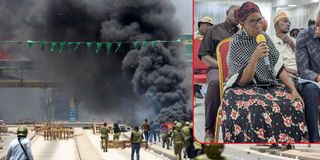
Dar es Salaam. As the Presidential Commission of Inquiry continues nationwide hearings into violence that erupted during and after the October 29, 2025 General Election, victims have recounted chilling accounts of injury, loss and abandonment, stories that underscore both the human cost of unrest and the resilience of communities in its aftermath.
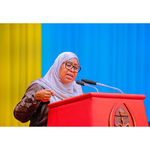
The Commission, established by President Samia Suluhu Hassan in November 2025, is mandated to establish facts surrounding the election-related violence, examine the conduct of security agencies, assess the scale of human and property losses, and recommend measures to prevent future unrest.
Chaired by retired Chief Justice Mohammed Chande Othman, the panel is conducting public hearings across the country, receiving testimonies from victims, witnesses and other stakeholders.
One of the most harrowing accounts came from Ms Aurelia Joseph, 75, a resident of Magomeni Kota, who told the Commission she was shot inside her home and left unattended for more than five hours at Mwananyamala Hospital after being presumed dead.
“I was left there for hours because they thought I was dead,” she said. “It was only when I started coughing that they asked, ‘What about this old woman, is she still alive?’”
Ms Joseph said she lay in a room crowded with more than 20 bodies, watching as other injured patients died while security officers arrived to interrogate victims. She told the Commission she was accused of inciting unrest and questioned about her political choices.
According to her testimony, patients with gunshot wounds were ordered to leave the hospital regardless of whether they had received treatment.
She later sought help at Magomeni Hospital but found no doctors available and resorted to traditional remedies. Bullet fragments remain lodged in her body, leaving her in chronic pain and with limited mobility.
Following her testimony, Commission member Prof Ibrahim Juma assured her that social welfare officers would assist in covering her medical expenses.
Other witnesses recounted the loss of loved ones in incidents unrelated to protests. Ms Veronica Lyimo, 37, told the Commission that her husband, Emmanuel Joseph, was shot near their home and later confirmed dead at Mwananyamala Hospital.
Similarly, Ms Rahma Said, 49, said her son, Mohamed Salum, was shot inside their home and died the following night after failing to receive hospital treatment. Both women described scenes of chaos in which families were left helpless as armed groups moved through their neighbourhoods.
The economic toll of the violence also featured prominently. Mr Juma Matari, 25, a mobile phone trader, said his business was destroyed in Manzese Darajani after looters set fire to shops and stole goods worth more than Sh60 million.
He described groups of more than 200 youths armed with stones, machetes and metal rods ransacking the area, leaving traders without livelihoods.
Perhaps the most compelling account of survival and solidarity came from Mr George Chipeta, a young car mechanic who was shot in the leg while riding a bodaboda on election day. The injury eventually led to the amputation of his leg.
Mr Chipeta told the Commission that fellow bodaboda riders pooled resources to buy him a bajaj, enabling him to earn a living again.
“These are the people who came together to help me survive,” he said.
Across the testimonies, a consistent pattern emerged: citizens suffered severe physical and emotional trauma as institutions struggled to respond. Yet, in the absence of formal support, communities stepped in, demonstrating resilience amid adversity.
The Commission continues its public hearings as it seeks to document the full extent of the violence, hold institutions accountable and recommend safeguards against a recurrence.
Victims told the panel that the process is not only about recounting past suffering, but also about securing assurances that such tragedies will never happen again.