Powerful owners linked to use of unfinished buildings in Kariakoo

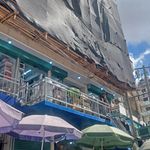
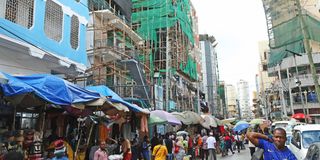
Construction continues on an unfinished multi-storey building while traders carry on with their daily activities beneath it along Tandamti Street in Kariakoo, Dar es Salaam. PHOTO I MICHAEL MATEMANGA

Dar es Salaam. The Powerful interests and politically connected property owners are complicating enforcement of construction safety regulations in Kariakoo, allowing unfinished buildings to remain in use by merchants and exposing occupants and passers-by to significant safety risks.

A three-month investigation conducted by The Citizen’s sister publication, Mwananchi, between December 2025 and February 2026, reveals that the challenge is not primarily the absence of laws or oversight systems.
Instead, it is driven by ownership patterns, weak enforcement and influence linked to politically and economically powerful individuals.

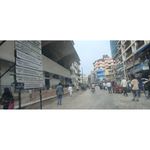
The continued occupation of buildings still under construction has sparked renewed public concern, raising serious questions about accountability, regulatory effectiveness and the safety of one of Tanzania’s busiest commercial districts.

Sources familiar with construction activities in the area say a significant number of buildings in Kariakoo are owned by influential individuals with political connections, making regulatory enforcement particularly difficult.

One supervisor involved in construction projects told Mwananchi that while laws governing construction are clear, their implementation becomes complicated when influential stakeholders are involved.

“Laws exist and must be followed, but many of these buildings belong to influential people. It becomes difficult for authorities to take action because they are dealing with powerful interests,” the source said.

Kariakoo Magharibi street chairman, Said Omary, said local government leaders lack the legal authority to halt construction activities directly and can only escalate complaints to higher administrative levels.

He noted that weak accountability across several leadership layers has contributed to recurring incidents in the area.

According to him, failures in enforcement, not legislative gaps, are at the centre of the ongoing safety concerns.

“Laws and procedures are clear and well known, but enforcement is the challenge. Politics has created a situation where procedures are not followed, and that is the root of the problem,” said Omary.

He added that inspection mechanisms remain weak, while lower-level leaders are frequently excluded from the formal approval processes governing construction.

Mr Omary further explained that as a street chairman, he is rarely involved in permitting procedures, making it difficult to exercise authority when addressing issues at construction sites.

“When you arrive at a site, people ask who you are because they have not been informed. Yet when problems arise, it is the chairperson who is called to explain,” he said.

Some contractors operating in Kariakoo, who spoke on condition of anonymity, said inspections are often informal and inconsistent.

They claimed that individuals presenting themselves as inspectors sometimes engage directly with project owners, with matters resolved privately without documented follow-up.

“My role is to supervise construction and ensure documentation is in place. When inspectors come, even if I am absent, I receive calls and later hand over to the owners. I do not always get clear instructions,” said one contractor.

He added that multiple groups claiming to represent different institutions frequently visit construction sites, creating confusion among builders and workers.

Construction workers also described a pattern in which inspection orders rarely lead to sustained enforcement action.

One worker said that when officials arrive and issue instructions to halt work, they are usually contacted later by project owners, after which work resumes.

“We are just labourers. When officials come and tell us to stop work, we call the relevant people and they sort it out. We continue working,” he said.

While these accounts raise concerns about possible malpractice, workers said they could not confirm whether corruption was involved, noting that enforcement actions are often not followed through to conclusion.

The Prevention and Combating of Corruption Bureau (PCCB) in Ilala initially acknowledged the issue when contacted in November 2025, stating that it would initiate investigations.

“We will assign a team to look into the matter and provide feedback,” said Ilala PCCB Director, Faustine Maijo at the time.

However, follow-up enquiries conducted in December 2025 and January 2026 produced no confirmed findings.

Officials requested specific identification of buildings allegedly involved in irregularities, citing the size and complexity of Kariakoo as a challenge to broad investigations.

“Please specify the exact buildings so we can conduct a proper investigation and give you back accurate findings,” an official said.

Dar es Salaam City Engineer, Isack Mtega, said poor compliance with construction procedures remains a significant factor contributing to the persistence of unsafe practices.

He explained that many property developers misunderstand or disregard regulatory requirements.

According to him, some developers perceive mandatory inspections as interference rather than legal obligations. “The main issue is lack of awareness among property owners.

Many believe returning to the municipality for inspection is interference, so they ignore procedures under the Local Government Act, Chapter 288,” he said.

Mr Mtega added that compliance levels vary among developers, with foreign investors generally demonstrating higher levels of adherence to established procedures than many local developers.

“Most local developers do not strictly follow procedures after obtaining permits. However, some foreign investors tend to adhere more closely to regulations,” he said.

He also pointed to financial constraints as a driving factor behind the early occupation of unfinished structures. Many developers rely on loans or financial partnerships and begin renting out incomplete buildings to generate income needed to sustain construction activities.

Assistant Chief Fire and Rescue Officer for Ilala Region, Peter Mabusi, warned that prioritising commercial interests over safety has been a major factor contributing to repeated fire incidents in Kariakoo.

“Kariakoo has experienced several fire incidents. The main issue is that buildings are put into use before completion or inspection, with business taking priority over safety,” he said.

Mr Mabusi explained that phased construction practices are common, with developers completing lower floors and leasing them out while upper sections remain unfinished.

“Some build two or three floors and start renting them out because they need income while construction continues,” he said.

He noted that under the Fire and Rescue Services Act, 2007, authorities have powers to halt the use of unsafe buildings.

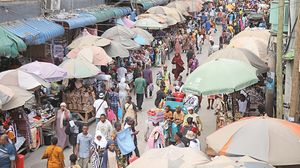
However, enforcement is often complicated by Kariakoo’s central role in economic activity.

“Kariakoo is economically critical. Stopping operations entirely would have major social and economic consequences,” he added.

Mabusi further highlighted inconsistencies between regulatory frameworks as a major challenge affecting compliance.

He explained that different institutions sometimes issue conflicting instructions, leaving developers uncertain about which requirements take precedence.

“Different agencies issue different guidelines, so ultimately the burden falls on users, who choose what suits them,” he said.

Chairman of the Occupational Safety and Health Association of Tanzania (Tohasa), Manyanda Maziku, said fragmented regulatory systems remain a major obstacle to effective oversight.

He cited the Occupational Safety and Health (Construction and Building Sector) Regulations, Government Notice No. 73 of 2015, which prioritise worker safety but do not explicitly prohibit the use of incomplete buildings.

However, Maziku contrasted these provisions with urban planning regulations that clearly prohibit occupancy before formal certification.

“The planning regulations clearly state that no one is allowed to use an incomplete building without a Certificate of Occupancy,” he said.

Mr Maziku warned that although construction workers may receive training and protective equipment, members of the public remain highly exposed to risk when using incomplete structures. 

“Workers are usually trained and equipped with protective gear. But members of the public passing through or conducting business in such buildings have no protection at all,” he said.

Stakeholders interviewed for this investigation agree that Kariakoo’s recurring safety challenges will persist unless regulatory agencies harmonise their frameworks and strengthen enforcement capacity.

They emphasised that while legal frameworks already exist across multiple institutions, inconsistent application and weak coordination continue to expose the public to avoidable risks.

Without decisive enforcement and improved coordination among regulatory authorities, the use of unfinished buildings in Kariakoo is likely to continue, sustaining a cycle of safety concerns in one of Tanzania’s most vital commercial hubs.