Prime Minister's Office seeks Sh12.5 trillion for jobs, Vision 2050, stronger government

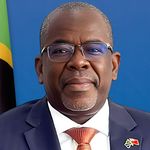
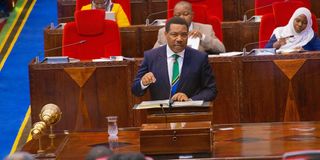
Prime Minister, Dr Mwigulu Nchemba, presents the revenue and expenditure estimates for the Prime Minister’s Office and the Office of Parliament for the 2026/27 financial year in Parliament in yesterday. PHOTO | PMO
Dar es Salaam. The Prime Minister Dr Mwigulu Nchemba has asked Parliament to approve Sh12.5 trillion for the Prime Minister’s Office and its affiliated institutions for the 2026/27 financial year, marking a sharp budget increase largely driven by a massive allocation to the Regional Administration and Local Government (RALG) portfolio.

The proposed spending plan places employment creation, implementation of the National Development Vision 2050 and strengthening coordination of government activities at the centre of government priorities for the coming financial year.

The request marks a significant rise compared to the Sh782.08 billion that was requested for the office and its institutions in the 2025/26 financial year.

Before the RALG portfolio was moved under the Prime Minister’s Office, Parliament had approved its budget for the 2025/26 financial year at approximately Sh11 trillion.

However, President Samia Suluhu Hassan decided to move the Ministry of State, President’s Office – Regional Administration and Local Government (PO-RALG) back under the Prime Minister’s Office on November 17, 2025.

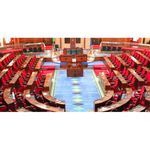
Presenting the budget speech in Parliament in Dodoma, on Wednesday, April 1, 2026, Dr Nchemba said the funds will enable the Prime Minister’s Office to continue coordinating government policies and overseeing key sectors such as regional administration, local government authorities and labour and employment.

“For the year 2026/2027, the Prime Minister’s Office and its institutions request this Honourable House to approve a total of Sh12.5 trillion, of which Sh8.73 trillion is for recurrent expenditure and Sh3.77 trillion for development expenditure,” he said.

The bulk of the proposed budget is directed to the docket responsible for RALG, reflecting the government’s continued focus on strengthening service delivery at the local level.

In addition, Sh183.95 billion will be allocated to the Policy, Parliamentary Affairs, Coordination and Persons with Disabilities docket, while Sh225 billion is proposed for the Parliamentary Fund, including Sh208 billion for recurrent expenditure and Sh17 billion for development projects.

The Prime Minister also informed lawmakers that the Prime Minister’s Office intends to collect about Sh2.41 trillion in internal revenue in the coming financial year from its institutions.

In outlining the direction of the government’s programmes, Dr Nchemba said the upcoming budget will support implementation of the National Development Vision 2050, which was launched by President Hassan last year and will guide the country’s development agenda for the next 25 years.

“On 17 July 2025, the President of the United Republic of Tanzania, Dr Samia Suluhu Hassan, officially launched the National Development Vision 2050 which will guide our development plans for the next 25 years,” the Prime Minister said.

He added that the budget to be approved by Parliament will mark the beginning of implementing the Fourth National Five-Year Development Plan.

“The plan and budget to be approved by this House will be the first phase of implementing the Fourth National Five-Year Development Plan for the period 2026/2027–2030/2031 and Vision 2050,” he said.

Among the areas expected to receive significant attention in the coming financial year is employment creation, particularly for young people.

The Prime Minister noted that the government has already taken steps to empower youth economically, including providing funding aimed at supporting self-employment initiatives.

“On 5 February 2026, the government provided Sh200 billion to support youth self-employment,” he said, noting that the funds are intended to stimulate job creation in sectors such as agriculture, livestock, fisheries, industry and trade.

Dr Nchemba also highlighted the blue economy as another strategic area that the government will continue prioritising in the coming financial year.

He said the sector is expected to open new economic opportunities by promoting sustainable use of marine and freshwater resources.

“The blue economy is one of the new strategic areas aimed at promoting national economic growth through the sustainable use of marine, lake, river and wetland resources,” he said.

The Prime Minister emphasised that through the proposed budget, the Prime Minister’s Office will continue strengthening its role of coordinating government programmes, monitoring implementation of national policies and ensuring that development initiatives are effectively delivered across the country.

“I beg to move that this Honourable House now receive and deliberate on the report on the review of the implementation of government activities for the year 2025/2026 and the estimates of revenue and expenditure for the year 2026/2027,” he told Parliament.

Members of Parliament will now debate the proposed budget before approving the estimates for the 2026/27 financial year.