Private sector key to Tanzania’s economic transformation, MPs told
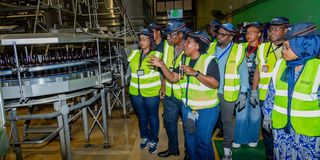
Members of the Parliament’s Budget Committee receiving a briefing from Serengeti Breweries Ltd Operations Manager Rolina Samson (centre) when the team visited the company’s Moshi plant at the weekend. PHOTO|COURTESY
Moshi. Tanzania’s private sector has a critical role to play in driving economic transformation, creating jobs and strengthening local value chains as the country works towards the ambitions of Dira (Vision) 2050, Members of Parliament’s were told.
The message was delivered during the Parliament’s Budget Committee visit to Serengeti Breweries Limited’s (SBL) Moshi Brewery in Kilimanjaro at the weekend, where the legislators were briefed on the company’s investments and contribution to manufacturing and the wider economy.
The visit provided MPs with an opportunity to assess first-hand the contribution of private investment to manufacturing, agriculture, employment, skills development, community initiatives and environmental sustainability.
SBL managing director Dr Obinna Anyalebechi said the private sector could help translate the aspirations of Dira 2050 into tangible economic outcomes through investment, job creation and stronger local supply chains.
“As Tanzania looks towards 2050, the private sector has an important role to play in turning our country’s Dira 2050 aspirations into tangible outcomes,” Dr Anyalebechi said.
He said SBL’s investment extended beyond its manufacturing operations to farmers, employees, communities and other businesses linked to its value chain.
“We remain committed to working in partnership with the government to support Tanzania’s industrialisation agenda, create jobs, strengthen local value chains and contribute to sustainable economic growth,” he said.
Dira 2050 identifies a strong and dynamic private sector as an important driver of economic transformation, productivity, innovation, investment and employment.
The brewer has invested in initiatives linking agriculture with manufacturing, including its Shamba ni Mali programme, which supports smallholder farmers producing sorghum, barley and maize.
The Budget Committee chairman Mashimba Ndaki said the engagement was important in helping Parliament understand the contribution of private investment to the economy and strengthening cooperation between the public and private sectors.
“The visit has provided us with an opportunity to understand first-hand the contribution of private-sector investment to manufacturing, employment, local value chains and communities,” Mr Ndaki said.
He said continued engagement between the Government and the private sector was necessary to create an environment that supports investment, productivity and sustainable economic growth.