Dar es Salaam. Private sector stakeholders have urged the government to establish strong mechanisms for participation, implementation, and monitoring of development plans to ensure effective contribution towards achieving the goals of the National Development Vision 2050 and the First Five-Year Development Plan IV.
They made the call yesterday, during a consultative meeting organised by the National Planning Commission (NPC), which brought together private sector associations and institutions to discuss strategies for the sector’s involvement in implementing the vision and development plans.
Addressing journalists, Tanzania Private Sector Foundation (TPSF) Acting Executive Director Deogratius Massawe said private sector engagement should extend beyond planning to implementation and evaluation.
“We are calling for greater private sector participation in implementation and monitoring. As we begin the first year of implementing this plan, it is important that the private sector becomes part of measuring progress and identifying emerging challenges,” he said.
Mr Massawe said the success of Vision 2050 would depend largely on effective collaboration between the government and private sector, particularly in investment, production, innovation, and improving the business environment.
“Our goal is to establish a system that allows the private sector to participate from planning through implementation and evaluation.
This will strengthen ownership of national development goals,” he said.
He added that involving business associations and sector institutions would broaden stakeholder engagement and help incorporate diverse views into the implementation process.
“We want the private sector to become a true development partner. Full participation in implementation and monitoring will make it easier for us to drive economic growth and create jobs,” he said.
Tanzania Women Chamber of Commerce (TWCC) chief executive officer, Ms Mwajuma Hamza, said the private sector expects permanent evaluation mechanisms that will enable regular engagement between stakeholders and government to assess progress towards Vision 2050 targets.
She said such mechanisms would help identify gaps, address challenges, and develop strategies to accelerate implementation.
“The vision seeks to transform Tanzania into a $1 trillion economy by 2050. These ambitious goals require close cooperation between the government and the private sector at every stage,” she said.
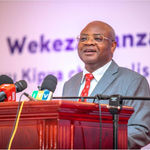
Opening the meeting, the Permanent Secretary in the President’s Office–Planning and Investment, Dr Tausi Kida, said the government had already established key tools for implementing Vision 2050, including a long-term master plan, the Five-Year Development Plan, and a monitoring framework.
She said the vision aims to build a strong, inclusive, and competitive $1 trillion economy, up from the current estimated $91 billion.
“Technically, we have established that these targets are achievable, but not through business as usual. We need major reforms and close collaboration with all development stakeholders, particularly the private sector,” she said.
Dr Kida said the private sector plays a central role in achieving the vision through its contribution to investment, production, revenue generation, and employment, noting that it accounts for more than 90 percent of jobs in the country.
She identified agriculture, manufacturing, tourism, mining, the blue economy, construction, real estate, financial services, and innovation and creative industries as the nine transformative sectors expected to drive Tanzania’s economic growth towards 2050.
Register to begin your journey to our premium contentSubscribe for full access to premium content