Dar es Salaam. The High Court of Tanzania, Kigoma Sub-Registry, has ordered the government and members of a presidential commission probing criminal incidents during and after the 2025 General Election violence to appear without fail in a case challenging the legality of their appointment, which will be heard today, Tuesday, June 23, 2026.
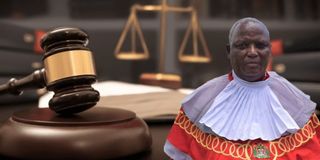
The judicial review application was filed by activist Buberwa Kaiza and his colleague Joseph Mabugo against the Attorney General, commission chairperson, Court of Appeal Judge Shaban Ally Lila, and three other commissioners.
The respondents also include retired High Court judges Gad John Mjemmas, Awadh Mohamed Bawazir, and Aishieli Nelson Sumari.
The applicants lodged the case on June 18, 2026, through the court’s electronic filing system after being granted leave to proceed.
Leave was issued on June 8, 2026, by Judge Agustine Rwizile, who was satisfied that the applicants had met the legal threshold.
The matter will be heard online by Judge Wilbert Chuma and is scheduled for mention at 11:30 am.
According to notices signed by the Deputy Registrar and served on all parties, copies of which have been seen by The Citizen, all parties must attend via the link https://virtualcourt.judiciary.go.tz/hc023 without fail.
The commission, commonly known as the Judge Lila Commission, was appointed by President Samia Suluhu Hassan, with its members announced on May 18, 2026.
Its formation followed the report of the Presidential Commission of Inquiry into Breaches of Peace During and After the October 29, 2025, General Election, chaired by former Chief Justice Mohamed Chande Othman.
Following the post-election incidents, police arrested several people nationwide and charged them with treason, before President Hassan later ordered their release.
She subsequently established the Chande Commission, which submitted its report on April 23, 2026, indicating that 518 people were killed and many others were injured.
Before the new commission was sworn in, Mr Kaiza and Mr Mabugo, through advocates Mpale Mpoki and Hekima Mwasipu, moved to court challenging its legality.
In their petition, they seek orders to quash the President’s decision to appoint the commissioners and to restrain her from making similar appointments in the future.
Grounds for challenge
The applicants argue that the President acted outside her legal mandate and in breach of the law in constituting the commission.
They further contend that the appointments lack a rational basis, violate legitimate expectations, amount to abuse of discretion, and contravene constitutional provisions.
They state that after the incidents, police arrested suspects and charged them with treason before the President ordered their release and set up the Chande Commission.
Although the commission recommended a further inquiry into criminal offences linked to the election period, the applicants argue that the President acted unlawfully in creating another body after the Chande Commission had concluded its work.
They rely on the Commissions of Inquiry Act, Cap. 32 (R.E. 2023), arguing that Section 21(1)(a) and (b) requires that once the report is received, the appropriate course is prosecution rather than fresh inquiries.
They further argue that criminal investigations fall exclusively under the Director of Public Prosecutions under the National Prosecutions Service Act, Cap. 430 (R.E. 2023), not a presidential commission.
The applicants say that if further investigations were required, the President should have directed the DPP to instruct the police accordingly.
They also argue that establishing a commission after releasing suspects without any court determination amounts to unlawful and discriminatory conduct contrary to Article 13(1) of the Constitution.
Register to begin your journey to our premium contentSubscribe for full access to premium content