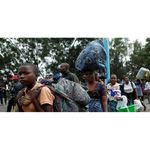
A view of Segerea on Independence Day, where residents chose to stay home due to concerns over a planned protest that ultimately did not occur. PHOTO | HERIETH MAKWETTA
Dar es Salaam. Tanzania’s 64th Independence anniversary on December 9, 2025 unfolded unlike any other in recent history.
What is traditionally a day of celebration, patriotic parades, and family gatherings instead became a day marked by empty streets, shuttered shops, unusually quiet bus terminals and heightened security presence from Dar es Salaam to the Lake Zone and southern highlands.
The abrupt shift stemmed from unrest that followed the October 29 General Election, whose aftermath left deep emotional and psychological scars on communities across the country.
Combined with anonymous online calls for nationwide, nonstop demonstrations coinciding with Independence Day, the atmosphere leading up to December 9 was charged with anxiety, rumours and worstcase fears.
By December 8, the government had suspended all official celebrations and issued a firm directive urging citizens to remain indoors unless facing an emergency.
The Minister for Home Affairs, George Simbachawene, went further, warning that any attempts to take to the streets would not be treated as demonstrations but as “an attempted coup”, attracting forceful intervention from security agencies.
Yet, when the day arrived, the feared chaos never materialised. Instead, the nation slipped into an uneasy calm.
A quiet capital under survaillance
In the administrative capital of Dodoma, silence seemed to envelop major streets from early morning.
Morogoro Road— normally choked with commuter traffic—was almost empty, save for a stream of motorcycles cutting through the stillness. Some traders at Sabasaba and Majengo markets opened their stalls, but foot traffic remained far below normal. Security forces maintained a visible presence.
At the Nzuguni junction, a police vehicle packed with officers sat in place for hours. Near the Prime Minister’s residence, another patrol remained parked at the roadside.
Access roads around Parliament were closed, and soldiers from the Tanzania People’s Defence Force (TPDF) were stationed along key junctions, including Nyerere Square and the Airport area.
Despite the heightened security, business was calm and traders went about their work without interference—yet it was clear the city was on alert. The commercial capital experienced a similar atmosphere.
Dar es Salaam—customarily vibrant even on public holidays—was subdued, with traffic flowing lightly and shops in areas such as Kariakoo, Buguruni and Mwenge opening cautiously or not at all.
Residents reported seeing patrol vehicles moving across key locations, especially in the city centre and on major highways.
Police and TPDF personnel were stationed at strategic intersections; however, there were no confrontations or crowds requiring dispersal. “It was calm, yes—but a tense kind of calm,” said one resident in Mabibo. “People stayed indoors because they feared the unknown.
After October 29, no one wants a repeat of that experience.”
Mwanza: A clip confusion and a rebuttal
In Mwanza, Tanzania’s second-largest city, the day passed without any notable disturbances despite a viral video clip circulating online purporting to show demonstrations.
Regional Commissioner Said Mtanda moved quickly to debunk the footage, describing it as misleading and outdated.
“The clip being circulated was recorded on October 31, a few days after the election results were announced. It is not from today,” Mtanda clarified, assuring residents that the city was peaceful.
He cautioned the public against falling victim to “propaganda in such sensitive periods,” urging Mwanza residents to continue with their activities without fear.
In Musoma, Mara Region, streets that ordinarily hum with movement were deserted by midday.
Shops were closed, public transport was dormant, and boda boda stands lay empty. Even the main bus terminal— usually bustling with traders ferrying supplies to rural areas—was still.
Station chairman Freddy Festo said business had dropped sharply because the supply chain relies on open shops. Residents echoed similar sentiments.
“What happened on October 29 changed the way people think about safety,” said Selemani Mashauri, who closed his shop early after failing to receive a single customer. “People stayed at home today because fear still lingers.” A butcher Joash Tikina expressed hope that normalcy would gradually return as the day progressed: “By mid-morning it was very quiet—too quiet. We have never seen Independence Day like this.”
Mbeya: A city slowing down
Mbeya City, still recovering from its share of tensions after the October polls, saw an unusual slowdown.
In Soweto, several shops remained closed. The once-vibrant market was still, contrasting sharply with the long queues and frantic shopping witnessed the previous day as residents stocked up on essentials—some commodities even selling at inflated prices due to increased demand.
Residents openly linked the behaviour to fears over the anticipated demonstrations and lingering trauma from the election aftermath. “What we saw on October 29 taught many a lesson. People were preparing early, just in case,” said trader Suleiman Hashim.
In Kibaha, Coast Region, commercial streets lay quiet, with most shops closed and daladala services halted. The absence of buses forced commuters to rely on boda boda operators—who seized the opportunity to hike fares.
“I normally pay Sh1,000 to reach town. Today it was Sh1,500,” said commuter Lucy Mkande. “But what can we do? There is no alternative.”
Mobile money agents also remained closed, leaving residents unable to access cash for basic household needs. In Morogoro, the pattern was similar—light traffic, closed shops, and a noticeable security presence.
Police patrols were reportedly seen at key junctions, though no incidents were recorded. Like elsewhere, residents largely stayed indoors.
The Police Force speaks
National Police spokesperson David Misime later confirmed that the country remained secure throughout the day.
“By midday of December 9, the security situation across the country was calm,” he said, emphasising that security forces continued to protect people and property.
Quiet under pervasive fear What happened on October 29 changed the way people think about safety.
People stayed at home today because fear still lingers MASHAURI | SHOP OWNER He dismissed circulating images suggesting demonstrations in some regions as “false and lifted from past events.”
“We urge Tanzanians to ignore such images. Their intention is to deceive the public into believing demonstrations are taking place,” he said.
He reminded citizens that the planned nationwide, open-ended demonstrations were outlawed from December 5 for failing to meet statutory requirements.
To better understand the significance of the day, two experts weighed in. A political analyst, Dr Moses Ngalya, attributed the nationwide calm to public caution shaped by the October 29 events.
“What you saw on December 9 was not compliance but fear— fear rooted in recent political trauma,” he said.
“People stayed indoors not because they were told, but because they did not want to be caught in a situation reminiscent of the post-election disturbances.”
He argued that the government’s strong messaging, particularly framing any demonstrations as an attempted coup, had a chilling effect. “When the state labels a protest an attempted coup, it heightens anxiety. Citizens naturally withdraw.”
A Security and governance specialist, Manoa George said the day reflected a silent standoff between uncertainty and restraint.
“The public was anxious, the government was prepared, and online narratives added fuel,” he said.
“But the absence of demonstra demonstrations should not be mistaken for stability. It shows a nation that is still healing.”
He emphasised that emotional fear—especially among youth and urban populations—was amplified by rumours and the lived experience of October 29.
“Silence can sometimes be louder than chaos. What happened today is evidence of widespread anxiety.”
A pardon and a calming tone While the country navigated tension, President Samia Suluhu Hassan issued an annual Independence Day pardon, releasing 1,036 prisoners or reducing their sentences.
The announcement, made by the Home Affairs Minister, came as a reminder of continuity amid disruption and, to some, an effort to lower national temperature.
Ultimately, Tanzania’s Independence Day passed without the demonstrations many had feared. But the silence that enveloped the cities tells a bigger story: of a nation still processing political shock, a population cautiously watching events unfold, and a government determined to assert control. The calm was real—but so was the fear behind it.
Whether this marks a turning point toward political reconciliation or a deepening of quiet tension remains to be seen.