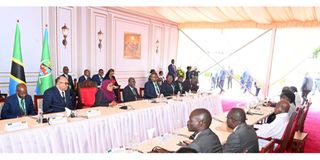
Dar es Salaam. Economists and political analysts say talks between President Samia Suluhu Hassan and her Ugandan counterpart, President Yoweri Museveni, signal a deliberate strategy to reposition Uganda as Tanzania’s closest and most strategically integrated partner within the East African Community (EAC).
They say the discussions, covering oil exports, pipelines, ports, railways and regional security, reflect a shift from broad regional cooperation to a more focused bilateral integration agenda designed to bind the two economies together over the long term.
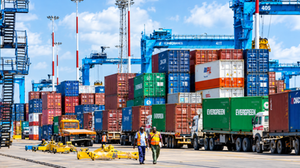
The meeting comes as Uganda prepares to begin exporting crude oil through Tanzania’s Port of Tanga in July, a milestone analysts say has accelerated efforts by both governments to align infrastructure, trade routes and diplomatic priorities.
According to analysts, the talks mark a transition from project-based collaboration centred on the East African Crude Oil Pipeline (Eacop) to a broader framework positioning Tanzania as Uganda’s primary economic gateway and Uganda as one of Tanzania’s most important regional trade partners.
An economist at the University of Iringa, Mr Samson Rutashobya, said the issues discussed reflect a clear intention to institutionalise Uganda as Tanzania’s closest economic partner within the bloc.
“When heads of state sit down to align oil pipelines, gas transport, ports and railways, they are not just discussing infrastructure. They are defining the future structure of their economies and who their most important partners will be,” he said.
He said that Uganda’s growing reliance on Tanzanian infrastructure is gradually embedding Tanzania into Uganda’s export and supply chains.
“This goes far beyond transit services. Uganda is effectively tying its external trade to Tanzania’s ports and transport corridors. That level of dependence elevates Uganda into Tanzania’s most strategic partner within the EAC,” he said.
Mr Rutashobya noted that such arrangements create mutual dependence, with Tanzania benefiting from sustained port usage, logistics services, employment and fiscal revenues, while Uganda secures predictable and politically stable access to global markets.
The executive director of research body, Repoa, Dr Donald Mmari, said the talks reflect the use of economic diplomacy to reshape regional partnerships.
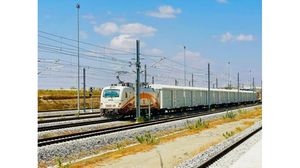
“EACOP created a foundation of trust, but what we are now seeing is the expansion of that trust into other strategic sectors. Gas pipelines, refined petroleum transport and rail connectivity are all part of a broader economic corridor linking the two countries,” he said.
He added that the corridor effectively positions Tanzania and Uganda as economic extensions of each other.
“When Uganda’s oil, goods and services move through Tanzania, growth in one economy directly supports growth in the other. That is how Uganda becomes a priority partner rather than just one of many EAC members,” he said.
Sharing similar views, Dr Isack Safari of St Augustine University of Tanzania said the discussions highlight a shift towards selective, deeper integration within the EAC.
“For many years, EAC integration has been broad but slow. What we are seeing now is Tanzania and Uganda choosing to move faster and deeper together,” he said.
Dr Safari added that infrastructure has become the anchor of the emerging partnership.
“Political goodwill is important, but infrastructure creates permanence. Once ports, pipelines and railways are aligned, cooperation becomes structural rather than optional,” he said.
Beyond economics, analysts say the talks also reinforced political alignment and security cooperation, further distinguishing the Tanzania–Uganda relationship within the EAC.
A political scientist at the University of Dodoma, Dr Paul Loisulie, said the closeness displayed during the talks reflects shared strategic interests that extend beyond trade.
“When countries become economically intertwined, political coordination becomes necessary. Supporting each other regionally and internationally becomes part of protecting shared investments and infrastructure,” he said.
He added that discussions on regional security, particularly in the Great Lakes region, are consistent with the deepening economic partnership.
“Instability in one country threatens transport corridors, pipelines and trade routes in the other. That is why security cooperation naturally intensifies as economic ties deepen,” he said.
Another political analyst from the State University of Zanzibar, Prof Makame Ali Ussi, said the engagement highlights one of the most stable bilateral relationships in the region.
“This is not symbolic diplomacy. It is a partnership built on shared infrastructure, shared economic risks and shared regional responsibilities,” he said.
He added that reciprocal political support on continental and global platforms reflects the depth of trust between the two governments.
“When countries consistently back each other, it shows clarity about who their closest allies are. In this case, Uganda is clearly emerging as Tanzania’s closest partner within the EAC,” he said.