Tanzania and Uganda agree to remove all trade barriers by June
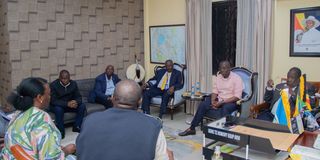
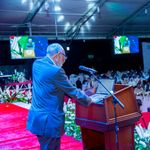
Leaders and officials from Uganda engage in discussions during an official dinner hosted by the Uganda High Commission in Dar es Salaam yesterday evening ahead of the 5th Session of the Uganda–Tanzania Joint Permanent Commission (JPC). PHOTO | COURTESY
Dar es Salaam. Tanzania and Uganda have agreed to remove all trade barriers between the two countries by June this year in a move aimed at strengthening bilateral trade and deepening economic cooperation.
The commitment was announced during an official dinner hosted by the Uganda High Commission in Tanzania in Dar es Salaam on Thursday evening ahead of the 5th Session of the Uganda–Tanzania Joint Permanent Commission (JPC).
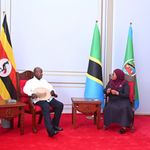
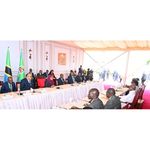
The meeting, held from March 11 to March 13, 2026, is taking place at the Julius Nyerere International Convention Centre (JNICC) and has brought together government officials from both countries to review and strengthen cooperation in areas such as trade, investment and regional integration.
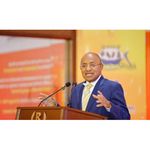
Speaking during the event, Uganda’s High Commissioner to Tanzania, Fred Mwesigye, said the two countries share a relationship that goes beyond friendship, describing it as a brotherhood rooted in history and cooperation.
“We want to tell Tanzanians and Ugandans that we are not just friends, we are brothers. Everything we do, we do as brothers—without problems, without obstacles and without unnecessary challenges,” he said.
According to him, the main objective of the ongoing discussions is to further strengthen economic ties and ensure traders from both countries can conduct business without unnecessary restrictions.
“As we head towards the fifth JPC meeting, we have agreed that all existing barriers to trade will be removed by June. This means we expect to see grain entering Uganda without restrictions and Ugandan traders doing business in Tanzania without obstacles,” said Mr Mwesigye.
He noted that taxation-related charges have been among the biggest challenges affecting trade between the two countries, but removing such barriers would help businesses expand faster and promote deeper economic integration.
The envoy also praised Tanzania for improving infrastructure that supports trade between the two nations.
He cited the expansion of road networks connecting to Uganda, plans to extend the Standard Gauge Railway to Uganda and improvements in ports commonly used by Ugandan traders, including those in Tanga, Mwanza and Dar es Salaam.
“These improvements will make it easier for goods to move between our countries. Once the remaining charges are addressed, trade between Uganda and Tanzania will grow even faster,” he said.
Mr Mwesigye also pointed to what he described as a significant imbalance in investment flows between the two countries.
He said Tanzanian investments in Uganda currently exceed $2 billion, while Ugandan investments in Tanzania stand at about $200 million.
“That is a major imbalance. But once the remaining barriers are removed, we expect Ugandan products such as sugar to enter Tanzania without difficulties, while Tanzanian products like rice will access the Ugandan market more easily,” he said.
Meanwhile, Permanent Secretary at Uganda’s Ministry of Foreign Affairs and East African Cooperation, Vincent Bagiire, commended officials from both countries for the progress made during the discussions leading up to the JPC session.
“On behalf of the Ministry of Foreign Affairs, I want to welcome you all to the Uganda High Commission in Dar es Salaam and thank you for the work you have done over the past two days,” he said.
Mr Bagiire also highlighted the growing shift from traditional diplomacy to economic and commercial diplomacy, noting that forums such as the JPC play a crucial role in promoting trade and investment between countries.
“The diplomacy of today is increasingly focused on economic and commercial interests. Mechanisms such as the JPC are important tools for implementing this approach and supporting the growth of our economies,” he said.
He praised the Uganda High Commission in Dar es Salaam for promoting economic cooperation between the two countries, including initiatives aimed at expanding exports.
Mr Bagiire cited ongoing efforts to export electric buses manufactured in Uganda to regional markets, including Tanzania, noting that there are indications of demand for the buses in the Tanzanian market.
“The challenge now is whether our manufacturers will be able to meet the demand for these buses,” he added.
Uganda’s Minister of State for Foreign Affairs in charge of Regional Cooperation, John Mulimba, said regional integration within the East African Community (EAC) remains central to strengthening economic cooperation among member states.
He said recent reforms within the bloc are expected to improve decision-making and strengthen institutional structures.
“We are here for the JPC to reaffirm our commitment to implementing the Common Market Protocol and the Customs Union. These frameworks already provide guidance on many of the issues we are discussing,” said Mr Mulimba.
He emphasised the need for effective implementation of agreements reached between the two countries.
“We must leave here with clear timelines and responsibilities so that ministries, departments and agencies can implement what has been agreed rather than simply filing the documents away,” he said.
The Joint Permanent Commission serves as a key bilateral mechanism through which Tanzania and Uganda review cooperation across sectors including trade, infrastructure, security and regional integration.
Officials from both governments are expected to continue discussions aimed at strengthening economic ties and improving cross-border trade between the two neighbouring countries.
Register to begin your journey to our premium contentSubscribe for full access to premium content