SGR damage raises questions over railway safety and competence of management

New Content Item (1)


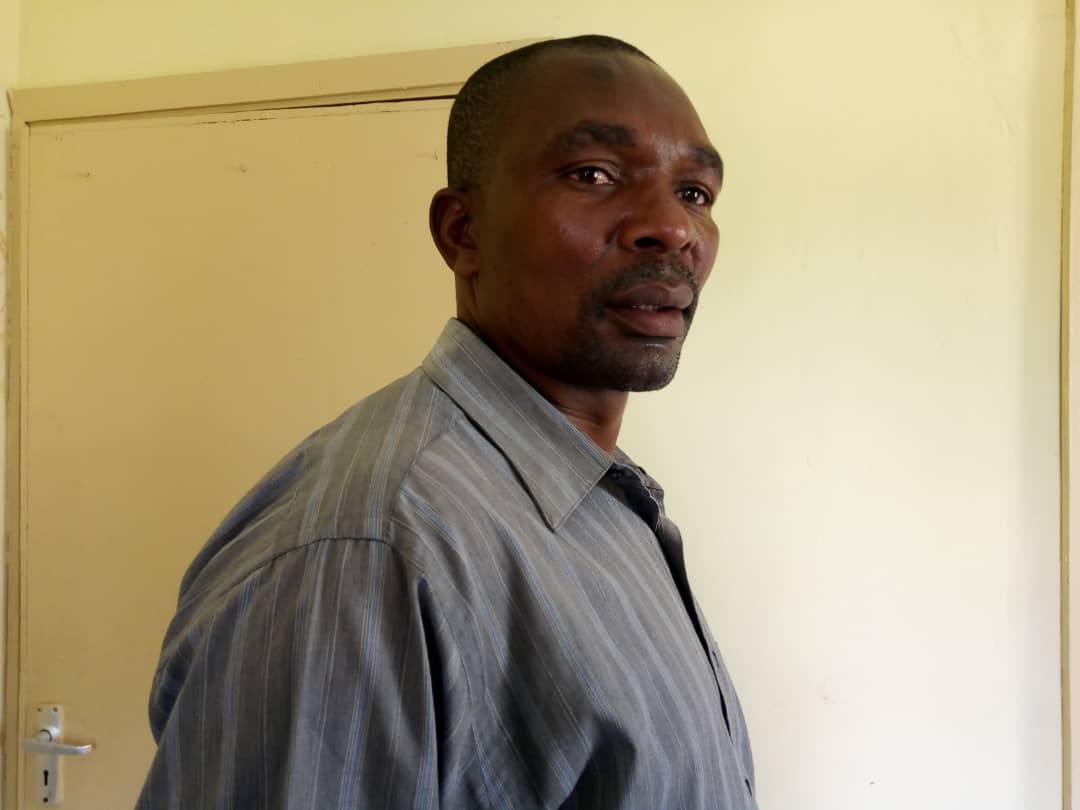
Dar es Salaam/Dodoma. As criticism mounted over the design and construction of the Standard Gauge Railway (SGR) following the suspension of services due to heavy rains, the Tanzania Railways Corporation (TRC) has dismissed claims that the disruption was caused by design or construction flaws.

Speaking to the sister publication Mwananchi on January 2, 2026, TRC Director General Machibya Masanja said the suspension was prompted by erosion of riverbanks near a railway bridge, not by any structural failure of the railway itself.
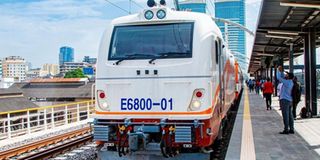
“As a precautionary measure, we decided to suspend services to allow for reinforcement of the riverbanks,” he said.

On December 31, 2025, TRC announced the suspension of SGR services on the Morogoro–Dodoma and Dodoma–Morogoro routes, citing infrastructure damage caused by heavy rains in Kidete area, Kilosa District in Morogoro Region, and Godegode area in Mpwapwa District, Dodoma Region.

The announcement triggered criticism from some members of the public and politicians, who questioned how a railway completed barely a year ago could already be experiencing problems.

Online reactions

Through his X (formerly Twitter) account, Chadema Mainland Vice Chairman John Heche criticised the project, linking the incident to what he termed sabotage.

“A mega project worth trillions of shillings has not even completed a year of operation — in fact, it has not even reached Mwanza. Why was there no proper feasibility study and detailed design?” he wrote.

Similar views were shared by another citizen via WhatsApp, who argued that the country should not bear repair costs while the project is still under the contractor’s liability period.

The individual attributed the problem to the contractor’s limited experience, saying the project was their first of such magnitude.

“This was their first major project, so it was a learning curve,” the message read.

The citizen warned against using taxpayers’ money to fix defects, calling for the contractor to take full responsibility for any shortcomings.

Another social media user, Martin Masese, said any damage at this stage should be borne by the contractor, adding that alleged corruption in the project’s design could have contributed to the problem.

TRC response

Mr Masanja dismissed the allegations, saying the incident had nothing to do with design flaws or feasibility studies, and stressing that the railway line had not been washed away as claimed.

“The railway has not been cut off. What happened is erosion of riverbanks near a bridge. For the safety of passengers and equipment, we decided to suspend services temporarily to carry out reinforcement works,” he said.

He explained that the suspension was a safety precaution, noting that while trains could technically pass, the erosion posed a potential risk.

“It’s not that trains cannot pass. But you must take precautions and strengthen the riverbanks. I personally passed through that section earlier today in the locomotive,” he said during an interview at 12:51pm on January 2.

Mr Masanja added that engineers were assessing the situation to prevent future risks, reiterating that the railway itself remained intact.

Responding to claims that feasibility studies were not conducted, he said: “We are engineers. We work based on evidence, not rhetoric. The bridge was designed to last at least 120 years.”

He said the bridge’s foundation extends 30 metres underground — equivalent to a 10-storey building — while its pillars go as deep as 30 to 40 metres, making structural failure highly unlikely within its design lifespan.

He contrasted this with some bridges on the old metre gauge railway (MGR), many of which were designed more than 100 years ago and have exceeded their intended lifespan.

Mr Masanja stressed that the erosion was exacerbated by human activities such as deforestation, which had been identified during the feasibility study as a long-term risk.

To address this, he said plans were already in place to construct dams that would regulate water flow and stabilise riverbanks.

Prime Minister’s remarks

Speaking during a visit to the affected area on January 2, Prime Minister Dr Mwigulu Nchemba said the suspension of SGR services was not unusual and should be seen as a responsible safety measure.

“When there are strong winds affecting power lines, electricity flow becomes unstable. Those wishing ill for Tanzania want trains to continue operating regardless. You wouldn’t even transport potatoes in such conditions, yet you want people to travel on electric trains during storms,” he said.

Dr Nchemba likened the situation to international airlines, which routinely postpone flights during severe weather.

“When it comes to safety, we should not quarrel or trade blame. The work we are rushing to do can only be done if we are alive,” he said.

Permanent solution

The Prime Minister directed experts to finalise technical assessments to pave the way for dam construction as a long-term solution.

He said construction would begin in Kidete, where funds are already available, followed by efforts to secure financing for seven additional dams.

“There are people who celebrate and mock when others face difficulties. I want to assure them that the government is fully alert. Technical work is underway and contractors are being secured,” he said.

He said Sh23 million had already been released to top up funds for relocating affected residents and providing humanitarian assistance, noting that Sh63 million had been requested in total and efforts were ongoing to secure the balance.

Dr Nchemba also warned against the tendency of some citizens to sell plots allocated in safe areas and return to flood-prone zones.

“It has become common for people to sell safe plots once the land dries up and move back to dangerous areas,” he said.

He further urged local governments to clearly demarcate high-risk zones instead of allowing construction to proceed only for residents to be later evicted.

Ticket availability

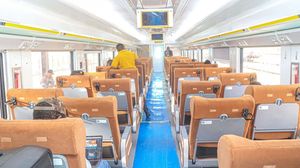
Meanwhile, some passengers have complained about difficulties obtaining SGR tickets within 24 hours of travel.

TRC has acknowledged the challenge and said it plans to address it by increasing routes starting in the third week of January.

“SGR transport should not be like this. On the Morogoro–Dodoma route, you should be able to travel whenever you want. Why should you buy a ticket two days in advance for a journey of less than 300 kilometres?” asked passenger Gervas Mathayo.

Another passenger, Neema Uledi, said ticket shortages were more pronounced during holidays and weekends.

“Many of us expected SGR to be the solution, but demand seems to be exceeding supply,” she said.

Responding to the complaints, Mr Masanja said demand for SGR services currently outstrips the number of available routes.

“It is true demand is high, but we are addressing the issue. We are in the final technical stages of increasing routes between Dar es Salaam and Dodoma,” he said.

He said the process would be completed by the third week of January, with additional routes introduced in the fourth week.

Mr Masanja added that TRC has sufficient trains stationed in Dodoma, and the new operating model will allow trains to pass each other instead of turning back immediately, enabling the transport of more passengers each day.