Data from the 2022 Tanzania Demographic and Health Survey show that 56.9 percent of children under the age of five in Iringa are stunted, compared with the national average of about 30 percent.
Iringa. Nutrition stakeholders have proposed a range of targeted interventions to tackle persistently high levels of child stunting in Iringa, warning that existing laws and policies are failing to translate into effective action at household and community levels.
Despite being a major food-producing region, Iringa records one of the country’s highest rates of stunting among children under five.
Data from the 2022 Tanzania Demographic and Health Survey show that 56.9 percent of children under the age of five in Iringa are stunted, compared with the national average of about 30 percent.
Tanzania’s legal framework places clear obligations on the state to prevent and address child malnutrition.
Local government authorities, through nutrition officers, health officers and social welfare officers, are tasked with implementing these mandates at community level under the Tanzania Food and Nutrition Act (Chapter 109) and the Law of the Child Act of 2009.
Also relevant are the UN Convention on the Rights of the Child, which Tanzania has ratified, and the Tanzania National Multisectoral Nutrition Action Plan II (NMNAP II), which outlines coordinated multisectoral actions. The stakeholders’ call follows findings of a three-month investigation conducted by The Citizen from October to December 2025, aimed at understanding the scale of the problem and proposing interventions to address the challenge.
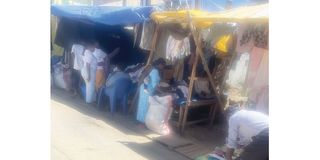
The investigation found that raising children in workplaces and harmful practices, such as exposing children under the age of five to local brews, were among widespread behaviours in the region.
It was also found that practical barriers prevent working women from attending routine clinic-based services, despite their central role in maternal and child healthcare.
Furthermore, the investigation found that nutrition sessions commonly last between two and three hours, a time commitment mothers who rely on daily income cannot afford, leading to irregular or delayed clinic attendance for many mothers.
The lack of active follow-up for children identified as malnourished was another recurring concern. The findings run contrary to laws and regulations that place responsibility on the government, through nutrition and health experts, at different levels of governance.
Carers, nutrition officers, civil society organisations, and health experts in Iringa Municipal, Kilolo District, and Iringa Rural, where the investigation was conducted, revealed a consistent pattern to The Citizen.
They said children’s growth problems are often identified late, clinic advice is ambiguous, and efforts to support families outside health facilities are limited or inconsistent.
They therefore outlined a set of interventions that could significantly reduce stunting in the Iringa region if implemented consistently and in line with existing laws and policies.
They urged that one of the most frequently cited gaps is the late start of nutrition education, noting that current efforts focus heavily on pregnancy and early childhood, missing opportunities to build knowledge much earlier.
“We wait until a woman is pregnant or until a child is already underweight before we start talking seriously about nutrition,” said a mother of four and ten-cell leader of Mkimbizi Neighbourhood in Iringa Municipal, Ms Ritha Paul.
Ms Paul added that by that time, many habits are already formed: “Nutrition should be taught in schools, starting from the primary level, so children grow up understanding food, health, and caregiving.”
She recalled that in the past, subjects such as domestic science and home economics were part of the school syllabus from Standard Five.
“We learnt in school about basic life skills such as cooking, food preparation, and how to take care of our bodies and families. Nutrition education should begin in school, not at the clinic,” she stressed.
Her views were echoed by several nutrition officers, who called for the reintroduction of life-skills education in schools, including food preparation, balanced diets, and basic childcare.
They said this would equip future parents with practical knowledge long before they assume caregiving responsibilities. At health facilities, stakeholders highlighted the need for clearer and more practical clinic guidance, saying advice such as “add nutrition” or “increase intake” is often too vague to apply at home.
“A mother needs to know exactly what foods to prepare, how often to feed the child, and how to do it with the money she has,” said a former nutrition officer in Tumaini Neighbourhood, Kihesa Ward, Iringa Municipality, Mr Samwel Paul, adding that if guidance is not practical, it will not be followed.
Mr Paul previously worked as a community nutrition officer for people living with HIV/AIDS through the non-governmental organisation CARE International. Echoing these concerns, Call Africa managing director, Mr Paulo Brasili, said poor follow-up and discouraging clinic experiences often have long-term consequences.
“Many parents of malnourished children here in Iringa lose hope early and stop attending clinics, sometimes even missing routine vaccinations,” said Mr Brasili. “By the time the situation becomes severe, it is often too late to reverse the damage,” he added.
Call Africa, an Iringa-based organisation working to combat poverty and social injustice, currently runs three core programmes in the region.
These include the Sambamba Day Care Centre for children with disabilities, the Kipepeo Nutrition Centre for malnourished children, and a school feeding programme supporting seven public primary schools.
Mr Brasili said sustained education and follow-up are critical, “Nutrition education must reach families in their homes through local government leaders and healthcare providers.”
“Mothers need to understand the importance of returning to clinics and completing nutrition treatment for their children. At the same time, service providers must actively follow up on malnourished children and carers who stop attending clinics,” he added. “When a child is enrolled in a nutrition programme, there should be follow-up, even if the family moves. Right now, once they disappear from the clinic, the system often loses them,” said Mr Paul.
Stakeholders also proposed flexible clinic and nutrition session schedules to accommodate working mothers and suggested varying session times or offering shorter, repeated sessions instead of long lectures.
“We realised we were mostly talking to ourselves,” said a nutrition officer for Ilala and Mkwawa wards in Iringa Municipal, Ms Sizo Nzogere.
She explained that initial efforts to hold nutrition seminars at ward offices yielded limited results. “When we changed our approach and shifted from fixed meetings to community outreach, we were able to reach far more people,” she said, noting that she adjusted service delivery to reflect the realities of Mkwawa and Ilala wards in Iringa town.
Ms Paul confirmed this pattern, explaining that some women deliberately arrive late to reduce the time spent at health facilities. “Some mothers come at 9:30, 10:00, or even 11:00 a.m., simply to avoid spending the whole day at the clinic,” she said.
Beyond health facilities, stakeholders stressed the importance of mass and community platforms as effective channels for nutrition education. Radio programmes, religious institutions, sports events, and village gatherings were repeatedly cited as trusted spaces where messages can be reinforced consistently and reach entire households.
“We are now working with religious leaders because they reach people every week. We realised it helps keep nutrition messages alive beyond the clinic,” said Ms Nzogere.
Stakeholders also highlighted the urgent need for community-based childcare options, particularly for mothers working long hours in markets, farms, or informal businesses. They warned that without safe and reliable caregiving alternatives, young children face a high risk of missed or delayed meals.
This gap, according to officials, is beginning to receive attention, with an Iringa Municipal social welfare officer, Ms Tiniel Mbaga, saying the municipality, in partnership with BRAC, is now identifying buildings suitable to serve as low-cost community childcare centres.
However, she acknowledged that implementation remains limited and far from complete, currently leaving many working mothers without adequate support. This newspaper observed that wards such as Kihesa, Mkwawa and Ruaha in Iringa Municipality have limited access to low-cost early childhood services.
Kihesa, in particular, is a ward with streets densely populated with traditional local bars, raising concerns about the safety and supervision of children, especially those under the age of five.
During the investigation, daycare centres emerged as the top recommendation from working mothers and other stakeholders.
They also warned against one-size-fits-all interventions, arguing that Iringa’s social and economic context requires tailored solutions.
“Iringa produces food, but access and consumption are the real problems. Solutions must reflect how families earn income, what they eat daily, and who cares for children,” said a former nutrition officer who has worked in several regions but requested anonymity.
Taken together, stakeholders agree that reducing stunting in Iringa does not require new laws but a shift in approach, one that begins earlier, reaches households more effectively, and aligns with how families live and work.
“Prevention, clarity, and follow-up are critical. If we take nutrition education closer to families and support mothers instead of blaming them, we can break the cycle of undernutrition and stunting in Iringa,” said Mr Brasili.