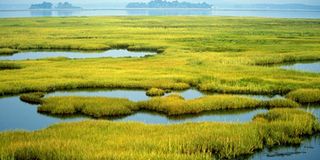
Morogoro. Environmental stakeholders have identified four priority measures to halt the degradation of Tanzania’s wetlands, warning that stronger action is needed to protect ecosystems facing growing pressure despite ongoing conservation efforts. They say meaningful community participation, alternative livelihood opportunities, stricter enforcement of environmental laws and closer coordination among government institutions are critical to safeguarding wetlands that support biodiversity, food production and water security.
The Citizen investigation established that limited public awareness of wetland conservation has contributed significantly to the degradation of the Kilombero River Valley, one of Tanzania’s most important ecosystems. The valley supports agriculture and supplies water to the Julius Nyerere Hydropower Project (JNHPP).
Poor understanding of the ecological and economic value of wetlands has fuelled farming, livestock grazing, brick-making, logging and charcoal production in sensitive water catchment areas. Indiscriminate disposal of waste, including empty agrochemical containers that end up in rivers, has further accelerated environmental degradation.
The founder of Khanyi Foundation, an environmental organisation, Ms Anabahati Mlay, says lasting wetland conservation depends on educating communities about the importance of wetlands while equipping them with sustainable livelihood opportunities.
“To save wetlands, we must work closely with local communities by helping them understand their value and teaching them how to pursue economic activities sustainably without harming the environment,” she says. Beyond raising environmental awareness, she says communities should receive entrepreneurship training and support for alternative income-generating activities to reduce dependence on practices that degrade wetlands and water sources.
Ms Mlay adds that residents also need a better understanding of environmental laws and the consequences of violating them, arguing that enforcement should complement education rather than rely solely on punitive measures.
Drawing on the foundation’s work in Marangu, Kilimanjaro Region, she says local communities, particularly women, have been supported to plant indigenous trees, while some village and street governments have allocated funds to purchase seedlings. She also advocates introducing environmental education from an early age so that conservation becomes part of everyday life.
Schools, she says, should place greater emphasis on practical environmental learning instead of relying largely on classroom theory.
According to Ms Mlay, conservation should not depend on short-term government or donor-funded projects but become a lasting community responsibility embedded in everyday life.
The projects officer for the Community Wildlife Management Areas Consortium (CWMAC), Mr Franklin Masika, says growing demand for fertile farmland and the movement of pastoralists into the Kilombero Valley are intensifying pressure on wetlands.
He notes that between 2015 and 2020, the government implemented land-use planning in Malinyi, Ulanga and Kilombero districts by preparing village land-use plans and issuing customary certificates of land rights. However, weak implementation and enforcement remain major challenges. Mr Masika recommends sustained public awareness campaigns, improving rice productivity on existing farmland to reduce expansion into wetlands, and introducing livestock management systems that prevent grazing in water catchment areas.
Another environmental stakeholder from Kilombero District, Mr Said Mwendabwillah, warns that unless urgent action is taken, continued wetland degradation could have severe long-term environmental consequences.
He says findings from a 28-day study in parts of the valley revealed widespread deforestation, cultivation close to water sources, uncontrolled grazing and indiscriminate disposal of plastic waste, all of which continue to threaten the ecosystem.
He urges authorities to introduce alternative livelihood projects, including beekeeping and cage fish farming, while strengthening environmental education programmes.
Environmental ambassador Mr Selemani Msindi says Tanzania also needs stronger policy coordination among the ministries responsible for environment, water, lands, agriculture, livestock, and mining to eliminate institutional overlaps that undermine conservation.
However, Deputy Minister in the Vice President’s Office (Union and Environment), Mr Reuben Kwagilwa, says wetland management already operates under a coordinated legal framework involving ministries responsible for water, local government, lands, agriculture and mining.
He says there is no conflict of mandates because each institution operates within its legal responsibilities.
Coordination mechanisms, including environmental impact assessments overseen by the National Environmental Management Council (NEMC), ensure development projects comply with environmental standards.
Mr Msindi nevertheless maintains that communities living near wetlands should be provided with alternative energy sources, livestock watering facilities, designated farming areas and irrigation schemes to reduce pressure on forests and water catchment areas.
He also calls for environmental laws to be enforced fairly and without political interference, arguing that conservation efforts must focus more on rural water catchment areas, where environmental degradation often begins.
Register to begin your journey to our premium contentSubscribe for full access to premium content