Dar es Salaam. Tanzania has begun strengthening leadership capacity in the health sector through the second phase of the Programme for Leadership Development to Transform and Strengthen the Health Sector in Africa (PHLTA), a move aimed at improving the delivery of health services in the country.
The programme has brought together Regional Medical Officers (RMOs), District Medical Officers (DMOs), as well as officials from the Policy and Planning Department of the Ministry of Health.
The officials in the sector over the weekend received specialised leadership training to address health system challenges.
This step comes at a time when the country’s health sector is facing a changing disease burden, increasing demand for services, and operational challenges, a situation that requires leaders capable of making effective decisions and delivering positive outcomes for citizens.
The government, in collaboration with the World Health Organisation (WHO), designed and launched the programme following the 2020 resolution by African health ministers to build a new generation of transformative leaders in the health sector.
A training needs assessment conducted in 2024 in collaboration with Muhimbili University of Health and Allied Sciences (Muhas), the Centre for Educational Development in Health Arusha (CEDHA) as well as RMOs, found that despite the availability of technical training, it has not been adequately translated into effective and practical leadership.
Through PHLTA, participants are encouraged to begin by questioning the vision of the health sector they are building and the future of Africa as a whole, while being taught systems-thinking approaches that enable them to view the entire system rather than addressing challenges from a narrow perspective.
Additionally, the training emphasises the importance of shifting from a fixed mindset to a growth mindset, focusing on reflection, continuous learning and the ability to adapt to change.
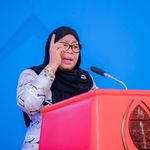
Dr Vivian Wonanji of the Ministry of Health’s Directorate of Policy and Planning speaks during the event. PHOTO | HERIETH MAKWETTA
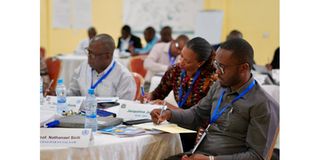
Participants demonstrated high engagement during the training, sharing experiences of real challenges they face in their workplaces, including team performance, communication, staff motivation and service delivery constraints.
Speaking about the programme, WHO Health Systems Coordinator Dr Thomas Tefoyet said that, unlike other countries that focus on top-level leaders, Tanzania has invested more in leaders closer to service delivery.
“By strengthening the leadership of RMOs and DMOs, we expect to increase staff motivation, improve performance, and enhance the quality of health services,” he said.
Prof Nathanael Sirili of MUHAS said the institution is collaborating with the Ministry of Health and the Prime Minister’s Office to ensure the sustainability of the programme.
“MUHAS plans to develop specialised health leadership curricula tailored to Tanzania’s context, as well as build the capacity of participants to become trainers who will disseminate the training nationwide,” he said.
The PHLTA programme focuses on three leadership areas: leading self, leading teams, and leading institutions.
Participants begin with self-awareness, then build the capacity to manage teams and ultimately move towards strategic institutional transformation.
After the training, participants are expected to enter a six-month implementation phase, where each will design and implement a project to improve health services in their area, receiving close mentorship and follow-up.
Through the WHO-supported programme, Tanzania aims to develop health leaders capable of adapting, learning, and leading reforms that will improve healthcare services for citizens.