Tanzania begins bold journey towards $1 trillion economy by 2050
The Permanent Secretary in the President's Office – Planning and Executive Secretary of the National Planning Commission, Dr Tausi Kida (right), with Tanzania's Permanent Representative to the United Nations, Ambassador Togolani Mavura.
New York. Tanzania has begun implementing the Fourth Five-Year National Development Plan (FYDP IV) for 2026/27–2030/31, the first medium-term plan under the National Development Vision 2050, which seeks to transform the country into a $1 trillion upper-middle-income economy by 2050.
The Permanent Secretary in the President's Office – Planning and the National Planning Commission executive secretary, Dr Tausi Kida, announced the move during a side event at the 2026 United Nations High-level Political Forum on Sustainable Development (HLPF) at the UN headquarters in New York.
Speaking at the forum, themed Driving Industrial and Inclusive Economic Transformation: Financing, Innovation and Sustainable Growth in Agricultural and Blue Economy Value Chains, Dr Kida said Tanzania was entering a new phase of development focused on translating sustained economic growth and infrastructure investment into higher productivity, quality jobs, increased exports, value addition and shared prosperity.
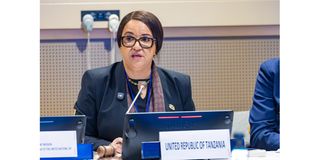
Permanent Secretary in the President's Office – Planning and the National Planning Commission executive secretary, Dr Tausi Kida
She said the economy is currently growing at 5.9 percent and is projected to expand to 6.3 percent by the end of 2026, driven by stronger performance across productive and service sectors, alongside continued investment in strategic infrastructure.
"Our goal is not simply to expand the size of the economy, but to deliver inclusive growth that raises incomes, creates jobs, reduces poverty and enables women, young people, smallholder farmers and entrepreneurs to participate fully in economic development," said Dr Kida.
She noted that agriculture, forestry and fisheries contributed 24.3 percent of Tanzania's gross domestic product (GDP) in 2025, while the fisheries sector's contribution rose from 1.9 percent in 2020 to 2.2 percent in 2025, reflecting growing opportunities in the blue economy.
Dr Kida said the government was committed to shifting the economy from exporting raw materials to producing higher-value manufactured goods through processing, technology adoption and stronger linkages between local producers and domestic, regional and international markets.
She also announced that Tanzania will present its Third Voluntary National Review on implementation of the Sustainable Development Goals (SDGs) on July 14, 2026, highlighting progress in clean water, energy, infrastructure, healthcare, transport, digital technology and domestic resource mobilisation.
Tanzania's Permanent Representative to the United Nations, Ambassador Togolani Mavura, said Africa's industrial transformation must be inclusive, benefiting smallholder farmers, women, young people, fishers, pastoralists, small businesses and participants in the informal economy.
He called for stronger regional and international partnerships in technology, investment, trade, skills development, development finance and value chain integration.
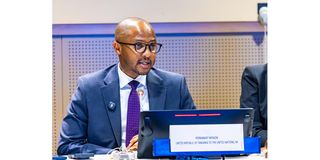
Tanzania's Permanent Representative to the United Nations, Ambassador Togolani Mavura
The United Nations Capital Development Fund (UNCDF) chief financial officer, Mr Karen Vardanyan, cited Tanzania as an example of how innovative financing can accelerate national and local development.
He said access to clean cooking energy had increased from 6.9 percent in 2021 to 28.6 percent in 2025, supported by the National Clean Cooking Energy Strategy, private sector investment and government initiatives.
Mr Vardanyan also highlighted the Tanga UWASA Green Revenue Bond, which raised $20.8 million for climate-resilient water infrastructure.
The bond was the first sub-national green bond issued in East Africa, with domestic investors contributing 65 percent of the total investment.
Other initiatives showcased included the PesaTech Accelerator, which supports youth-led financial innovation and enterprises, and the LoCAL facility, which helps local government authorities mobilise climate-resilient investment.
The forum concluded that delivering Vision 2050 and FYDP IV will require close collaboration among the government, the private sector, financial institutions, the United Nations, development partners, civil society and local communities.
Under Vision 2050, Tanzania aims to become an upper-middle-income economy with a gross domestic product of $1 trillion, per capita income exceeding $7,000 and the eradication of poverty by 2050.