Tanzania demands diversified climate finance as philanthropy steps in to close Africa’s funding gap at UNEA-7
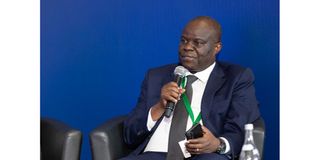
Tanzania’s Presidential Adviser on Climate Change and Chair of the African Group of Negotiators (AGN), Dr Richard Muyungi, speaking during a side event at the UNEA-7 conference in Nairobi, Kenya.
Josephine Christopher is a senior business journalist for The Citizen and Mwananchi newspapers
Mwananchi Communications Limitted
Nairobi. Tanzania has called for a more diversified and accessible climate-financing architecture, urging stronger collaboration between philanthropy, governments and multilateral agencies to address Africa’s chronic funding gaps.
Speaking during a high-level panel on “Philanthropy and UNEP: Driving Collective Action for a Healthy, Prosperous and Resilient Planet” at UNEA-7 in Nairobi, Tanzania’s Presidential Adviser on Climate Change, Dr Richard Muyungi, said philanthropic capital can play an increasingly catalytic role in unlocking the resources African countries need to meet their climate goals.
“This partnership is already happening in Tanzania,” he said. “We have worked with philanthropic organisations to advance clean cooking, expand access to energy and support community-level climate projects. Philanthropy fills critical gaps where traditional financing has been slow or inaccessible.”
Dr Muyungi noted that Africa continues to receive a disproportionately small share of private climate finance — just 4 per cent globally — despite being among the regions most affected by climate change.
“This is why philanthropy matters,” he said.
“We need first movers and risk-takers who can unlock opportunities that commercial or institutional investors may hesitate to pursue. A systematic approach — where philanthropy works together with government, the private sector and climate funds — can make a significant difference.”
He emphasised that UNEP has a strategic role in facilitating access to climate finance by strengthening countries’ technical capabilities, guiding proposal development and helping governments meet the stringent requirements of climate funds.
Africa faces persistent challenges in accessing major global climate-financing mechanisms. Dr Muyungi cited several funds — including the Green Climate Fund (GCF), the Adaptation Fund, the Global Environment Facility (GEF), the Loss and Damage Fund and the Least Developed Countries (LDC) Fund — which hold substantial resources but remain difficult for many African states to access.
“Accessing these funds has been a challenge for Tanzania and the wider continent,” he said.
“This is where philanthropy can come in — not to replace these mechanisms, but to support readiness, build capacity and help countries meet the complex technical thresholds required for approval.”
He added that in Tanzania, philanthropic partnerships are increasingly taking shape at community level, driving small-scale climate solutions. These initiatives serve as proof-of-concept pilots that can later attract larger investment.
He called for more structured partnerships between philanthropic foundations, African governments, UNEP and the African Group of Negotiators (AGN), which he chairs.
On the sidelines of UNEA-7, Dr Muyungi also held bilateral meetings with senior officials from the African Union Commission and the UNFCCC.
Discussions focused on securing a unified African voice in climate negotiations, increasing Tanzania’s representation in key climate institutions through appointments and secondments, strengthening national and regional capacity-building efforts, and aligning African countries around shared climate priorities ahead of COP30.
He said these engagements are essential to ensure that Tanzania not only benefits from global climate processes but also contributes meaningfully to shaping them.
As UNEA-7 enters its third day, Tanzania’s message remains clear: addressing climate change in Africa requires more diversified financing, stronger institutional readiness and deeper partnerships across both traditional and non-traditional actors.
UNEA-7 continues this week in Nairobi, with negotiations expected to shape global environmental priorities for 2025–2026.
Register to begin your journey to our premium contentSubscribe for full access to premium content