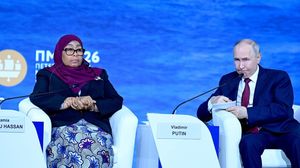
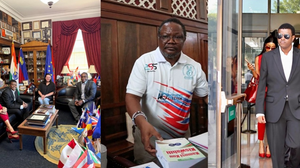
Dar es Salaam. Tanzania expects to attract investments and business worth more than $2 billion (about Sh5.2 trillion) from Russia over the next three to five years following President Samia Suluhu Hassan’s recent state visit and participation in the St Petersburg International Economic Forum (SPIEF).
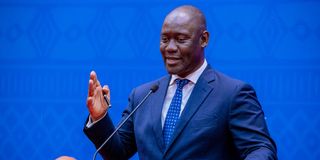
The projection was announced on Sunday, June 7, 2026, by the Ministry of Foreign Affairs and East African Cooperation’s Director of Economic Diplomacy, Ambassador John Ulanga, during a briefing on the outcomes of the visit.
He said the trip had opened new opportunities for trade and investment, with major Russian companies expressing interest in several strategic sectors.
“Based on the discussions held on trade and investment, we are confident that within the next three to five years, Tanzania will attract investments, and business worth more than $2 billion," he said
"This will position Russia among Tanzania’s key development partners,” he added.
The health sector emerged as one of the most promising areas of cooperation, with Russian firms expressing interest in pharmaceutical manufacturing, and vaccine production.
“Russian companies have indicated that within the next five years they can partner with Tanzania to produce up to 20 million vaccine doses locally for both domestic use and regional markets,” Mr Ulanga said.
He attributed the growing interest to President Hassan’s economic diplomacy, which has promoted Tanzania as an attractive destination for investment, trade and tourism.
The mining sector was identified as another key area of interest, particularly strategic minerals such as uranium, nickel and other critical minerals used in modern technologies.
Furthermore, Mr Ulanga said Russian energy companies, including Gazprom, had also shown interest in participating in Tanzania’s oil and gas exploration and development projects.
Agriculture featured prominently in the discussions, with investors exploring opportunities in modern farming technologies, agro-processing and value addition for export products such as cashew nuts, coffee and tea.
The technology sector also attracted attention, with Russian firms seeking partnerships with Tanzanian start-ups to support innovation, and strengthen the country’s digital economy.
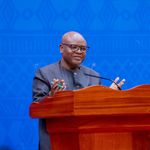
Minister of State in the President’s Office (Planning and Investment), Prof Kitila Mkumbo, said the visit had also delivered significant gains in education, science and technology cooperation.
He said agreements signed between the two countries would facilitate recognition of academic qualifications and create opportunities for students to pursue dual-degree programmes.
“As we implement Vision 2050, we must seek investment opportunities across the world. This visit has opened another important door and will contribute to economic growth,” he said.
Prof Mkumbo added that the Dar es Salaam Institute of Technology (DIT) had signed cooperation agreements with Russian institutions to strengthen training and research in artificial intelligence, machine learning, and data science.
The partnerships are expected to enhance Tanzania’s digital skills base and support efforts to build a competitive digital economy.
Foreign Affairs and East African Cooperation Minister, Mr Mahmoud Thabit Kombo, said the visit came at a time when Russia is expanding its engagement with African countries in trade, investment, and development cooperation.
He said Tanzania had positioned itself strategically within Russia’s broader Africa agenda, strengthening its profile as a destination for investment, and economic partnerships.
“The visit has enabled Tanzania to position itself within Russia’s wider strategy of expanding cooperation with African countries in trade, investment and development,” he said.
Mr Kombo also highlighted education as a key area of benefit, noting that Russia had continued expanded scholarship opportunities for Tanzanian students.
He said the scholarships would help develop a new generation of Tanzanian professionals in science, technology, engineering and other fields critical to national development.
“These opportunities will increase the number of Tanzanian experts in science, technology, engineering, and other key sectors essential to the country’s development agenda,” he said.