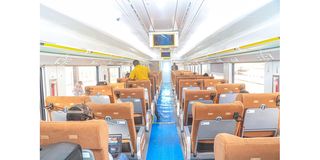
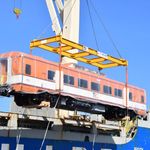
Kibaha. The Land Transport Regulatory Authority (Latra) is considering to establish a specialised training facility for railway personnel in a move aimed at strengthening safety standards and professionalism in the country’s expanding rail transport sector.
The proposed facility, to be known as the Railway Critical Workers Competency Testing Centre (RCWTC), is expected to serve as a regional hub for training and certifying locomotive drivers and other railway crew.
Preliminary estimates place the cost of the project at about $800 million, although a detailed feasibility study is yet to be conducted.
Latra Acting Director of Railway Transport Regulation, Moses Nyoni, said the initiative is anchored in Regulation 4(1) and Regulation 17 of the Latra (Certification of Train Drivers and Registration of Train Crew) Regulations, Government Notice No. 80 of 2020, which require train drivers and crew to be certified before operating trains.
Mr Nyoni was speaking during a Latra workshop for journalists in Kibaha, where he presented on railway and cable transport regulation.
“The proposed centre will help improve drivers’ competence, reduce railway accidents linked to human factors, strengthen compliance with regulatory standards and enhance overall safety in railway transport services,” he said.
He added that the facility would also support Tanzania’s commitments under regional integration frameworks, particularly the East African Railway Interconnectivity Project.
“We have already met regional requirements under the East African framework. The protocol requires member states planning to develop railway systems to also establish training infrastructure for personnel,” he said.
Mr Nyoni noted that Tanzania’s role in the Central Corridor, as well as its links to the Southern African railway network through the Southern African Railways Association, especially along the Tanzania–Zambia Railway Authority route, makes harmonised railway standards essential to avoid operational challenges across borders.
He also cited limited public awareness about railway transport as a challenge, noting that many Tanzanians previously had little exposure to train travel.
However, he said the introduction of the Standard Gauge Railway (SGR) has significantly boosted public awareness and interest in rail services.
Mr Nyoni further observed that the sector faces a shortage of skilled personnel, as many experienced professionals approach retirement while the number of young specialists remains limited.
He encouraged young people to pursue careers in railway engineering and related technical fields to support the country’s growing rail industry.
He also commended the government’s open access policy in the railway sector, saying it has created opportunities for increased private sector participation in service delivery and infrastructure development.