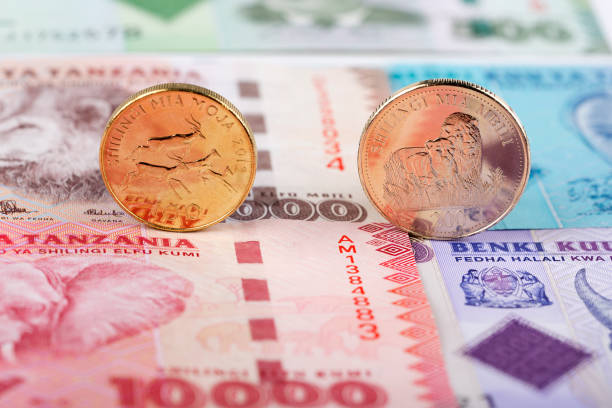
Dar es Salaam. Members of Parliament have urged the government to ensure that the country sustains annual economic growth of more than eight percent to realise its ambition of becoming a $1 trillion economy by 2050, with gross domestic product (GDP) per capita rising to $7,000.
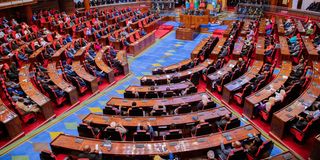
Debating the One-Year Development Plan and the 25-Year Development Plan in Parliament, MPs said while the targets are achievable, they will require faster growth, stronger private sector participation, expanded energy production and improved infrastructure.
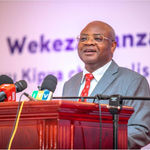
They identified agriculture, mining, tourism and industry as key productive sectors that must drive the country’s long-term economic transformation. Musoma Rural MP Sospeter Muhongo said Tanzania’s vision is clear that by 2050 the economy should be worth $1 trillion, with average income per person reaching $7,000. “This target is achievable if the right investments are made, particularly in major infrastructure and irrigation projects that directly benefit rural communities,” he said.
However, Prof Muhongo cautioned that the current pace of growth remains insufficient. “While projections assume growth of around eight percent, the economy is currently growing at about 6.3 percent. For nearly two decades, average growth has hovered around six percent, and historically Tanzania has reached seven percent growth only once,” he said.
He cited China’s experience, noting that its GDP expanded from $150 billion in 1978 to $1.7 trillion 25 years later, supported by annual growth of between 9.1 and 10.1 percent.
He argued that Tanzania’s development plans would fall short unless growth rises above eight percent. Prof Muhongo proposed increasing the contribution of productive sectors to GDP to push growth closer to 10 percent, suggesting agriculture growth of 15 percent, natural gas 25 percent, mining 20 percent, tourism 15 percent, fishing and livestock three percent, and music and culture two percent.
He also called for the establishment of natural resource wealth funds, including a national sovereign wealth fund, to support long-term development. Tarime Urban MP Esther Matiko raised concerns about energy supply, noting that the long-term plan targets electricity generation of 70,000 megawatts by 2025, up from about 4,000 megawatts currently.
“Although the country has potential sources such as solar, geothermal, coal, wind and gas, many of these projects take a long time to implement. Major projects such as Mchuchuma and Liganga remain long-term, while several wind projects are still incomplete,” she said.
Ms Matiko stressed that private sector participation in power generation is critical, describing energy as the backbone of economic growth. She cited China as an example of how reliable power supply underpins industrialisation.
On income targets, she said the ambition to reach $7,000 GDP per capita by 2050 must be matched with realism, noting that the current figure stands at about $1,275.
To achieve the target, she said the economy would need to grow at around 10 percent annually, with 70 percent of growth driven by the private sector and 30 percent by the government. She pointed to Singapore, South Africa and Rwanda as examples of economies where private sector activity plays a dominant role.
Ms Matiko also called for regional economic assessments to identify investment opportunities, citing mining, fishing and underutilised tourism resources in Mara Region.
Kigamboni MP, Haran Sanga, said low agricultural productivity and the absence of large-scale commercial farming were inconsistent with Tanzania’s economic ambitions. He emphasised the importance of manufacturing, describing industry as the backbone of a strong economy.
“Kigamboni has about 342 factories, with industrial growth supported by road construction and the development of industrial corridors,” he said, adding that new factories would also boost government revenue through taxes.
Nachingwea MP Fadhili Liwaka said government agricultural plans aim to raise production and farmers’ incomes through subsidies and improved inputs, but warned that poor road connectivity between districts and regions remains a major constraint.
He said improved transport infrastructure is essential if agriculture is to drive broader economic growth.
Meanwhile, Hanang MP Asia Halamga said Manyara Region should be strategically positioned for industrial development due to its proximity to neighbouring countries, including Kenya.
“The region is rich in raw materials such as salt, tanzanite, ruby, green garnet and green tourmaline, among others, which could support expanded economic activity,” she said.