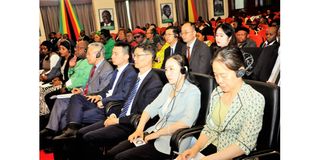
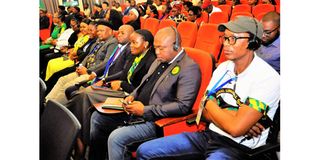
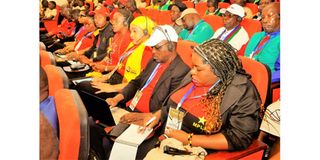
Kibaha. A Research Center for Xi Jinping Thought on Socialism with Chinese Characteristics for a New Era by the philosophy and approaches of Chinese President Xi Jinping has been launched on Wednesday, May 20, 2026, in Kibaha, Tanzania's Coast Region.
The centre has been launched as Southern African liberation movements seek new approaches to transform their economies and alleviate poverty.
The centre, established at the Mwalimu Nyerere Leadership School, is expected to serve as a platform for leaders and officials from six Southern African liberation movements to study China’s development experience and exchange ideas on improving citizens’ welfare.
The facility has already received more than 200 books and publications detailing China’s economic policies, poverty reduction strategies, and development experience, which Chinese authorities say contributed to lifting more than 800 million people out of poverty between 2012 and 2021.
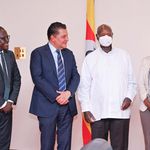
Leaders attending the launch represented liberation movements from six countries, including Tanzania’s CCM, South Africa’s ANC, Namibia’s SWAPO, Angola’s MPLA, Mozambique’s FRELIMO, and Zimbabwe’s ZANU-PF.
Speaking during the launch, CCM Secretary-General, Dr Asha-Rose Migiro, said the longstanding solidarity among Southern African liberation movements should be preserved because it continues to play an important role in promoting development across the region.
She said the establishment of the centre marks a new chapter of cooperation aimed at strengthening efforts to combat poverty through the exchange of development experiences and policy ideas.
“This unity has a long history linked to the liberation and development of our people. We believe this centre will strengthen efforts to fight poverty and improve the lives of citizens,” she said.
Head of the Tanzanian delegation, Mr Richard Kasesela, said the centre would become an important hub for learning how China implemented its development strategies and transformed the lives of millions of citizens within a relatively short period.
He said leaders and officials from the participating movements are expected to meet regularly for training on rural development, infrastructure investment, use of technology, and economic empowerment initiatives.
“China has shown how practical development policies can rapidly improve people’s lives. This is valuable experience for African countries seeking economic transformation,” he said.
Principal of the Mwalimu Nyerere Leadership School, Prof Marcelina Chijoliga, said the centre was established through cooperation among the secretaries-general of the six liberation movements and would strengthen the institution’s role in leadership and development training.
“This is a leadership institution where we train different groups, including public servants and private sector stakeholders, to strengthen their skills and improve performance in their responsibilities,” she said.
According to organisers, the centre is expected to strengthen cooperation between China and Southern African countries, build leadership capacity, and support research on strategies for reducing poverty and improving economic development.
Many countries within the Southern African bloc continue to face significant economic challenges despite possessing abundant natural resources.
Tanzania, for example, continues to invest heavily in infrastructure projects such as the standard gauge railway, energy, ports, and mining, while a large share of the rural population still depends on agriculture for livelihoods.
South Africa, despite remaining Africa’s largest economy, continues to struggle with high unemployment and widening income inequality.
Zimbabwe is still battling inflation and economic instability that continue to affect the daily lives of ordinary citizens.
Angola and Mozambique remain heavily dependent on oil and gas revenues, while unemployment and limited social services continue to be major public concerns.
Namibia also faces persistent unemployment, particularly among young people, alongside growing concerns over income inequality.
The alliance among Southern African liberation movements dates back to the 1960s during anti-colonial and anti-apartheid struggles, when the parties worked together politically and diplomatically to support independence movements across the region.
Under the late Mwalimu Julius Nyerere, Tanzania played a central role in supporting liberation movements by providing shelter, training, and logistical assistance to freedom fighters from different Southern African countries.
Following independence, the liberation movements continued to maintain political, economic, and social cooperation aimed at advancing regional solidarity and improving the welfare of citizens.