Dar es Salaam. The government has announced plans to construct more than nine dams along the Standard Gauge Railway (SGR) corridor in a bid to control recurring floods and strengthen climate resilience in vulnerable parts of the country.
Prime Minister Mwigulu Nchemba said the projects will start in Morogoro, Mpwapwa and Dodoma, areas that have repeatedly experienced flooding and environmental degradation in recent years.
“As I speak, funds for the construction are already available and the works will begin immediately,” he said.
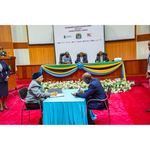
Dr Nchemba made the remarks during the commemoration of the 40th anniversary of the National Environment Management Council (NEMC), where he called for stronger environmental conservation measures and greater public participation in protecting natural resources.
He warned that pressure on land use is increasing due to rapid urbanisation, population growth and unsustainable environmental practices, saying urgent action is needed to prevent further degradation.
He noted that Dodoma, once sparsely populated, has in recent years expanded rapidly, with urban growth increasingly merging with surrounding areas.
According to him, rising competition for land for agriculture, settlement and livestock keeping has accelerated environmental stress in several regions.
“We are creating a disaster for ourselves if we fail to change our ways. What we are witnessing today is a result of environmental destruction and climate change,” he said.
The Prime Minister urged local government authorities, the private sector and communities to improve waste management systems, including waste segregation and recycling initiatives.
He said innovation is already enabling some communities and youth groups to convert waste into useful products such as bricks and other construction materials, creating both environmental and economic benefits.
“In some areas, young people are turning materials that were once considered environmental hazards into valuable products. These initiatives should be supported and expanded through cooperation with local government authorities,” he said.
Dr Nchemba stressed that environmental protection should not be seen as the responsibility of a single institution, but as a shared national duty involving all stakeholders.
He reaffirmed the government’s commitment to advancing a green economy, with increased investment in innovation and youth-driven technologies that promote sustainable development.
Former Controller and Auditor General (CAG), Ludovick Utouh, called for stronger institutional coordination, improved legal frameworks and increased funding to enhance environmental management.
He said overlapping mandates among institutions were undermining efficiency in enforcement and policy implementation.
Mr Utouh also urged full operationalisation of the National Climate Change Coordination Committee, alongside stricter enforcement of environmental laws.
“There is a need for integrated implementation systems and stronger cooperation among relevant institutions to improve environmental governance,” he said.
Register to begin your journey to our premium contentSubscribe for full access to premium content