Dar es Salaam. Tanzania’s reconciliation efforts face a difficult test: political actors increasingly agree that dialogue is necessary, but deep mistrust between them is raising a more fundamental question — who can be trusted to bring the country’s divided political camps together?
Political analysts say Tanzania has already crossed an important first hurdle by acknowledging that the country needs to address its political divisions. The bigger challenge now, they argue, is finding a trusted mediator who can bring competing sides into a process accepted by all.
University of Dar es Salaam political analyst Salbinus David said the focus should now shift towards identifying a person or institution capable of commanding confidence across the political divide.
“At first, we were saying that people did not want to accept the truth. Now we are saying that what is needed is someone who can bring these people together. We must look for someone who can work with everyone so that we can be on the same page,” he said.
Mr David said religious leaders could have an advantage because they appeared to be acceptable to different sides.
“Some do not want outsiders, while others want them. Some do not want only people from within, while others do. The group that appears likely to have the greatest opportunity is religious leaders because they seem to be accepted and understood by both sides,” he said.
Political analyst and University of Dar es Salaam law lecturer Dr Onesmo Kyauke said the reconciliation process would depend heavily on the intentions of those involved and their willingness to put national interests ahead of political interests.
“Intentions are the most important thing. The situation has shown that we can return to normal, but what is now needed is to involve all the key groups and understand what they believe in most. That is the position the nation should follow,” he said.
“Regardless of the interests of politicians and their parties alone, it is important to see what type of mediator citizens choose through different groups, and that mediator should lead the entire process to the end without interference from the system or any political party.”
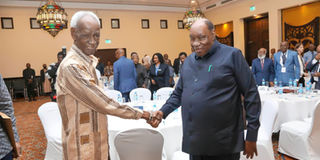
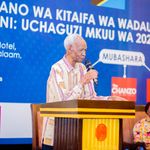
The concerns were reflected at the Tanzania Centre for Democracy (TCD) National Conference in Dar es Salaam, where political parties, religious leaders, diplomats, civil society representatives and other stakeholders called for dialogue and reforms following the divisions and violence surrounding the 2025 General Election.
But while participants largely agreed on the need for dialogue, their positions showed that trust remains fragile.
Former Prime Minister Joseph Sinde Warioba said political competition had contributed to divisions when parties began treating opponents as enemies rather than fellow citizens. “The coming of multiparty politics turned the country into a new type of discrimination; political parties became new tribes,” he said.
Mr Warioba said Tanzania needed credible electoral institutions and genuine political competition to restore public confidence in the democratic process.
For ACT-Wazalendo Mainland Vice-Chair Isihaka Rashid Mchinjita, however, the problem goes beyond the absence of laws. He said existing rules were sometimes not respected, creating doubts about whether reforms would deliver meaningful change.
“It is not a question of whether the laws favour someone; it is a question of the laws being trampled on and State organs being used,” Mr Mchinjita said.
The issue of trust was also central to Chadema’s position. Secretary-General John Mnyika said the party could not make a decision on reconciliation while its chairman, Tundu Lissu, remained in prison, insisting that any decision would have to follow the party’s established procedures.
Mr Mnyika also questioned whether mechanisms established by the Government could command sufficient confidence among political opponents.
“Those who were entrusted with reconciliation in the past failed because, while they were preaching peace, State security organs continued to commit acts of brutality,” he said.
He called for religious leaders to play a role as internal mediators, working alongside international mediators.
Mr Mnyika said reconciliation also required the country to address what he described as the truth, justice and accountability questions surrounding the October events.
“The first thing is to seek truth, justice and accountability regarding the October events by conducting an independent investigation,” he said.
He warned that failure to address those concerns could prolong political tensions.
“If we do not seek truth, justice and accountability through an independent investigation into October, the nation will continue to have a chain of conflicts within the ruling party, within the Government and among citizens,” he said.
TCD Chairperson Dorothy Semu said the country needed institutions that could protect democracy regardless of who was in power.
“We want institutions that are stronger than individuals, laws that are stronger than the whims of leaders, and a Constitution that governs and protects the rights of all Tanzanians,” she said.
Her argument points to another dimension of the trust problem: political actors may be reluctant to accept a reconciliation process if they believe institutions can be influenced by whoever holds power.
CHAUMMA Director of Information, Communication and Public Information John Mrema said reconciliation would also require the country to confront the issues that have created political divisions.
“If we are trying to build national consensus, we must look at the sources of these things that are dividing us so that we can find a remedy,” he said.
Veteran journalist Salim Mohamed Salim was more direct, linking successful political reform to goodwill among the parties.
“Where there is no goodwill, you cannot do anything,” he said.
CCM Mainland Deputy Secretary General Agrey Mwanri, however, said the ruling party was prepared to listen to concerns raised during the conference and acknowledged shortcomings in the electoral process.
“There are shortcomings that appear to have occurred, and if we remove these shortcomings, there is a possibility that we will not see a situation like this,” Mr Mwanri said.
National Council of Political Parties Chairman Juma Ali Khatib urged political actors to stop assigning blame and instead work together to prevent a repeat of the 2025 crisis.
“I think now is the time to sit together, as Tanzanians, and discuss the best way and strategies to ensure what happened does not happen again,” he said.
Register to begin your journey to our premium contentSubscribe for full access to premium content