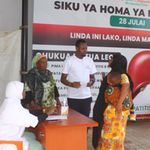
Dar es Salaam. Tanzania has reduced inappropriate antibiotic consumption by 88 percent and cut deaths linked to antimicrobial resistance (AMR) by 14 per cent, marking a significant milestone in efforts to contain a growing global public health threat.
This was revealed on Wednesday at the 17th University-Wide Research Dissemination Symposium organised by Muhimbili University of Health and Allied Sciences (MUHAS), where experts reviewed progress and remaining gaps in the country’s response to AMR.
The chairperson of the Antimicrobial Resistance Multi-Sectoral Coordination Committee (MCC), Prof Hezron Nonga, said the gains were driven by implementation of Tanzania’s Second National Action Plan on AMR (2023–2028), which adopts a One Health approach linking human, animal and environmental health.
He said Tanzania had strengthened surveillance systems, expanded data-sharing platforms, increased domestic financing and intensified public awareness campaigns to curb misuse of antibiotics.
Prof Nonga said the country had progressed from virtually no AMR response capacity in 2016 to strong institutional and technical systems by 2024, but warned that AMR remained a serious threat to health systems, food security and economic development.
Globally, AMR is associated with an estimated 4.71 million deaths annually, including 1.14 million directly caused by drug-resistant bacterial infections.
Tanzania has intensified public awareness through introduction of the Swahili term Usugu wa Vimelea vya Magonjwa Dhidi ya Dawa (UVIDA) and the nationwide Holelaholela Itakukosti campaign, reaching 24.7 million people and earning recognition from Africa Centre for Disease Control (CDC).
Prof Nonga said compliance with infection prevention and control measures in health facilities had improved by 60 percent, while expanded livestock vaccination, biosecurity and food safety measures had reduced disease outbreaks and unnecessary antimicrobial use in the animal sector.
Head of Cooperation at the French Embassy in Tanzania, Luc Blanco, said AMR is among the world’s leading public health challenges and reaffirmed France’s support for One Health initiatives, noting that stronger collaboration and data sharing were essential.
He highlighted the French-funded HATUA project implemented in Tanzania, Kenya, Uganda and Ethiopia as an example of regional cooperation strengthening surveillance and evidence-based interventions.
MUHAS Deputy Vice Chancellor for Planning, Finance and Administration, Prof Erasto Mungu, said AMR threatens to reverse decades of medical progress by making common infections increasingly difficult to treat.
He said the university would continue producing research evidence to inform policy and support practical solutions to emerging health challenges.
The symposium was held under the theme “Advancing the Fight against AMR in Tanzania: One Health Updates on Progress Gaps and the Road Ahead.”
Register to begin your journey to our premium contentSubscribe for full access to premium content