Dar es Salaam. The Journalists Accreditation Board (JAB) has stepped up efforts to verify journalists’ qualifications nationwide, with inspections already conducted in Dodoma, Iringa and Morogoro as part of a drive to weed out unqualified practitioners from the profession.
The board has also introduced life membership accreditation for veteran journalists who were aged 50 years and above in 2016, following legal guidance allowing those with long service in the media industry to receive lifetime accreditation.
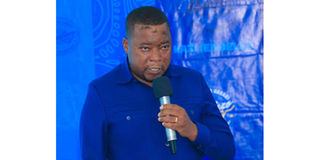
JAB director Patrick Kipangula said on Saturday, July 11, 2026, that the board was conducting region-by-region assessments to ensure all journalists practising in Tanzania meet academic and professional requirements stipulated by law.
“We want to satisfy ourselves that people working in the media have the qualifications and requirements stipulated by the law. Every person currently practising journalism must meet the required criteria,” remarked Mr Kipangula during the ongoing Dar es Salaam International Trade Fair popularly known as Sabasaba.
He said journalists whose accreditation had been revoked would only be reinstated after proving they met the required standards.
“Some issues are circulating on social media, but accreditation decisions are based on verification. If someone does not have the required qualifications, they cannot return to broadcasting or journalism until they meet the requirements,” he said.
Mr Kipangula said the board was verifying academic credentials to establish whether applicants attended recognised institutions, completed their studies, and obtained valid qualifications.
“For those who studied abroad, we verify whether their qualifications are equivalent to Tanzania’s education requirements, starting from diploma level,” he said.
He warned that journalists who failed to meet the required standards would not be allowed to continue practising.
“We are very strict on this matter. Those who do not qualify will not return, while those who meet the criteria will be allowed to continue serving the public,” he said.
The move comes amid concerns among media leaders over declining professional standards, limited resources and challenges affecting the quality of journalism.
Mwananchi Editor, Ms Lilian Timbuka, said the industry needed urgent reforms to restore professionalism.
“We want to see improvement. Every corner should have competent journalists who meet the required standards. The shortcuts and unprofessional practices happening now must stop,” she said.
Ms Timbuka said some media organisations continued to employ journalists without the necessary skills, a situation she warned could erode public confidence in the media.
She also called for economic support for media organisations, saying a financially stable media sector was essential for effective public accountability.
Nipashe Managing Editor, Ms Salome Kitomari, said financial constraints had weakened investigative journalism as many media houses could no longer afford field reporting.
“Today, many media houses cannot afford investigative journalism. If you send a journalist to another region to investigate a story, there must be resources to make that possible,” she said.
Tanzania Editors Forum (TEF) Chairman, Mr Deodatus Balile, said improving journalism required mentorship and stronger self-regulation, including the establishment of an independent media council to handle complaints.
He said experience should also be recognised alongside academic qualifications, particularly for veteran journalists.
“There are journalists who have worked in newsrooms since 1989. You cannot tell them today to go back and start a diploma course. They have knowledge and can mentor young journalists,” said Mr Balile.
Media Brains Editor, Mr Jesse Kwayu, said journalists needed more support to undertake challenging assignments, especially investigations, adding that technology should be used to strengthen accountability.
JAB Chairperson, Mr Tido Mhando, said 141 applications for accreditation had been rejected after applicants failed to meet the required criteria.