Josephine Christopher is a senior business journalist for The Citizen and Mwananchi newspapers
Mwananchi Communications Limitted
Dar es Salaam. Tanzania has signed agreements covering public-private partnership (PPP) investment in electricity transmission, expanded renal healthcare services and increased industrial use of natural gas as the country seeks to accelerate infrastructure development and economic transformation.
The agreements were signed on Wednesday, August 5, 2026, during the Africa50 General Shareholders’ Meeting and Infra for Africa Forum in Dar es Salaam.
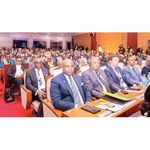
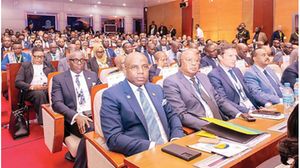
The forum brought together government institutions, development financiers and private-sector partners.
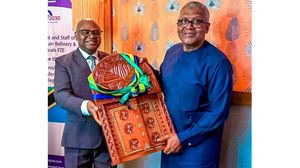
The signatories included Africa50, the Ministry of Health, the Tanzania Electric Supply Company (Tanesco), the Tanzania Petroleum Development Corporation (TPDC) and TAQA Arabia.
The agreements come as Tanzania continues to position itself as a regional trade and logistics hub while pursuing large-scale infrastructure projects under its long-term development agenda.
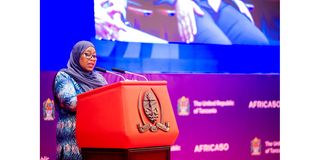
Addressing delegates, President Samia Suluhu Hassan said infrastructure development remains central to unlocking Africa’s economic potential, urging governments and development partners to move beyond planning and focus on implementation.
She said citizens measure development through reliable electricity, efficient transport networks, digital connectivity and employment opportunities rather than policy documents and strategies.
President Hassan said Tanzania was implementing the National Development Vision 2050, under which the government is investing in strategic infrastructure, including the expansion of the Port of Dar es Salaam, the Standard Gauge Railway (SGR), roads, bridges and key transport corridors.
She said the investments were intended not only to strengthen Tanzania’s economy but also to improve trade links with neighbouring countries, including Burundi, Rwanda, Uganda, Zambia, Malawi and the Democratic Republic of the Congo.
She also called on African countries to add value to their natural resources instead of exporting raw materials, saying industrialisation would create jobs, build technical skills and strengthen economic resilience.
Furthermore, President Hassan described natural gas as a strategic resource capable of supporting energy security and driving industrial growth across the continent.
Kenya’s Deputy President, Prof Kithure Kindiki, said delivering transformative infrastructure requires sustained political commitment, predictable policy frameworks and long-term planning.
He also called for stronger domestic technical capacity, innovative financing mechanisms and greater community participation to ensure infrastructure projects generate broad-based benefits.
Africa50 chairman and African Development Bank Group president Dr Sidi Ould Tah said the institution would continue supporting African governments to develop bankable infrastructure projects capable of attracting private investment.
He said Africa50’s second decade should prioritise faster project implementation, increased capital mobilisation and stronger partnerships among governments, development finance institutions and private investors.
The forum also brought together ministers from Tanzania, Mozambique, Nigeria and Senegal to discuss energy, industrialisation, natural gas development, value addition and cross-border infrastructure.
Participants heard that more than 600 million Africans still lack access to electricity, highlighting the continent’s significant infrastructure financing gap.
In Tanzania, access to clean cooking solutions has increased from six percent in 2021 to 28 percent in 2026, reflecting ongoing efforts to expand access to modern energy.
President Hassan commended Africa50 for supporting Africa’s infrastructure agenda and urged stakeholders to ensure that the agreements signed are translated into projects that deliver tangible improvements in people’s lives.