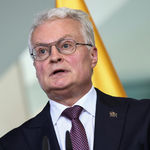
Dr Ulisubisya urged policymakers to adopt long-term health planning rather than focusing only on immediate challenges
Dar es Salaam. Tanzania’s healthcare system risks being overwhelmed by future challenges unless the country invests in a new generation of health professionals equipped with digital skills, artificial intelligence (AI) expertise and strong leadership capabilities, experts have warned.
Speaking at the opening of the 4th Human Resources for Health Conference yesterday, health leaders said Tanzania must shift from a treatment-focused approach to one that prioritises disease prevention while preparing young professionals to lead a rapidly changing health sector.
Muhimbili Orthopedic Institute (MOI) Executive Director Dr Mpoki Ulisubisya said the country’s health strategy must place greater emphasis on prevention.
“I don’t know of any country in the world where curative health services alone have solved the majority of a population’s health challenges,” he said.
“If we invest effectively in preventive healthcare, fewer people will fall sick, especially from preventable diseases. Prevention is one solution we cannot afford to ignore.”
Dr Ulisubisya urged policymakers to adopt long-term health planning rather than focusing only on immediate challenges.
“We need to stop looking only at what is available today. We must project ourselves into the future and prepare for the healthcare needs that are coming,” he said.
He identified artificial intelligence as one of the biggest opportunities for transforming healthcare, saying the technology could improve diagnosis, medical research and clinical decision-making.
“In the past, a doctor would spend hours searching medical libraries to understand a disease they had never encountered before. Today, artificial intelligence allows health professionals to access that knowledge almost instantly,” he said.
However, he cautioned that AI should support rather than replace healthcare workers.
“Artificial intelligence cannot replace the human mind because it has no compassion. It cannot understand inequalities or appreciate the social realities affecting patients. Technology should strengthen healthcare workers, not replace them,” he said.
Dr Ulisubisya also stressed the need for equal healthcare standards across the country, saying people in rural areas deserve the same quality of services as those in Dar es Salaam.
“The benchmarks for healthcare services in rural areas should be the same as those in Dar es Salaam because we are treating the same human beings,” he said.
He also highlighted the growing gap between the number of health graduates and available employment opportunities.
“The belief that every graduate should be employed by the government is no longer realistic,” he said.
“With a population approaching 70 million, no government can employ everyone. Young professionals must also be prepared to create opportunities through innovation and entrepreneurship.”
He said some professionals pursue higher qualifications mainly to secure administrative positions rather than improve patient care.
“We need to reward excellence in service delivery just as much as we reward academic advancement,” he said.
Dr Ulisubisya called for stronger mentorship programmes, urging senior professionals to prepare young workers for leadership.
“Senior leaders must be willing to mentor young professionals and prepare them to take over leadership positions. They should not see them as threats,” he said.
Benjamin Mkapa Foundation Chief Executive Officer Dr Ellen Mkondya-Senkoro said the conference was focused on preparing the health workforce Tanzania will need in the coming decades.
“We are asking ourselves a simple question: what kind of health workforce will Tanzania need by 2050?” she said.
She said demographic changes, technological advances and shifting disease patterns require new skills beyond traditional medical training.
“We may not necessarily need more specialists in the traditional sense alone. We will also need professionals with expertise in artificial intelligence, digital health, data science, telemedicine and elderly care,” she said.
Dr Senkoro said Tanzania produces more than 25,000 health professionals annually across more than 20 health fields, but government employment opportunities remain limited.
“The government cannot employ every graduate. We must therefore create alternative career pathways through innovation, entrepreneurship and the private sector,” she said.
She encouraged young professionals to develop digital health solutions that address practical challenges, including appointment systems and telemedicine services.
She said financial support is needed to help young innovators turn ideas into sustainable businesses.
“Our young people are developing remarkable innovations, but many struggle to secure financing and business support. We need to create an environment where those ideas can grow and benefit the entire country,” she said.
The World Health Organisation (WHO) Representative in Tanzania, Dr Alex Gasasira, said Africa has made progress in strengthening its health workforce but still requires solutions based on local realities.
“Our health systems depend on a strong health workforce. We have made good progress, but there are still areas where innovation is needed,” he said.
He urged governments and institutions to ensure young professionals participate in shaping future health policies.
The Executive Director of the East, Central and Southern Africa Health Community, Dr Mtuli Kaforogwe, said countries in the region continue to face major shortages of health workers.
He said member states have an average workforce shortage of about 46 percent and are sharing approaches to improve recruitment, deployment and retention.
“We are here to learn from Tanzania’s experience, particularly the work done by the Benjamin William Mkapa Foundation in supporting healthcare workers in underserved communities,” he said.