Dar es Salaam. The government has initiated discussions with the Wold Gold Council (WGC) aimed at strengthening investment in the mining sector, with a focus on empowering small-scale miners and enhancing geological surveys nationwide.
The talks, held on Friday, 13 February, brought together four Cabinet ministers and technical experts. The WGC delegation was led by its chief executive officer, David Tait.

The Tanzanian delegation included the Minister of State in the President’s Office (Planning and Investment), Prof Kitila Mkumbo; the Minister for Minerals, Anthony Mavunde; the Minister for Youth Development, Joel Nanauka; and the Minister for Community Development, Gender, Women and Special Groups, Dorothy Gwajima.
The two sides agreed to develop a joint action plan aimed at removing bureaucratic bottlenecks that may delay access to critical data and project implementation. The initiative is expected to spur growth in the mining sector, particularly among small-scale operators, with women and youth prioritised to benefit from emerging opportunities.
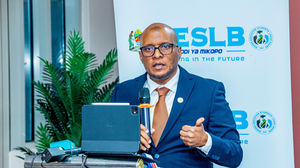
Briefing journalists after the meeting, Prof Mkumbo described the discussions as in-depth and productive, saying they were geared towards uplifting small-scale miners and ensuring that gold and other minerals are value-added before export.
He emphasised that Tanzania’s current policy and legal framework requires minerals to be processed locally prior to export, a position he said was well received by the council.
“Our discussions went well. We will continue to create a conducive environment for investors who are ready to operate within that framework, while ensuring mining activities adhere to environmental conservation standards,” he said.
Mr Mavunde noted that small-scale miners currently contribute about 40 per cent of the country’s total mineral production but continue to face challenges, including outdated equipment, limited access to reliable geological data and restricted access to finance.
He said many small-scale miners operate largely through trial and error due to insufficient information about underground mineral deposits.
“Through this partnership, investors are expected to introduce modern technologies, including satellite-based geo-surveys, to accurately identify mineral deposits and provide professional guidance to small-scale miners,” he said.
Gold remains Tanzania’s leading export earner, accounting for more than 80 percent of mineral export revenue. The government has introduced policies requiring mining companies and traders to sell a portion of their gold domestically, including a directive that at least 20 per cent of gold output be offered to the Bank of Tanzania to strengthen foreign reserves and support the national currency.
According to Mr Mavunde, the partnership is expected to boost productivity, improve efficiency and enhance miners’ capacity for value addition.
Meanwhile, Mr Tait said small-scale miners stand to gain significantly as the council plans to introduce traceability technology to ensure they fully benefit from their production.
"We thank the government for allowing us to hold these discussions, which we believe will bear fruit,” he said.
He said that the council is satisfied with the incentives available to foreign investors and will not only invest but also promote Tanzania as an attractive mining destination to global investors.
“We will work with the government in areas including training and technology transfer in the mining sector. The standards that have been set give confidence to international investors. We will use Tanzania as an example in promoting small-scale mining,” he said.
Register to begin your journey to our premium contentSubscribe for full access to premium content