Temeke, Kigamboni to begin specialised study programme
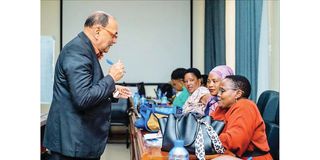
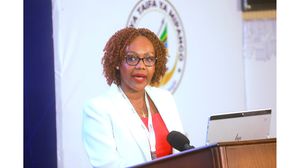
Chief Researcher for the EN-REACH-ED study and child health specialist Prof Karim Manji speaks with education officers from Temeke and Kigamboni districts. PHOTO | HERIETH MAKWETTA.
The initiative forms the latest phase in a series of studies—EN-BIRTH, EN-SMILING and now EN-REACH-ED—conducted by researchers from the Muhimbili University of Health and Allied Sciences (MUHAS) alongside partners from Nepal and Bangladesh.
Dar es Salaam. The government, in collaboration with education and health partners, has expanded a specialised programme aimed at strengthening early learning abilities among children in Temeke and Kigamboni districts.
The move follows years of research on children born with health complications, with findings showing encouraging progress.
The initiative forms the latest phase in a series of studies—EN-BIRTH, EN-SMILING and now EN-REACH-ED—conducted by researchers from the Muhimbili University of Health and Allied Sciences (MUHAS) alongside partners from Nepal and Bangladesh.
The current project will target 1,000 children aged between 60 and 72 months across 40 schools in eight wards within the two districts. Its goal is to produce scientific evidence on effective ways to prepare young learners within Tanzania’s education system.
EN-REACH-ED Project Coordinator, Dr Mustafa Miraji, said the new study builds on earlier work launched in 2018, which followed children born with complications including low birth weight, delayed crying, jaundice and early infections.
“Across all countries, around 2,000 children were monitored, with Tanzania accounting for 450, divided into an intervention group and a non-supported group,” he said.
Initial assessments focused on school readiness, cognitive ability, basic understanding and developmental challenges. Parents were also trained on stimulating child development at home.
A major intervention involved a six-month parental programme of nine sessions, teaching play-based learning techniques and how to create simple educational materials using household items.
“After the training, reassessments showed marked academic and developmental improvements, particularly among children born with neurological challenges,” Dr Miraji noted.
Based on the findings, researchers have developed new manuals and two sets of learning packages—for teachers and parents—to strengthen support for children, including those with special needs.
Whereas earlier training targeted only parents, the revised model now incorporates teachers to close gaps in inclusive early education.
Temeke and Kigamboni have each selected 20 schools for the next phase, targeting 500 children per district. The schools will serve as centres for baseline assessments, training, monitoring and comparison between intervention and non-intervention groups.
The team will use tools approved by the Ministries of Health and Education to assess school readiness, developmental concerns and parental mental health. The intervention begins next year after schools reopen.
Senior Education and Disability Coordinator, Olivia Amedeus, said the project aims to strengthen school readiness through a “three-way model” involving teachers, parents and pupils.
Lead researcher, Prof Karim Manji, emphasised the importance of early stimulation, noting that MUHAS and KCMC now produce around 50 occupational therapists annually to support children with learning difficulties nationwide