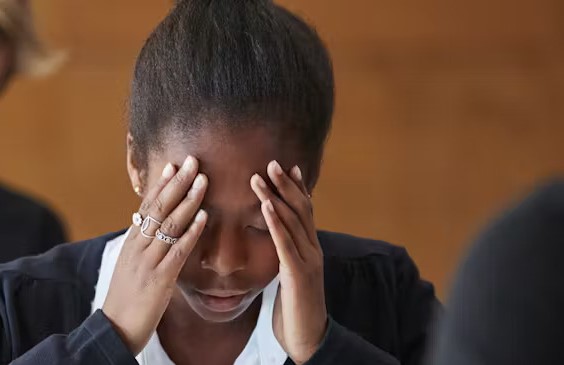
Rising student suicides expose deepening mental health crisis
What you need to know:
The WHO reports that more than 720,000 people die by suicide globally each year, making it the leading cause of death among those aged 15 to 29
By Juma Shabani
Dar es Salaam. The November 26, 2025 suicide of University of Dodoma (Udom) student Saidi Kabuga has reignited a debate on the mental health crisis facing young people, with experts warning that the growing number of cases may be only “a tip of the iceberg”.
Kabuga, who reportedly threw himself into a well, was initially said to have been driven by gambling. However, his family disputes this narrative, saying he was not a habitual gambler and may instead have been overwhelmed by academic stress after failing a key subject.
His death adds to a troubling pattern. Just 10 days before the Udom incident, police reported that a student at the Muslim University of Morogoro (MUM), Goodluck Charles survived a suicide attempt after stabbing himself in the neck.
On May 13, 2025, the Kilimanjaro Regional Police Force confirmed that Erick Sawe, a student at the Kilimanjaro College of Health and Allied Sciences (KICHAS), allegedly took his own life due to overwhelming debt.
And in July, authorities reported that Tumaini University student Emmanus Kajura died by suicide on 25 June.
Although these cases have drawn public attention, mental health experts and international organisations warn that the problem is neither isolated nor unique to Tanzania.
The World Health Organization (WHO) reported on March 25, 2025 that more than 720,000 people die by suicide globally each year, making it the leading cause of death among those aged 15 to 29.
In Tanzania, the true scale of the crisis remains unclear due to a lack of comprehensive data, limited school counselling structures and persistent stigma around mental health.
Higher expectations than reality
Psychologist Charles Nduku said many young people struggle under the weight of unrealistic expectations, social pressures and emotional immaturity.
“There are two main reasons why many young people experience suicide incidents,” he explained. “The first is having higher expectations than reality, often fuelled by the desire to live an imaginary life, and the second is low emotional maturity.
Many young people face challenges with intense emotions that lead to difficult decisions. Economic hardships and social media lifestyles also play a role.”
Mr Nduku advised parents to be more involved in their children’s emotional development, warning against sending very young children to boarding schools before they are emotionally ready.
He also urged institutions to prepare students for the realities of campus life, including peer pressure, exploitation and social dynamics.
A generational upbringing gap
Secretary of the Tanzania Psychologists Association (Tapa), Barnabas Nkinga, said the surge in suicide cases is also linked to identity struggles, social conflicts, poverty and biological changes, particularly for girls who face sexual abuse and associated trauma.
“Lack of emotional stability is a major factor, especially between ages 15 and 24,” he said. “Many young people are still developing, and when their behaviours conflict with the foundations of society, they sink into self-blame and self-harm.”
He criticised what he called a widening “upbringing gap”, saying many parents fail to appreciate the differences between past and present generations.
“Most parents think the current generation is corrupt or immoral, and they scold or accuse young people harshly. Meanwhile, schools still lack professional counsellors. As such, teachers act as both disciplinarians and counsellors, making it hard for students to open up,” he said.
Mr Nkinga urged parents to “listen and love their children”, adding: “Let us be farmers, not carpenters. A farmer nurtures; a child needs to be cared for and listened to.” He also called on the government to develop policies and laws that support psychological services in institutions.
Institutions step up support
At the Muslim University of Morogoro, the dean of students, Dr Hassan Mohammed Issa said institutions are working to strengthen student welfare systems.
“We have a dean of students, a counselling desk and a gender desk to ensure we understand youth challenges and create space for students to express themselves,” he said.
Dr Issa noted that some students hide academic or relationship problems from their families, but MUM is increasingly involving guardians to create a stronger support network.
He urged government bodies, faith-based organisations and the media to work together in shaping young people’s attitudes, saying issues like gambling and unhealthy relationships can be addressed through early intervention.
Students speak out
Students acknowledge that help exists but many fail to seek it.
A Mass Communication student at MUM, Rahma Hamza Kubeha, said the reluctance of students to share their problems contributes to the rise in cases.
“If students made use of help desks, these incidents would not increase,” she said.
“We should talk to each other, our families and our institutions. Suicide is not a solution; we must think of those who depend on us.”