Stories of courage, loss and survival after escaping FGM
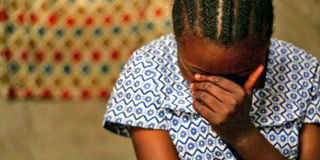
Young girls are usually forced by their parents or guardians to undergo female genital mutilation. However, there are documented cases of girls refusing to comply and thus avoiding the primitive and potentially dangerous ritual. PHOTO | FILE
Mara. When Joyce (not real name) reflects on the choice she made at 15, she describes it as the hardest and bravest decision of her life.
Facing imminent female genital mutilation (FGM) and a forced marriage, she chose to flee her home, defying family expectations and a deeply rooted tradition that had already dictated the fate of her elder sister.
A member of the Kurya community, Joyce, now 24, ran away to avoid being cut.
She recounted her story to The Citizen during a recent visit to Butiama, Musoma Urban, Tarime and Serengeti districts in Mara Region.
Speaking quietly but firmly, she said, “My parents were determined to subject me to FGM so that I could be married off. It was also about the benefits they would gain from the marriage.”
She described how preparations were already complete: invitations had been sent, clothes and shoes bought and guests informed.
She had even been given kitenge fabrics for the ceremony. “There was no discussion. It was compulsory,” she said.
Access to information
What changed Joyce’s path was access to information. While still at school, she attended awareness sessions by Hope for Girls and Women Tanzania, an organisation educating children and communities about the dangers of FGM and the rights of girls.
“They used to come to our school and teach us about the health risks and lifelong effects of FGM. That is how I understood the harm it causes. I knew I could not accept it,” she said.
With pressure mounting and preparations complete, Joyce decided to leave home and seek refuge at a safe house run by Hope for Girls and Women Tanzania. “I knew there would be consequences,” she recounts.
Those consequences were immediate and painful. Her younger sister was forced to undergo FGM in her place.
“When they realised I was gone, they said someone had to fill the gap. My younger sister was cut. After that, she stopped going to school. She didn’t complete Standard Seven and was later married,” she recalls.
Joyce was taken to Mugumu Safe House, where she was welcomed by caregivers, including a woman she fondly calls Mama Rhobi.
At the time, she was in Form One. With support from the safe house, she continued her studies through Form Two in Mugumu, Serengeti District and later completed Form Four.
Her determination paid off. With sponsorship support, Joyce enrolled in college to study hotel management and hospitality.
After graduating, she secured employment in the tourism sector and now works in Serengeti as a hospitality professional and tour guide.
“I escaped in 2017 when I was 15. Today I am working, independent and supporting myself,” she said.
Joyce comes from a family of six girls, of whom only two, her elder sister and the younger sister, after she fled, underwent FGM.
The remaining sisters were spared, a change Joyce attributes to her journey and the lessons her parents have learned.
“At first, my parents rejected me. They said they could not live with a daughter who was not cut. But after I completed my higher education and got a job, things have changed,” she added.
With the support of safe house caregivers, Joyce later returned home to engage her parents in dialogue. Over time, attitudes shifted.
“We started educating them. They have now seen that FGM has no benefit. When a girl is cut, she often loses interest in school and ends up married early, facing a very hard life,” she explained.
Her younger sister’s experience remains a painful reminder. “After she was cut, she refused to continue school and got married. Life has been very difficult for her.”
Joyce adds, “My parents have seen the difference between a daughter who ran away, studied and succeeded and another who was cut and struggled.”
“Today, there is no longer pressure on the younger girls in the family. One sister is in Form Two and currently living in a safe house after fleeing for fear of being cut. Others are still in primary school,” she added.
“My parents now say it should be a personal choice. Before, there was no debate; it was mandatory. Now they understand,” she recalls.
Joyce hopes her story will inspire other girls facing similar threats to speak out and seek help.
“I want other girls to know that it is possible to escape and succeed. FGM is not destiny. Education and support can change everything,” she said.
Courage and resilience
Another survivor, Jamila (not real name), 25, shares a similar story of courage and resilience.
She resolved never to undergo FGM after witnessing its devastating effects on her two elder sisters.
“By the time preparations were being made for me, I was completely determined that I would not go through it,” she said.
At the age of 12, Jamila sought help from her teacher.
“I explained to my teacher what was happening. She told me she would help, but advised me to return home for the moment,” she recalls.
By then, all arrangements had been finalised. Although her mother opposed FGM and understood its harm, she was unable to intervene, as other family members had made the decisions.
A day before the scheduled ceremony, Jamila returned to her teacher. “I told her everything had been finalised and that the next day I was expected to be cut, together with my cousin, as was customary.”
Her teacher immediately intervened, instructing her not to go home that day. She stayed with the teacher, who made several phone calls and arranged for help.
“A vehicle was organised. I was taken to the police and from there referred for protection. Eventually, I was taken to Hope for Girls,” recalls Jamila.
At the time, she was 12. In her family of three girls, two were cut, leaving Jamila as the only one who escaped.
“After reporting the matter, the police ensured my safety before I was taken to Hope for Girls and Women in Tanzania, a safe house located in Serengeti, Mara Region,” she says.
Jamila’s life took a very different path. She went on to complete her O-Level and A-Level studies, achieving Division One and later earned a place at the University of Dar es Salaam, where she studied Arts and Law Enforcement, graduating in 2024.
She has worked in legal-related fields, including volunteering with advocacy organisations, gaining exposure to justice and human rights issues.
Currently, she is involved in leadership and advocacy work, some of which is conducted online, focusing on empowerment and awareness.
Her sisters, who were cut, remain at home: one is married and the other continues with her own life.
“Looking back, I know my life would have been very different had I not escaped FGM,” she says.
She emphasises, “Parents must respect and protect the rights of girls. Many harmful practices persist because girls are denied choices and opportunities. If a girl wants to be educated, she should be supported to learn and grow. Girls have dreams, ambitions and potential. They deserve to be protected, empowered and given the chance to shape their own futures.”
“If there had been a safe house, I would not have been cut. I had nowhere to run and that is why it happened, even though I did not want to undergo FGM.”
Painful experience
Those words reflect the painful childhood experience of Rhobi Samwelly, whose life was permanently altered by a harmful cultural practice she neither chose nor supported.
When her parents decided it was time for her to be cut, she received no protection or support from her community, leaving her defenceless.
Years later, Rhobi realised that the absence of safe spaces for girls was one of the main reasons many are forced to undergo FGM, particularly during peak cutting seasons. Determined to prevent other girls from suffering, she took action.
In 2017, she founded Hope for Girls and Women in Tanzania, an organisation dedicated to protecting girls at risk of FGM and other for and of violence.
Since its establishment, the organisation has rescued and protected 3,757 girls from being cut.
Between November and December 2025 alone, more than 200 girls were sheltered in safe houses, bringing the total number of girls protected to nearly 4,000.
Rhobi says her personal experience continues to fuel her lifelong commitment to defending the rights of girls and women.
Reliable rescue vehicle
However, the work is not without challenges. Speaking about the organisation’s difficulties, she said the most urgent need is a reliable rescue vehicle to enable rapid response when reports of girls at risk are received.
“Once we receive information, we must act immediately by sending a vehicle to rescue the girls,” she said.
She added that providing food and clothing remains a major challenge, as many girls flee their homes with nothing and often come from marginalised families.
Despite the obstacles, Rhobi remains resolute, saying that as long as FGM persists, safe houses will remain a lifeline for vulnerable girls.
Currently, she runs two safe houses in Serengeti and Butiama in Mara Region and she hopes to expand the initiative with a new centre in Tarime.
Register to begin your journey to our premium contentSubscribe for full access to premium content