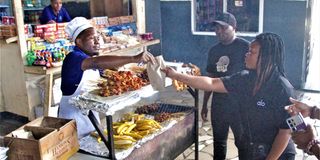
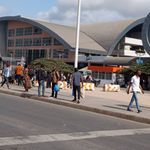
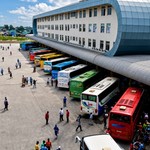
Some head straight for the toilets. Others make a dash for food stalls, scanning menus and prices before joining queues.
A few remain on board, wary that stepping off could mean being left behind.
For passengers travelling hundreds of kilometres between Dar es Salaam and other parts of Tanzania, the stop is supposed to provide a welcome break from the long journey.
Instead, for many, it has become a race against the clock.
An investigation by The Citizen, conducted between May and August 2026 at Mkambarani in Morogoro and Nangurukuru along the Dar es Salaam-Lindi highway, has established a range of challenges confronting passengers using designated bus stops.
The investigation found that meals such as chips and chicken or goat meat cost about Sh10,000, while chicken or fish served with rice or ugali could cost the same.
For passengers travelling on tight budgets, such prices can add a considerable burden to the cost of a journey. But the price is not the only concern.
The clock is often the more immediate challenge.
At the designated stops, passengers interviewed by The Citizen said conductors sometimes give them only 10 minutes to use the toilet, buy food and return to their buses.
Ms Shaweni Uroki, who was travelling from Dar es Salaam to Dodoma, described the dilemma. “You get off and first want to go to the toilet.
When you come back, you find a queue for food. By the time you get the food, it is already time to return to the bus,” she said.
The situation is particularly difficult for passengers travelling with limited funds.
The regulatory framework, however, appears to allow passengers more time.
Under the Transport Licensing (Public Service Vehicles) Regulations, 2020, the Land Transport Regulatory Authority (Latra) requires long-distance buses to stop at designated areas for passengers to access social services for at least 20 minutes in accordance with the recognised timetable.
That difference between the requirement and what some passengers experience has become a source of concern.
Ms Asina Mrope, who was travelling from Dar es Salaam to Tunduru, said time pressure could also affect the quality of food passengers receive.
“In some cases, you find that the food is ready but cold,” she said during a break at Nangurukuru.
“If you wait for it to be heated, you start watching the time because you are told the bus will leave. In the end, you eat it as it is or leave it,” she added.
The short stop also creates another problem: limited choice. A traveller may budget carefully for a journey, setting aside money for transport, food and other expenses. But once the bus arrives at a designated stop, that calculation can change.
Passengers have little time to compare prices or search for cheaper alternatives.
“You have your travel budget, but when you reach the stop, you find that prices are excessively high. Worse, the buses stop at a single area, leaving passengers without alternatives,” said Ms Riziki Joseph, a traveller interviewed at Mkambarani.
“This is where the problem becomes an accountability issue. A passenger may technically have a choice of several food sellers, but when the bus is expected to leave within 10 minutes, walking away for cheaper alternatives becomes impossible,” she added.
The result, according to passengers, is a captive market.
They need food and water, but have limited time to shop around. Mr Emmanuel Kessy, a Morogoro resident who frequently travels by bus, said the limited number of suitable eating places at the designated area worsened the problem.
“Currently, there are not many good places to eat at the Morogoro designated area therefore leading to limited services,” he said.
Sellers defend their prices
Food sellers, however, say the prices reflect their own costs.
Mr Joseph Lugotu, a meat seller at the Nangurukuru designated area, said customers frequently complained about the price of goat meat.
But he attributed the cost to the price of livestock.
“We would like to see prices fall, even to Sh4,000 or Sh5,000, but the cost of buying goats is high. Medium-sized goats can cost between Sh150,000 and Sh200,000,” he said.
At Mice Hotel in Mkambarani, general manager Mr Deodatus Majengo said the establishment serves between 300 and 350 bus passengers during the day and night.
“We provide all the services and have never received complaints related to the quality of food. As for the cost of food, the price reflects the increase in the cost of supplies in the market,” he said.
Bus operators also reject suggestions that passengers are deliberately being given inadequate time.
A Shabiby Line conductor, Ms Nice Kiule, said the company follows Latra’s 20-minute requirement. But passenger advocates say the complaints cannot simply be dismissed.
Passengers’ dignity
The Tanzania Passenger Rights Education and Advocacy Organisation (Shikuhata) executive director, Mr Ambakisye Mwakifwange, said his organisation was increasingly concerned by complaints from passengers.
According to him, passengers have raised concerns about being taken to particular hotels selected by bus operators. “Passengers are forced to buy food at very high prices, and in some cases the quality is poor. There have been complaints of being served undercooked meat, cold food and poor service,” Mr Mwakifwange said.
He said some passengers were given only 10 minutes for a break, contrary to legal requirements. Sanitation was another major concern.
“Some toilets are dirty, few and insufficient for the number of passengers, especially when more than two buses drop passengers at the same time. This affects passengers’ dignity and health,” he said.
What the regulator says
Latra says it is aware of the requirement governing passenger breaks.
The authority’s head of public relations and communication unit, Mr Salum Pazzy, said Latra uses its Vehicle Tracking System (VTS), customer service centres and stakeholder forums to educate drivers and conductors about the requirement to provide passengers with 20-minute breaks at designated stops.
But on food prices, the regulator says its hands are tied.
Mr Pazzy said Latra has no legal mandate to regulate prices charged by food businesses at bus stops because its mandate covers land transport services rather than food businesses.
That distinction leaves a regulatory gap at the very places where passengers are most constrained in their ability to make choices.
Operators call for more time
The Tanzania Bus Owners Association (Taboa) secretary-general, Mr Joseph Pricus, said operators would actually prefer passengers to have more time at designated stops.
He said the association had not received complaints about food prices and maintained that operators take passengers to suitable places.
“We have not received complaints about the price of food. We take our passengers to conducive places, and if we notice there is poor quality of service, we shift to another place,” he said.
But he acknowledged the need for longer breaks.
“We request at least 25 minutes for passengers to access social services instead of 10 minutes. This would give them time to negotiate prices and get what they want,” he said.
That proposal goes to the heart of the problem exposed by the investigation.
For a passenger, a bus stop is more than a brief interruption to a long journey. It is where basic needs must be met within a tightly controlled window.
Register to begin your journey to our premium contentSubscribe for full access to premium content