Dar es Salaam. The principle of “equal opportunity”, as enshrined in the foundational documents of the United Republic of Tanzania, is currently facing a silent but systemic deconstruction.
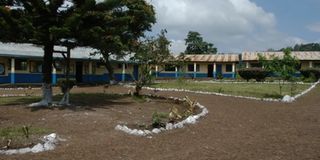
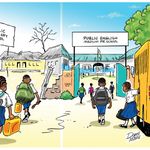
As one traverses the country, from the bustling wards of Kinondoni to the semi-arid plains of Bahi, a literal and figurative wall is being erected within the gates of public primary schools. On one side of the wall lies the "upgraded" English Medium wing.
On the other, the regular Swahili-medium wing continues to buckle under the weight of a "sorrowful" state of public education, defined by crumbling infrastructure and chronic overcrowding.
This investigation reveals that the government’s rapid expansion of public English Medium schools, is not merely a "progressive" pedagogical shift, as authorities claim.
Rather, it is a profound administrative and financial crisis that has created a "two-tier" education system, effectively institutionalising class divisions within the public sector in direct violation of Article 11 of the Constitution.
The ‘Special Arrangement’ trap
The legal bedrock of Tanzania’s education sector is Article 11 (2 & 3) of the 1977 Constitution, which mandates that every citizen has a right to education and that the state must ensure equal opportunity for all to achieve their potential.
Furthermore, the 2014 Education and Training Policy historically designated Kiswahili as the primary medium of basic instruction. However, recent years have seen a wave of "special arrangements" that allow municipal councils to bypass these standards to meet the "appetite" of the urban middle class. The implementation of the "fee-free" education policy in 2016 was intended to equalise the playing field. However, the reality shows that the government has struggled with chronic under-budgeting and disbursement delays.
The CAG reports say that for primary school infrastructure, the government often fails to release the full budgeted amount, leading to a reliance on donor-funded projects that are frequently delayed.
Into this financial vacuum, public English Medium schools have stepped in as "semi-private" revenue generators.
At Bahi English Medium Primary School in Dodoma, a government-owned institution, parents are required to pay a "food contribution" of Sh250,000 and an "admission fee" of Sh250,000.
Nationally, these "contributions" range from Sh300,000 to Sh600,000.
For parents like Sophia Amoni in Sinza, this is a manageable "alternative" to expensive private schools. But for her neighbour Juma, a petty trader, it is a wall he cannot climb.
This financial barrier effectively excludes low-income families from the very quality the public sector is meant to provide, forcing their children into under-resourced Swahili-medium schools.
By allowing these fees, authorities have offloaded the responsibility of providing quality education onto the individual parent, abandoning their constitutional mandate.
A tale of two ratios
The accountability gap is not merely a matter of policy debate; it is reflected in the stark disparities found in the National Audit Office (NAOT) reports.
According to the 2021 Performance Audit by the Controller and Auditor General (CAG), the national average classroom-to-pupil ratio (PCR) was a staggering 1:76, nearly double the required standard of 1:40.
Approximately 5.38 million pupils nationwide were forced to sit outside their classrooms due to a lack of space.
Contrast this with the newly minted English Medium public schools. In Kinondoni and Ubungo, the "upgraded" wings enjoy a PCR of around 1:47, while the Swahili-medium wings in the same compound suffer with ratios as high as 1:72.
Similarly, the pupil-teacher ratio (PTR) in English wings is 1:55, compared to 1:63 in the Swahili wings.
This preferential treatment means that the state is actively providing better learning environments ‘privatisation’ for a select few while the majority of Tanzanian children, 6.31 million of whom lack even basic latrines, are left in substandard conditions.
In Songea Municipality, the Chief Zulu English Medium Primary School was recently launched after being built for Sh626.4 million using internal municipal revenue.
While the school offers ICT rooms and French lessons for 491 pupils, critics point to the "silo" approach to development.
Why, they ask, is nearly a billion shillings of tax revenue diverted to a select 500 students when the district as a whole faces a massive infrastructure deficit?.
A veteran education researcher and founding member of HakiElimu, Mr Japhet Makongo, views these "special arrangements" as a dangerous deviation from constitutional duty.
"We have to make decisions based on the interests of many," he observes. "If we are convinced that the English language will help the Tanzanian child, then let’s make it a medium of instruction in all public schools, not just to a select few".
He argues that by allowing a selective upgrade, the government has turned a public right into a marketable commodity, creating a system where "quality" is reserved for those who can pay.
While the government brands this as providing "options," stakeholders argue it is a discriminatory reallocation of state power. "Now government schools are becoming class-oriented," notes an education commentator, Mr Ben Barka. "Upper level (English) for the rich and lower level (Swahili) for the poor".
Administrative silos, the pedagogical nightmare
The root of this crisis, experts say, lies in a total lack of coordination between the Ministry of Education and the Prime Minister’s Office - Regional Administration and Local Government (PO-RALG).
While MoEST formulates policy, PO-RALG manages the infrastructure. Local councils, such as Bahi and Kinondoni, are independently making decisions to "upgrade" schools without a unified national plan that ensures the Swahili-medium majority is not further neglected.
This administrative disconnect has created what Richard Mabala, a renowned education commentator, calls a "pedagogical nightmare".
He warns that secondary schools will soon receive Form I students from two vastly different linguistic systems.
"He [the teacher] cannot go too fast because he’ll fail those from Kiswahili medium and he cannot go too slow because he’ll bore those from English mediums," Mabala explains. "How can one achieve equal opportunity in such circumstances?".
Educational psychologists and researchers argue that the "quality" being sold in these English wings is often an illusion that masks systemic weakness.
Research by Lucy Ringo, an educator based at St. John's University of Tanzania, shows that teacher competence in English remains a critical issue; some instructors in public schools still pronounce "chalk" as “chaki” and "sentence" as “sentensi”.
Her research, ‘Teachers’ Competence in English Language Teaching in Tanzanian Primary Schools’ notes that 87.5 percent of teachers surveyed had not attended recent in-service training, meaning the pedagogical core of these schools remains stagnant.
A prominent Educational Psychologist from the University of Dar es Salaam, Richard Shukia, argues that the "two-tier" system actively stunts the development of 21st-century skills like collaboration and social responsibility.
"Collaboration requires a shared environment where students of different backgrounds learn to solve problems together," Shukia observes.
When children are segregated by their parents' ability to pay, the "enacted curriculum" teaches them that their worth is tied to class, not merit.
Shukia’s analysis found that only 3.1 percent of Standard III syllabus activities were related to collaboration, a deficiency that is only worsened by physical segregation in the school yard.
Until the National Assembly holds the executive accountable for the implementation of Article 11, the wall at Sinza and the fees at Bahi will remain as monuments to an education system that has chosen to leave its poorest behind.
Register to begin your journey to our premium contentSubscribe for full access to premium content