UAE exit from Opec unlikely to shake Tanzania's fuel market, experts say
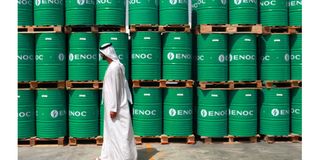
The United Arab Emirates will on May 1 pull out of the Organization of the Petroleum Exporting Countries (Opec) after being a member since 1967. PHOTO | FILE
Josephine Christopher is a senior business journalist for The Citizen and Mwananchi newspapers
Mwananchi Communications Limitted
Dar es Salaam. Tanzania is unlikely to experience immediate disruption in fuel prices or supply following the decision by the United Arab Emirates to withdraw from the Organization of the Petroleum Exporting Countries and the broader Opec+ alliance, according to industry stakeholders.
The UAE announced that it will exit the oil-producing bloc effective tomorrow in a move widely interpreted as a push for greater control over its production strategy amid shifting global energy dynamics.
The development comes at a time when the United States and Israel war with Iran has already severely disrupted oil flows through the Strait of Hormuz, a critical chokepoint for global oil supplies.
However, Tanzania Association of Oil Marketing Companies Executive Director Raphael Mgaya said the development is unlikely to have a meaningful impact on Tanzania’s petroleum market.
“In my opinion, the exit of the UAE from Opec and Opec+ will have no significant impact on the global oil market or on Tanzania,” he said.
Mr Mgaya noted that the UAE is not among the world’s dominant producers in terms of overall global supply and its departure is unlikely to cause any meaningful disruption to international oil prices.
He added that Tanzania should not expect noticeable changes in pump prices or supply availability directly linked to the move.
Instead, Mr Mgaya noted, the decision reflects a broader shift within Opec, where member states are increasingly prioritising national interests over collective production discipline.
“What this signals clearly is a weakening of solidarity within Opec.”
Tanzania’s fuel supply system further insulates it from shocks tied to any single producer, thanks to its Bulk Petroleum Procurement System (BPS).
Under the system, oil marketing companies source petroleum products competitively after winning tenders, selecting suppliers based on prevailing market conditions rather than fixed bilateral arrangements.
“Tanzania imports nearly all of its petroleum products from the Middle East, but we do not rely on a single country,” Mr Mgaya said.
Data provided by Energy Minister Deogratius Ndejembi, during the tabling of the budget last week showed that approximately 59 per cent of Tanzania’s petroleum imports originate from Middle Eastern countries—including the UAE, Saudi Arabia, Bahrain, Oman and Kuwait—while the remaining 41 per cent comes from India, which itself depends on crude oil from the same region.
Mr Ndejembi told Parliament that Tanzania has maintained a steady flow of petroleum imports despite mounting geopolitical pressures in global energy markets.
The country imported 5.84 billion litres of petroleum products between July 2025 and March 2026. The imports included 1.63 billion litres of petrol, 3.94 billion litres of diesel and 260 million litres of kerosene and jet fuel.
Of the total volume, 43.84 per cent was consumed domestically, while 56.16 per cent was re-exported to neighbouring countries, underscoring Tanzania’s growing role as a regional fuel hub.
Mr Ndejembi said the government has taken proactive steps to safeguard supply, including authorising the Tanzania Petroleum Development Corporation, the national oil company, to import enough fuel to cover the next three months—May, June and July 2026.
“The government continues to closely monitor global trends in petroleum product availability and will take various strategic measures to ensure our country maintains a stable and reliable supply of fuel, so as not to disrupt economic and social activities.”
Beyond concerns about weakening cohesion within Opec, some analysts argue that the UAE’s exit could, in fact, benefit global energy markets by loosening supply constraints.
By stepping outside Opec quotas, the UAE gains flexibility to increase production in response to market demand—potentially easing supply pressures and moderating prices over time.
The move also aligns with the long-standing position of US President Donald Trump, who has repeatedly criticised Opec for restricting output and driving up oil prices.
While there has been no formal endorsement of the UAE’s decision, analysts say the development indirectly advances Washington’s preference for a more competitive, less coordinated oil market.
In that sense, the shift could contribute to greater supply responsiveness globally, even as it signals a broader realignment within producer alliances.
Why the UAE’s Opec exit matters
The UAE has been a member of Opec since before it became a nation state in 1971.
Mainly consisting of Gulf oil-exporting countries, Opec has for many decades influenced the price of crude oil by decreasing or increasing production and allocating quotas across its membership. It played a vital role in the 1970s oil crises, which in turn transformed global energy policy.
While Opec production is dominated by Saudi Arabia, the UAE has held the second-highest spare production capacity. As such, it has been a key swing producer, capable of increasing output to help ease prices.
However, Opec quotas have limited its production to between three and 3.5 million barrels per day, meaning the UAE has borne a disproportionate share of the revenue sacrifices associated with membership.
The timing of this move also hints at consequences linked to tensions involving Iran. The pressure in the Gulf has affected the UAE’s relationship with Iran and may also influence its already strained ties with Saudi Arabia.
For Opec, the development represents a significant setback at a time when fundamental questions are being raised about its long-term cohesion.
Register to begin your journey to our premium contentSubscribe for full access to premium content