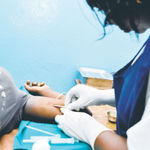
Dar es Salaam. The Universal Health Insurance (UHI) scheme officially starts today, Monday, January 26, 2026, to ensure that every Tanzanian can access healthcare services without financial barriers.
The scheme is being implemented under the Universal Health Insurance Act, 2023, which was passed by Parliament on November 1, 2023, assented to by President Samia Suluhu Hassan on November 19, 2023, and subsequently published in Government Gazette No. 48 of December 1, 2023.

With all legal procedures completed, including parliamentary approval, presidential assent, and gazettement, the law now makes health insurance mandatory for every Tanzanian citizen.
A statement by Health Minister, Mr Mohamed Mchengerwa, says the rollout will begin with vulnerable groups, including the elderly, children, pregnant women, and people with disabilities.
Their premiums will be covered by the government, with monitoring conducted through fingerprint and facial recognition systems to prevent fraud.
Last week, the minister delegated implementation responsibilities to regional commissioners across the country, giving them direct accountability within their respective areas of jurisdiction.
Speaking during a working session attended by regional administrative secretaries, district commissioners, district executive secretaries, and council directors, Mr Mchengerwa said the first phase of implementation would coincide with the introduction of an essential healthcare benefits package.
He said the package would be provided through health insurance schemes, targeting vulnerable groups to ensure they receive medical services without financial hardship.
“The price of this package is Sh150,000 per household of up to six members, and it follows the referral system within health facilities contracted by health insurance schemes,” said Mr Mchengerwa.
“This is not the work of a single ministry; it is a national commitment to our citizens. The success of this programme will be measured not by speeches or directives, but by the number of people protected from medical costs and able to access dignified healthcare,” added Mr Mchengerwa.
In addition to the basic package, the National Health Insurance Fund (NHIF), which will oversee the scheme, has prepared additional packages based on members’ ability to pay.
For a household of six, the Tarangire package costs Sh796,560; Ngorongoro Sh1,684,800; Mikumi Sh2,621,760; Serengeti Sh3,880,800, while the highest package, Tanzanite, costs Sh11,162,640.
NHIF has provided detailed explanations on how the UHI scheme will operate, including registration procedures and the costs of different packages for households of up to six members.
The basic package, which covers 277 services, allows a household head to pay either in a lump sum or through mobile money, starting with as little as Sh14,000, followed by incremental deductions until the full Sh150,000 premium is settled.
In an exclusive interview with The Citizen’s sister newspaper, Mwananchi, held on December 22, 2025, NHIF Director General, Dr Irene Isaka, said the UHI scheme implementation had already begun.
She said the systems were fully operational and tested, allowing citizens to self-register, employers to enrol their workers, and contributions to be paid online.
According to Dr Isaka, the foundation of the scheme is the essential healthcare package costing Sh150,000 per year for a household of up to six people, enabling members to access essential treatment at primary healthcare levels, in line with the referral system.
“Households that cannot afford to pay will be identified through Tasaf (Tanzania Social Action Fund), and supported by the government. Beneficiaries will start enjoying services immediately once implementation begins,” she said.
The second tier involves mandatory contributions for the formal sector, both public and private, where three percent is deducted from the employee, and another three percent is contributed by the employer, bringing the total to six percent.
The third tier is voluntary, targeting the informal sector, whereas NHIF will collaborate with providers such as Jubilee, Strategy, Assembly, and NSSF, which offer their own insurance packages.
Some experts said on Sunday, January 25, 2026, the launch of universal health insurance marks a major shift in the country’s healthcare system, but its success will depend on adequate preparation.
“In principle, this is a good programme for social equity. The challenge will be whether health facilities can handle a large number of patients without delays or compromised service quality,” said Tanzania Medical Association president, Dr Mugisha Nkoronko.
Dr Nkoronko said doctors would like to see all citizens contribute to the fund, noting that without broad participation, the scheme would not achieve meaningful results.
“It is important to research so health economists can determine how much, on average, one person needs for healthcare per year, and ensure everyone contributes in one way or another so funds flow directly into the pool,” he said.
Health economists also say the scheme could reduce poverty caused by medical expenses if well managed.
“Many households fall into debt due to healthcare costs. Universal health insurance can change this, but transparency in contributions and payments to service providers is crucial,” said economist Ms Catherine Mwinuka.
Some residents interviewed expressed optimism, while others called for greater clarity on how the scheme will operate.
A Temeke resident in Dar es Salaam, Ms Asha Mohammed, said: “If the costs are truly affordable and services are provided smoothly, this will help us greatly, especially those of us with children.”
A petty trader based in Mwanza, Mr Juma Selemani, said he supports the initiative but remains cautious about implementation.
“We have heard good plans before, but challenges often come during execution. We hope this starts with transparency and quality service,” he said.
The government says it is committed to ensuring effective implementation of the scheme through collaboration between NHIF and private healthcare providers.
Public education campaigns will continue to help citizens understand their rights and obligations under the new health insurance system.
Register to begin your journey to our premium contentSubscribe for full access to premium content