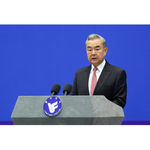
Dar es Salaam. Chinese Foreign minister Wang Yi’s visit to Tanzania has renewed the push to deepen political ties, unlock trade opportunities and fast-track flagship infrastructure projects the two countries are collaborating in.
Mr Wang, a member of the Political Bureau of the Communist Party of China (CPC) Central Committee and China’s Minister for Foreign Affairs, was in Tanzania on January 9 and 10 at the invitation of his Tanzanian counterpart, Mr Mahmoud Thabit Kombo.
In a joint press communiqué issued after bilateral talks, the two sides said the discussions were held in a “warm and cordial atmosphere”, reflecting the depth of a relationship built over six decades.
“From shared history to shared future, Tanzania and China are building a partnership that delivers,” the communiqué stated, underscoring the intent to translate political goodwill into tangible development outcomes.
China used the visit to congratulate Tanzania on the successful conduct of the October 2025 General Election and expressed support for the government’s efforts to safeguard constitutional order and national stability.
Both countries reaffirmed their rejection of violence, external interference and actions that undermine national unity.
China said it has “full confidence in Tanzania’s leadership and institutions to manage internal affairs independently”.
For its part, Tanzania reiterated its unwavering support for the one-China principle, stressing that “there is but one China in the world” and rejecting any form of secession, while backing Beijing’s efforts to achieve national reunification and protect territorial integrity.
The two ministers also committed to implementing the consensus reached by Presidents Samia Suluhu Hassan and Xi Jinping in September 2024 to elevate the China–Tanzania Comprehensive Strategic Cooperative Partnership, with closer alignment on each other’s core interests.
Trade, investment and market access
China welcomed Tanzania’s ambition to double its exports to China by 2030 and pledged support through capacity building in trade and customs management.
Beijing reiterated that its market remains open to Tanzania under zero-tariff treatment on 100 percent of tariff lines for African countries with diplomatic relations with China.
The two sides also agreed to foster a “fair and enabling business environment” and to encourage more Chinese companies to invest in Tanzania, particularly in priority sectors.
China expressed readiness to support projects agreed under the 2024 Forum on China–Africa Cooperation (FOCAC) Beijing Summit, including in infrastructure, health, education, agriculture, green development and the digital economy.
Tazara at the centre
A central pillar of Mr Wang’s visit was Tanzania-Zambia Railway Authority (Tazara), the iconic railway built in the 1970s with Chinese support, which both sides regard as a symbol of enduring friendship and a strategic asset for regional integration.
The joint communiqué welcomed the commencement of the Tazara revitalisation project and pledged support for its implementation. The two countries agreed to actively implement the joint project by China, Tanzania and Zambia on jointly building the Tazara Railway Prosperity Belt.
This includes promoting integrated development along the railway, linking it with other infrastructure such as railways and ports and exploring wider collaboration to spur regional development under the Belt and Road Initiative.
“The two sides are exploring the possibility of organising a high-level Tazara Railway Prosperity Belt meeting in the near future,” the communiqué said.
At State House in Dar es Salaam, President Samia Suluhu Hassan reiterated Tanzania’s strategic vision for the revitalisation of Tazara operations and related economic activities.
For his part, Mr Wang described Tazara as “a historic symbol of China–Tanzania friendship” and assured China’s readiness to support its modernisation and effective utilisation.
Beyond infrastructure and trade, the visit highlighted a shared focus on people-to-people exchanges as a foundation for long-term relations.
The two sides agreed to jointly host activities related to the 2026 China–Africa Year of People-to-People Exchanges and to expand cooperation in culture, tourism, education, public health, sports, youth, think tanks and media.
They also agreed to undertake measures to ease the movement of people between the two countries, enhance connectivity and promote trade.
At State House, President Hassan emphasised the need to improve visa arrangements to support mobility and exchanges between Tanzanians and Chinese citizens.
Register to begin your journey to our premium contentSubscribe for full access to premium content