Josephine Christopher is a senior business journalist for The Citizen and Mwananchi newspapers
Mwananchi Communications Limitted
Dar es Salaam. Water shortages reported in several parts of Dar es Salaam are largely the result of a widening gap between water production capacity and the rapidly growing demand in the city and neighbouring Coast Region, the Dar es Salaam Water Supply and Sanitation Authority (Dawasa) has said.
The authority says it is currently producing about 558 million litres of water per day from its treatment plants, while the combined demand in the areas it serves has risen to approximately 732 million litres per day. Dawasa Head of Communications, Ms Everlasting Lyaro, told The Citizen that the production shortfall has made it difficult to maintain a stable supply across all neighbourhoods.
“The biggest challenge at the moment is that our water production does not fully meet the demand in the areas we serve, in Dar es Salaam city and the Coast Region,” she said. According to Ms Lyaro, the utility is implementing several short-term measures to improve supply, including installing additional pumps that have already been procured.
“We have ordered additional pumps, which have already arrived and will soon be installed to help improve water distribution and increase supply in affected areas,” she said. In the longer term, she said the government is investing in large-scale water infrastructure projects aimed at significantly increasing production capacity. Among them is the Rufiji Water Supply Project, which she said is expected to produce more than 1.5 billion litres of water per day once completed, helping to meet growing demand and support the city’s expanding population.
“The project will substantially address water shortages by meeting current demand and providing additional capacity for future growth,” Ms Lyaro said.
She added that Dawasa is also implementing the Lower Ruvu expansion project, which is expected to increase water production capacity by an additional 90,000 litres per day. Since the rainy season last month, The Citizen has been analysing complaints from residents over the limited supply of water.
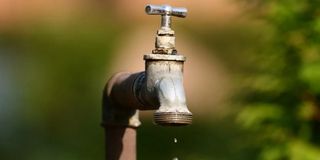
Many Dar es Salaam residents have taken to social media to complain about dry taps in their neighbourhoods, particularly in areas such as Tegeta, Mbezi, Goba, Kimara, and parts of Kinondoni.
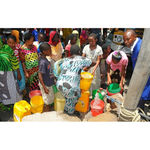
One resident from Tegeta wrote that there was no water at all in the area, saying households were struggling to carry out basic daily activities. Another commenter said residents in Mbezi had also gone several days without water, forcing many families to buy water from vendors. Residents from Goba reported that supply had become irregular, saying water sometimes flows only briefly before stopping again.
Others from Kimara said they had experienced an inconsistent supply for several days. Some users also called on the utility to improve communication during supply interruptions. “Please provide early notice whenever there are maintenance works or supply disruptions,” one resident wrote, saying households need advance information in order to plan.
Several commenters questioned why shortages were occurring even though the city is currently experiencing seasonal rains. “It is raining, but water is still not coming out of the taps. What is the problem?”
Dar es Salaam, Tanzania’s commercial capital, has long struggled with water supply challenges as rapid population growth continues to place pressure on infrastructure.
According to the National Bureau of Statistics, the city remains one of the fastest-growing urban centers in Africa, with expanding suburbs increasing demand for basic services such as water and sanitation.
While large-scale projects such as the Rufiji water scheme are expected to significantly improve supply in the future, residents say clearer communication and predictable distribution schedules would help households cope better during periods of limited water availability.
Register to begin your journey to our premium contentSubscribe for full access to premium content