Why Nyerere Hydropower dam operates at only 40 percent capacity
Trade and industrial policy expert Haji Semboja speaks during a policy debate organised by the Public-Private Partnership Centre (PPPC) under the theme “The Role of PPP in Securing Reliable Energy Under FYDP IV” held in Dar es Salaam on Monday. Looking on is PPPC executive director David Kafulila. PHOTO | COURTESY
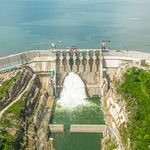
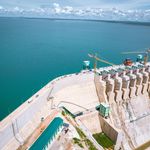
Dar es Salaam. Tanzania’s flagship Julius Nyerere Hydropower Project (JNHPP) is operating at just 40 percent of its installed capacity, largely due to bottlenecks in the national power transmission system.
The revelation was made on Monday during a policy debate organised by the Public-Private Partnership Centre (PPPC) under the theme The Role of PPP in Securing Reliable Energy under FYDP IV.
The concern was echoed the same day by Controller and Auditor General Charles Kichere while presenting the 2024/25 audit reports to President Samia Suluhu Hassan, highlighting the gravity of the situation.
Speaking at the forum, PPPC executive director David Kafulila said although JNHPP is designed to generate 2,115 megawatts, transmission limitations restrict supply to about 800 megawatts.
“This represents a significant gap between potential output and actual delivery to the national grid,” he said.
Mr Kafulila said that the Tanzania Electric Supply Company Limited, in collaboration with PPPC, is developing a 400kV transmission project to Lindi Region.
“This initiative will serve as a pilot—the first power transmission project under a public-private partnership—aimed at accelerating power evacuation from JNHPP,” he said.
In his report, Mr Kichere said one of the key shortcomings was the failure to conduct comprehensive testing of machinery following the project’s completion in March 2025.
“The capacity tests for all nine power-generating units were not conducted simultaneously, as required under the contract. These tests were intended to assess performance when all units operate at once,” he said.
He attributed the failure to inadequate transmission infrastructure and fluctuating water levels.
Contacted on Tuesday, Tanesco acting director of communications and customer experience Irene Gowelle said the utility is implementing measures to ensure all electricity generated by JNHPP is transmitted across the country through two major 400kV lines.
“The first line runs from Chalinze through Kinyerezi to Mkuranga, where the contractor is on site and progress is steady,” she said via WhatsApp.
“The second line, from Chalinze to Dodoma, is scheduled for completion by September 30, 2026. Once finalised, these projects will ensure efficient nationwide transmission,” she added.
She said the Chalinze-Dodoma line had reached 69.9 percent completion, with Lot 1 at 74.8 percent and Lot 2 at 48.25 percent.
For the Chalinze–Kinyerezi–Mkuranga line, overall progress stood at 43.4 percent, with Lot 1 at 61.07 percent and Lot 2 at 36.47 percent.
The underutilisation of the multi-trillion-shilling project has attracted criticism from academia and industry stakeholders.
Former diplomat Modest Mero said while JNHPP has the potential to attract major investors, transmission challenges require urgent public-private solutions.
“Energy is synonymous with the economy. Industrialised nations resolved energy constraints using their natural resources. Tanzania has hydro, natural gas, geothermal and wind potential. The private sector must be properly incentivised and the PPPC supported,” he said.
A senior lecturer in electrical engineering at the University of Dar es Salaam, Dr Aviti Mushi, likened the situation to “a 20-tonne lorry carrying only five kilogrammes,” questioning how operational costs could be recovered.
He also warned that multitasking among staff undermines efficiency, urging the public sector to emulate private sector time management practices.
Providing a policy perspective, principal energy officer at the Energy and Water Utilities Regulatory Authority Mussa Mussa said the National Energy Policy allows public-private partnerships to attract investment and technology, particularly in transmission.
He cited integrated energy projects in Nigeria’s Abia State as a model for Tanzania.
Beyond the immediate constraints, Mr Kafulila outlined an ambitious long-term vision, saying Tanzania aims to generate 70,000 megawatts by 2050—surpassing South Africa’s current consumption of about 65,000 megawatts.
“To transform into a $1 trillion manufacturing economy, Tanzania must significantly expand generation, transmission and distribution,” he said.
He added that PPPC has signed projects worth over Sh8.5 trillion in the past three years, compared to none in the preceding 13 years under the PPP Act.
“Currently, 113 partnership projects are in the pipeline,” he said.
Mr Kafulila also said the Tanzania Petroleum Development Corporation is working with the World Bank and PPPC on a gas infrastructure project starting in Dar es Salaam to reduce reliance on fuel imports and conserve foreign exchange.
Trade and industrial policy expert Haji Semboja said Tanzania’s investment framework has improved significantly, noting that reforms have addressed earlier governance challenges.
However, Dr Eve Hawa Sinare warned that the country will need between 10,000 and 15,000 megawatts by 2030 to meet growing demand.
“The government cannot succeed in the power sector without strong partnerships. Parastatal structures are essential to ensure equitable profit sharing and avoid contractual disputes,” she said.
Other experts, including Dr Hezron Makundi and Dr Ambiliasia Mosha, called for stronger oversight of power purchase agreements and greater recognition of innovation beyond Tanesco.
Political scientist Dr Sabato Nyamsenda urged the government to draw lessons from earlier privatisation efforts.
Register to begin your journey to our premium contentSubscribe for full access to premium content