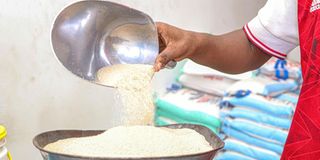
Dar es Salaam. Less than a year after Tanzania celebrated a historic milestone by exporting sugar for the first time, consumers are now facing a puzzling reality: supermarket shelves and retail outlets across the country are increasingly stocked with imported sugar rather than locally produced brands.
The development has raised questions among consumers and industry observers over how a country that recently reported sugar production exceeding domestic demand has returned to relying on imports.
In October 2025, Tanzania achieved a major breakthrough by exporting 85,000 tonnes of sugar and earning approximately $72 million in revenue. It marked the first time in the country’s history that sugar production had surpassed domestic demand.
At the time, official figures showed annual national sugar demand stood at around 550,000 tonnes, while production had already exceeded 600,000 tonnes by October 2025. The achievement was widely viewed as evidence of Tanzania’s growing industrial capacity and progress towards self-sufficiency in sugar production.
However, the optimism surrounding the sector appears to have been short-lived.
As of June 2026, imported sugar dominated retail outlets in Dar es Salaam and other major urban centres, with industry players attributing the shift to delayed factory operations, disrupted production cycles, prolonged rainfall and seasonal challenges affecting the current crushing season.
The situation has forced authorities to approve imports to stabilise supply and avoid shortages in the domestic market. When presenting her ministry’s budget estimates for the 2026/27 financial year in Parliament, the minister for Industry and Trade, Judith Kapinga, said Tanzania currently has seven sugar processing factories.
The factories include Kilombero Sugar Company Limited, Tanganyika Planting Company Limited (TPC), Kagera Sugar Limited, Mtibwa Sugar Estates Limited, Mkulazi Holding Company Limited, Manyara Sugar Limited and Bagamoyo Sugar Limited.
Together, the factories have a combined annual production capacity of approximately 800,000 tonnes. However, actual production has fallen below expectations. By April 2026, the seven factories had produced only about 410,979 tonnes, leaving a shortfall of approximately 139,021 tonnes against estimated national demand.
Ms Kapinga told Parliament that the government had initiated expansion projects aimed at reducing dependence on sugar imports.
According to her, Mkulazi Holding Company Limited and Kilombero Sugar Company Limited had initiated major expansion projects that significantly increased their production capacity.
Combined production capacity for the two factories has increased from 123,000 tonnes to approximately 226,000 tonnes annually.
She said production trials had been completed and full operations were expected to commence in June 2026.
The expansion at Mkulazi has also introduced industrial sugar production capabilities. According to Ms Kapinga, trial operations have already resulted in the production of about 256 tonnes of industrial sugar.
She said that the expansion projects are expected to create approximately 8,500 direct jobs and around 25,000 indirect employment opportunities.
Despite these developments, industry stakeholders say the country has experienced significant disruptions during the transition into the new production cycle.
The Executive Secretary of the Tanzania Sugar Producers Association (TSPA), Mr Kennedy Rwehubiza, said the shortage was largely linked to delays in the start of the 2026 production season. He explained that the production cycle usually starts in May and continues until April of the following year.
“The reality is that factories have experienced delays in starting the new production season. Normally, May and June are slow periods because factories are emerging from maintenance schedules, while production gradually begins to increase from June onwards,” he said.
According to Mr Rwehubiza, this year’s situation was worsened by prolonged rainfall in key sugar-producing areas, which disrupted harvesting and milling activities.
“June has been slow due to rains that started last year and continued for an extended period. In Kagera, rainfall levels were unusually high. Mtibwa started operations in June, but slowly. Mkulazi and Bakhresa have not fully started operations, while TPC and Kilombero are only beginning this week,” he said.
He said production is expected to improve from July as factories resume normal operations.
Mr Rwehubiza explained that annual maintenance shutdowns and technical interruptions had also affected domestic sugar production.
“Production stopped during March, April and May because of maintenance and technical challenges. Normally, June production should reach between 25,000 and 26,000 tonnes, but that target has not been achieved because there has not been a proper production recovery,” he said.
He noted that Tanzania is expected to maintain strategic sugar reserves equivalent to approximately two months of national demand to cushion against supply disruptions.
“There should always be a buffer stock equivalent to around two months of demand. The actual gap depends on production and consumption levels. The responsibility for maintaining this reserve lies with the National Food Reserve Agency in collaboration with the Ministry of Agriculture and the Sugar Board,” he said.
Meanwhile, Tanzania Sugar Board Director General Prof Kenneth Bengesi said the delayed start of this year’s production season was mainly caused by prolonged rainfall in several sugar-growing areas.
He explained that declining stocks of locally produced sugar during this period of the year are not unusual because the new crushing season is only beginning. Traditionally, temporary supply gaps are addressed through imports.
However, he said the challenge became more serious because factories expected to bridge the seasonal gap began operations later than expected.
“The expectation was that local production would be sufficient to meet domestic demand without the need for imports, but delays in production made that impossible,” he said.
Prof Bengesi added that the country also entered the current season with lower-than-expected production from the previous cycle. One of the major setbacks occurred at Kilombero Sugar, where the new K4 factory, expected to begin operations last season, was not completed in time to commence sugarcane crushing.
At the same time, the old factory was not operated because it had been expected to be replaced by the new plant.
As a result, neither facility produced sugar during the period, creating a substantial supply gap. Kagera Sugar also experienced significant challenges due to persistent heavy rainfall, which made harvesting difficult.
Because Kilombero Sugar and Kagera Sugar are among the country’s largest producers, disruptions at both facilities had a major impact on national supply. To stabilise the market, Prof been issued through established procedures.
He said Mohammed Enterprises Limited (MeTL) was among companies authorised to import sugar, with approximately 110,000 tonnes already entering the country.
Import permits have also been granted to Kagera Sugar, Zenji Enterprises and other companies. The National Food Reserve Agency is also participating in efforts to address supply shortages.
Kilombero Sugar Board Chairman Ami Mpungwe echoed the explanation provided by the Sugar Board, saying operational challenges delayed commencement of production at the company’s new factory.
However, he expressed confidence that operations would resume fully in the near future.
Meanwhile, Bakhresa Group Director of Communications Hussein Sufiani said the shortage resulted from disruptions across the entire production and distribution chain.
“Production has been interrupted for more than three months. This year’s shortage happened because producers did not achieve expected targets due to rains, technical breakdowns and commissioning challenges,” he said.
Register to begin your journey to our premium contentSubscribe for full access to premium content