Dar es Salaam. For many Tanzanian students, one of the most important decisions of their lives; choosing a career path, is often made too late.
While students spend years studying mathematics, sciences, languages and social sciences, many reach Form Six without a clear understanding of how their subject choices connect to future careers.
The result is a growing number of young people who either pursue courses they know little about, switch programmes midway through their studies, or discover too late that they lack the qualifications needed for their dream professions.
Education stakeholders say the problem stems from a long-standing weakness in career guidance within schools, where career conversations are frequently delayed until students are preparing to apply for university.
The challenge is now prompting some schools and higher learning institutions to intervene much earlier, exposing students to different professions while they are still in lower secondary education.
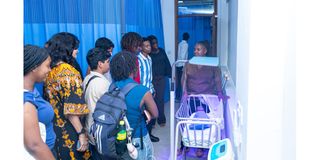
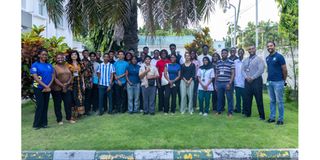
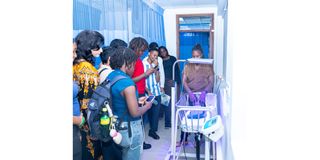
Recently, students from Morogoro International School visited the Aga Khan University (AKU) campus in Dar es Salaam as part of a career exploration programme designed to help young learners understand opportunities in healthcare, nursing and other science-related fields.
According to AKU Student Recruitment Specialist, Peter Mangi, many students only begin thinking seriously about careers when they are nearing completion of secondary education.
"One of the challenges that we have noticed, especially here in Tanzania, is that career guidance is usually left until a student reaches Form Six and is now struggling to decide which university programme to pursue," he said.
He believes students should begin learning about higher education opportunities much earlier, allowing them to make informed academic decisions before selecting subject combinations.
"The university believes it is important to let students know about quality higher education from the early stages, including Form One, Form Two, Form Three and Form Four," he explained.
The challenge is not unique to Tanzania. Studies across Africa have shown that inadequate career guidance contributes to poor programme choices, low student motivation and high dropout rates in tertiary education.
In Tanzania, the issue becomes particularly important when students transition from ordinary level to advanced level education.
At this stage, students are required to select subject combinations that often determine which careers will remain open to them later.
Without sufficient exposure to different professions, many rely on family influence, peer pressure or popular perceptions rather than informed decision-making.
For 15-year-old Myra Mboto-Malugu, a Year 10 student at Morogoro International School, uncertainty about the future is a reality familiar to many learners.
She said she has been weighing different career options while also dealing with expectations from those around her.
"I am trying to figure out whether I want to go into piloting or health sciences, with all the pressure from parents and everything," she said.
The campus visit, she noted, helped her gain a clearer picture of what a healthcare career entails and the academic pathway required to reach that goal.
"In the seminar, I was able to understand what subjects I should take, what career path I should choose and what I would need to do to get there," she added.
Teachers say such exposure can make a significant difference, particularly during adolescence when students are beginning to define their ambitions.
Morogoro International School teacher, Mr Azizi Amimungalawa, said the institution intentionally organises visits to different institutions to help learners connect classroom knowledge with the realities of the workplace.
"We want students to explore the real world and relate what they learn in class to practical careers," he said.
He explained that many students at the age of 15 have not yet developed a clear understanding of the professions available to them or the educational requirements involved.
"When students meet professionals and university students, they begin to understand who they want to become and what they need to study now to achieve those goals," he said.
According to him, exposing learners to workplaces and universities should not be viewed as an extracurricular activity but as an important component of education.
"If more schools did this, it would be a game changer for the current generation because students would better understand both employability skills and career pathways," he added.
The growing recognition of career guidance as a critical educational need comes at a time when Tanzania is investing heavily in sectors such as healthcare, science, technology and innovation.
Initiatives such as school visits, mentorship programmes and interactions with professionals are increasingly being viewed as practical solutions to bridge the information gap.
At AKU, students participated in career discussions, interacted with university students and toured learning facilities, including innovation and simulation centres that expose learners to real-world healthcare scenarios.
For some students, seeing practical demonstrations helped transform abstract career aspirations into tangible possibilities.
Register to begin your journey to our premium contentSubscribe for full access to premium content