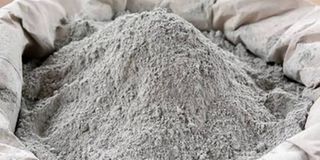
Dar es Salaam. Tanzania’s cement price crisis continues to escalate despite repeated state interventions, exposing deep structural vulnerabilities within the nation’s manufacturing sector.
Market disruptions driven by acute clinker shortages, elevated fuel and logistics costs, and severe supply chain bottlenecks have kept retail prices well above normal thresholds, leaving government directives sound like hallow sound bites.
In response to sharp price spikes, the government issued an eight-day ultimatum on August 18 ordering cement producers to boost output and drive down prices.
The directive followed severe regional shortages that saw the price of a standard 50-kilogramme bag rise to as high as Sh26,000 in key retail markets.
“We met cement manufacturers on August 18 and gave them eight days to ensure prices come down and product availability improves. After August 28, we will call them again for another meeting and assess the situation,” the Permanent Secretary in the ministry of Industry and Trade, Waziri Salum had said after meeting manufacturers and distributors in August.
He had added that manufacturers were given the eight-day period to improve supply and reduce prices before another meeting to assess progress However, the expiration of that deadline brought little relief to consumers in hard-hit regions such as Kilimanjaro and Tanga, where retail rates remain elevated.
And now the Vice-President Deogratius Ndejembi has directed the ministry and Tanzania Revenue Authority (TRA) to find a solution and report their findings to President Hassan.
Speaking at the 19th President’s Manufacturers of the Year Awards (PMAYA) organised by the Confederation of Tanzania Industries (CTI) in Dar es Salaam on Wednesday, Mr Ndejembi said poor coordination across the production chain was contributing to shortages and higher prices.
“Today, a Tanzanian is paying more for a bag of cement because we have not coordinated our production. The one producing clinker, the one grinding and the one packaging are operating separately,” he said.
The clinker problem
Clinker, a key raw material in cement production, has emerged as one of the main reasons the problem is proving difficult to resolve. Industry sources say maintenance at major clinker-producing plants disrupted supplies, forcing some cement grinding companies to halt or scale down production.
The disruption particularly affected non-integrated cement manufacturers, which depend on clinker from other plants before processing it into cement.
“The situation is starting to stabilise. The Tanga plant, which produces a large amount of clinker, had been undergoing maintenance but has now resumed operations. The stone-grinding plant has also been repaired and has started production,” one industry source said.
Some manufacturers also turned to imported clinker after local supplies were disrupted, adding pressure to their production and supply chains.
“When you disrupt a system in an industrial operation, it takes time for things to stabilise. The main problem is clinker because you cannot produce cement without clinker,” the source said. Although production is gradually recovering as plants resume operations and equipment is repaired, the industry could take time to fully stabilise.
The minister of Industry and Trade, Judith Kapinga, told The Citizen yesterday that the government was working with stakeholders to resolve the problem. “Soon we will find a solution and rescue the situation,” she said.
But clinker is not the only pressure point. Manufacturers also cite fuel and transportation costs as factors pushing up production and distribution expenses, meaning that restoring clinker supplies alone may not immediately translate into lower retail prices.
Beyond production
Prime Minister Mwigulu Nchemba told Parliament that the cement issue affects consumers across the country and that the government had held several consultations.
Responding to Kigoma Rural MP Edibily Kazala’s query, Dr Nchemba said a cement project in Kigoma was at the implementation stage, with plans for additional plants in Kigoma, Katavi and Kagera. The projects would reduce the cost of transporting cement from major producing areas such as Mtwara and Tanga to western Tanzania.
“We will sit down with distributors to establish how to prevent prices from rising and making it difficult for wananchi to meet the cost and slowing the pace of development,” he said.
On Wednesday Mr Ndejembi said the government wanted Tanzanians to access cement at affordable prices and directed the ministry of Industry and Trade and the Tanzania Revenue Authority (TRA) to engage manufacturers and identify solutions. He also called for stronger coordination between manufacturers and their suppliers to improve production and competitiveness. The cement challenge comes as the manufacturing sector continues to expand. Mr Ndejembi said the sector grew by 5.2 percent in 2025, up from 4.2 percent in 2024, contributing 5.9 percent to the economy.
However, he questioned whether the growth was sufficient to make Tanzanian industries competitive in East Africa and global markets, urging manufacturers to improve efficiency, strengthen supplier relationships and expand beyond the domestic market.
CTI Director General, Leodegar Tenga, said the awards promote productivity, innovation and competitiveness among manufacturers.
Register to begin your journey to our premium contentSubscribe for full access to premium content