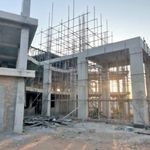
Singida Regional Referral Hospital Director Dr Munaji Kamtande (second left) with construction supervisors during an inspection of the project. The Ministry of Health has allocated Sh7 billion to complete the project in the 2026/27 financial year. PHOTO | HERIETH MAKWETTA

Dar es Salaam. The Government should establish a national system to manage health projects and ensure timely release of funds, proper assessment of contractors before they are awarded contracts and close monitoring until projects are completed and begin providing services, stakeholders have said.
The proposal is among recommendations from health experts, political leaders, members of the public and Controller and Auditor General (CAG) Charles Kichere, who say delays in health projects require changes across the entire implementation process rather than interventions after projects have stalled.
The proposed system should provide real-time information on the progress of each project, funds allocated and released, the level of implementation, challenges and action required when deadlines are missed.
President of the Medical Association of Tanzania (MAT), Dr Alex Msoka, said the Government should begin by conducting a rapid assessment of all delayed hospital projects to establish their status before deciding on the next steps.
“The first step should be a rapid assessment of all delayed hospital projects, including determining the percentage of completion, reasons for the delays, funds spent and the amount required to complete each project,” he said.
He said projects of greatest importance to the public should then be prioritised, with clear completion deadlines and measurable implementation plans.
Dr Msoka said the system should not only show how far a project has progressed, but also identify who is responsible at each stage and what action should be taken when a contractor or responsible institution fails to fulfil its obligations.
“Where a contractor fails to fulfil their obligations, contractual measures should be taken in accordance with the law without waiting for delays to worsen and affect the project’s cost and completion time,” he said.
Project funding
Stakeholders have also called for changes to the way health projects are planned and funded. They want the Government to ensure before a project begins that it has a financing plan capable of taking it through to completion, rather than starting construction without certainty over the availability of funds.
Funding should be released in line with the construction schedule and progress, while payments should be made for work completed and verified, they said. Singida Urban MP Yagi Kiaratu said the Government should prioritise completing ongoing projects before starting new ones.
“My advice to the Government is to first make efforts to ensure old projects are completed instead of starting new ones. Once the existing projects are completed, we can start others according to need,” he said.
Mr Kiaratu said releasing funds in small instalments could cause projects to stall and increase costs, adding that budget implementation should go hand in hand with timely availability of funds.
Assessing contractors
CAG Charles Kichere has stressed the importance of complying with procurement procedures and adequately assessing contractors’ capacity before awarding contracts.
The lowest bid alone should not determine the selection, he said. A contractor’s financial, technical and operational capacity to complete a project within the agreed timeframe should also be verified.
CAG has also recommended stronger contract management and monitoring to ensure work is carried out according to agreed terms, costs and timelines. Where a contractor fails to fulfil their obligations, appropriate action should be taken in accordance with the contract and procurement laws.
Technology in monitoring
Mr Kiaratu has proposed the use of digital systems to monitor project progress in real time. Such a system would allow information on implementation, expenditure and progress to be accessed from project sites through to the central government.
“The system is good because it promotes transparency. My advice is that it should be improved and linked from the lowest level to the highest.
If we reach that point, everything will be clear and monitoring will be easier,” he said.
The system could also help identify projects falling behind schedule early, rather than waiting until delays become significant before action is taken.
Public participation
Stakeholders also want project information made available to members of the public expected to benefit from the services.
Rehema Jonas, a Singida resident, said people should know the stage reached by a project, its scheduled completion date and how public funds are being spent.
“The Government should ensure contracts are properly managed and action is taken against those who delay implementation without valid reasons.
We want to see projects funded by public money completed and providing services,” she said. She said greater transparency could increase pressure for accountability and reduce uncertainty over the use of public funds.
Singida as a test case
The proposals come as construction of the Singida Regional Referral Hospital remains part of the wider debate over delays in health projects.
Stakeholders say the project should not be viewed as a challenge unique to Singida but as part of a broader assessment of how health projects are planned, financed and managed across the country.
Singida Regional Medical Officer Dr Jessica Lebba said the regional and hospital management had put in place a strategy to ensure construction of the hospital is completed within the contractual period.
She said regular inspections were being conducted to monitor the pace and quality of work. According to Dr Lebba, completion of the hospital will help reduce referral and travel costs for patients while enabling residents to access specialist services closer to home.
At community level, Health Facility Governing Committees (HFGCs) could also form part of the monitoring system.
Health Ministry Permanent Secretary Dr Grace Magembe said the committees should receive training in construction management, project handover and monitoring the quality of work.
She said they should also be involved in key stages of projects, including contractor selection and handover. This could strengthen monitoring at community level and help identify challenges before they develop into major delays.
Projects should be measured by services
For the public, the ultimate measure of a successful health project is not simply completion of a building, but its ability to provide the intended services.
Rama Rashid, a resident of Singida Urban, said the Government should have a specific strategy for health projects because they directly affect people’s lives.
“Projects such as hospitals should not take too long to complete because people need these services every day,” he said.
Dr Msoka added that improving the Singida Regional Referral Hospital should go hand in hand with an effective transport system to ensure patients can reach the hospital on time.
The proposed system should therefore begin before construction, with project planning and budgeting, and continue until the hospital is handed over, equipped, staffed and begins providing services. This would shift the response to delays from addressing problems after they occur to preventing them in the first place.
Instead of waiting for a project to fall behind schedule, the system would enable the Government to identify funding shortfalls, contractor weaknesses, delayed payments and other challenges early and take action before costs increase further.
For Dr Msoka, this is the basis of a national health project management system that should take into account public needs, the full project budget through to completion and service delivery, as well as clear accountability for every responsible institution and official.
Register to begin your journey to our premium contentSubscribe for full access to premium content