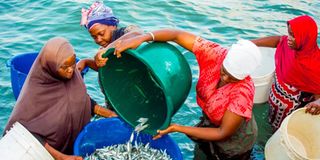
Dar es Salaam. Women entrepreneurs have been placed at the centre of efforts to expand Africa’s blue economy, with stakeholders calling for increased financing, stronger networks and targeted support to unlock the full potential of women-led ocean businesses.
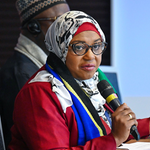
Speaking during the Women in Ocean Food event held in Dar es Salaam yesterday, Ireland’s Ambassador to Tanzania, Nicola Brennan, said women are already demonstrating strong innovation and competitiveness across ocean-related industries.
“You have shown what is possible with products from the ocean for nutrition within families, communities and beyond,” she said.
The ambassador noted that women-led enterprises are also advancing environmental sustainability through responsible production practices and waste management.
"You have shown how you are supporting the environment, managing waste and promoting a circular economy,” she said.
She emphasised that greater participation of women in aquaculture and ocean-based businesses is critical in unlocking economic opportunities and strengthening food systems across the continent.
“What needs to be seen more is women in ocean food, in aquaculture, in the blue economy and in business,” she said.
Brennan added that despite playing a central role in communities, women entrepreneurs often face limited visibility and restricted access to finance.
“We are the backbone of families and communities, yet often remain invisible, particularly in patriarchal societies,” she said.
She called on investors to take deliberate steps to support women-led innovations emerging within the blue economy.
“I encourage investors to back these innovations and the solutions that women are bringing forward,” she said.
The ambassador pointed to the importance of intentional approaches in promoting women’s participation, citing Ireland’s progress in increasing female representation in leadership.
“When I became an ambassador seven years ago, 35 per cent of Irish ambassadors were women. That figure has now risen to 55 per cent,” she said.
Discussions at the event highlighted aquaculture as a key growth area within Africa’s blue economy, with significant potential to contribute to food security and employment.
Principal at Hatch Blue’s Blue Revolution Fund, Sol Park, said the sector presents strong investment opportunities driven by rising global demand for seafood.
“Seafood already accounts for a significant share of global protein intake, and demand continues to grow rapidly,” she said.
Despite this growth, Africa still contributes a relatively small portion of global aquaculture production, signalling untapped potential.
“When looking at Africa, there is clear growth potential, not only for food production but also for climate solutions and sustainable livelihoods,” she said.
Park highlighted Tanzania’s position as a leading seaweed producer in Africa, noting the need to move beyond raw exports towards value addition and local processing.
“There are significant opportunities in areas such as alternative proteins, biostimulants and sustainable materials,” she said.
The role of finance in supporting women entrepreneurs also featured prominently during the discussions.
Impact Measurement Manager Maria Alvara Lopez emphasised the importance of investment approaches that balance financial returns with social and environmental impact.
"Investors are increasingly interested in businesses that combine profitability with sustainability and community development,” she said.
Investment professional Pearl Nayosi said women-led businesses require flexible and context-aware financing that aligns with different stages of growth.
“The focus should not only be on capital, but on the right type of capital that understands the realities of building businesses in this context,” she said.
She added that access to markets, networks and mentorship remains a key challenge limiting growth for many women entrepreneurs.
“Production is already happening, but access to markets and investment networks remains constrained,” she said.
Investment officer Damaris Etienne said women entrepreneurs demonstrate a strong understanding of value chains and maintain close connections with customers, making businesses more resilient.
“Women-led enterprises often have deep insight into inefficiencies within the value chain and are well positioned to address them,” she said.
However, she noted that many start-ups continue to face challenges in accessing early-stage capital required for growth.
“Targeted support, including mentorship and tailored financing, is essential in strengthening business models and improving investment readiness,” she said.
Another issue raised was the mismatch between available financing and the needs of early-stage enterprises.
Stakeholders noted that many women-led businesses fall between funding categories, limiting access to appropriate capital.
“What is needed is flexible financing that meets women entrepreneurs at different stages of growth,” Ms Park emphasised.
Climate change also emerged as a key factor influencing investment decisions within the blue economy.
Manager and partner at Catalyst Fund, Maylis Carraro, said climate-resilient solutions are becoming central to investment strategies.
“The blue economy plays an important role in climate adaptation, particularly in fisheries, aquaculture and food systems,” she said.
She said that innovations in areas such as cold chain infrastructure and climate-smart aquaculture can help build resilience while improving livelihoods.
Participants further highlighted the need to strengthen value chains, improve market access and enhance collaboration between investors, governments and development partners.
The event also showcased women-led enterprises developing innovative solutions across the blue economy, including aquaculture, nutrition products and waste management.
Women entrepreneurs also took to the stage to pitch innovative business ideas spanning aquaculture, seaweed processing and marine waste utilisation, demonstrating both commercial potential and strong environmental impact within the blue economy.