Dar es Salaam. A newly launched research has shown that unless coastal communities are placed at the centre of implementation, the Blue Economy strategy risks widening inequality and weakening the very ecosystems it seeks to grow.
This comes despite the blue economy agenda having been presented as one of the country’s most promising pathways to jobs, food security, exports and environmental protection.
The findings were unveiled on Wednesday at the University of Dar es Salaam during the launch of a special research issue titled Coastal Livelihoods and Sea Sustainability in the Blue Economy, published in the Tanzania Journal of Development Studies.
The publication draws from the Swahili Ocean Worlds: Fishing Communities and Sea Sustainability in Tanzania project, which examined how coastal communities relate to the sea between 2022 and 2025.
Tanzania has placed the blue economy among its national priorities. Zanzibar launched its policy in 2020, while Mainland Tanzania followed in 2024 with action plans covering fisheries, aquaculture, maritime trade, tourism, renewable energy and governance.
Yet researchers say the gap between policy ambition and realities on the shore remains wide.
“The blue economy is often framed as a triple-win model of economic growth, improved livelihoods and marine protection, but realities on the ground are far more complex,” the study notes. It found that social and ecological sustainability are still undervalued compared to the stronger push for economic returns.
Speaking during the launch, Principal of the College of Social Sciences at UDSM, Prof Christine Noe, said the findings come at the right time when Tanzania is expanding investment in ocean-based sectors.
She said growth alone would not be enough if ordinary citizens, especially those already depending on marine resources, are left behind.
“Our policies must speak to the lived experiences of communities. Research of this nature gives evidence that can help decision-makers build a blue economy that is inclusive, just and sustainable,” she said.
The project coordinator and senior lecturer at UDSM, Dr Thomas Ndaluka, said the study deliberately listened to local voices often missing in policy rooms.
“Using qualitative fieldwork methodologies, we engaged local coastal people whose livelihoods are directly affected by the blue economy. We also spoke with government officials, business representatives and environmental experts,” he said.
“Through this research, we have been able to identify opportunities and challenges for improvements in social and ecological sustainability in the blue economy.” One of the strongest messages from the study is that fisheries remain the backbone of many coastal households, yet the sector is under severe strain.
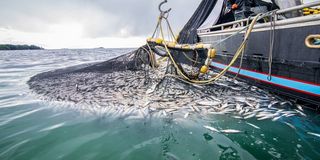
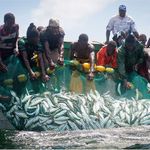
Small-scale fishing supports employment, nutrition and household incomes, but fishers reported declining catches, shrinking species diversity and rising competition in shallow waters, with illegal gear, overfishing and weak enforcement continuing to undermine sustainability.
Climate change is making matters worse. Changes in rainfall, warming waters and shifting breeding cycles are increasing uncertainty for families that depend on fishing, the report notes. This means the blue economy cannot be separated from climate resilience.
The research also highlights market failures. Many fishers and traders sell through intermediaries who control access to capital and markets, leaving producers with weak bargaining power and unstable prices. “Without fairer value chains, growth in marine resources may not translate into better livelihoods,” said Dr Ndaluka.
Women are another overlooked pillar of the sector. Separate research in the same journal found that women are active in ocean-based livelihoods, but their realities receive limited attention in blue economy priorities.
“Gender-based power relations often shape access to marine resources, finance and decision-making spaces, reducing women’s ability to benefit fully,” he noted.
However, experts say these benefits will only be realised through deliberate reforms.
The study recommends stronger support for Beach Management Units, sustained enforcement against illegal fishing, restoration of mangroves and breeding habitats, and wider community awareness on marine stewardship.
It also calls for affordable finance, modern equipment, training in sustainable fishing and fish handling, and targeted support for women and youth.
Another key recommendation is participation. Researchers found insufficient evidence that local communities are helping shape priorities.
“In practice, that means projects can be introduced without enough consultation, increasing conflict over ocean space and access rights,” the research reads in part.
Dr Ndaluka emphasized that a blue economy that enriches a few while exhausting fish stocks and sidelining coastal citizens would fall short of its promise.
“But one built on science, fairness and sustainability could become a major engine of livelihoods and national transformation for decades to come,” he stated.
Register to begin your journey to our premium contentSubscribe for full access to premium content