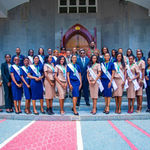
Tanzania’s beauty pageant industry is facing one of its most defining transitions in years after the National Arts Council (BASATA) moved to clarify who officially represents the country at the Miss World competition, while growing criticism over the state of Miss Tanzania has sparked a broader national debate on standards, leadership and the future of pageantry.
The clarification comes amid confusion following recent structural changes in the local pageant landscape, where multiple organisers appeared linked to different national titles and international opportunities.
At the centre of BASATA’s statement is 361 Degrees Africa, the company currently organising Miss World Tanzania under the leadership of celebrated designer Mustafa Hassanali.
According to BASATA Acting Executive Secretary Edward Buganga, the authority to send Tanzania’s delegate to Miss World is governed by international licensing agreements and is not open to multiple organisers.
“This is not an open space where anyone can decide to send a representative,” Buganga said.
“There are structured agreements and approvals from Miss World organisers, and 361 Degrees Africa is the recognised holder of that mandate in Tanzania.”
The statement effectively confirms that while several pageants may operate locally, the Miss World route remains exclusive.
The clarification follows a recent development involving Basila Mwanukuzi, whose company The Look Company transferred Miss Tanzania pageant rights to Lamata Village, led by Leah Mwendamseke Lamata.
That transition raised questions among stakeholders over which international platform a future Miss Tanzania winner would represent, especially given that the Miss World rights had already shifted elsewhere.
Historically, Miss Tanzania served as the direct feeder competition to Miss World.
For years, the franchise was managed by Lino International Agency under the late Hashim Lundenga, whose tenure firmly linked the national crown to the global stage.
Winning Miss Tanzania once automatically meant representing the country at Miss World.
That model has now changed.
By granting exclusive Miss World rights to 361 Degrees Africa, organisers have effectively separated the international franchise from the traditional Miss Tanzania structure.
As the governance issue unfolded, former Miss Teen Heritage 2016 titleholder and international model Cecilia Godfrey ignited another wave of discussion after publicly criticising the recent organisation of Miss Tanzania.
Cecilia described what was recently witnessed as “very disappointing”, saying beauty pageants are more than entertainment events.
“As a professional model working internationally, I understand that pageants are not just shows. They are platforms that carry a nation’s image globally.” she says
She argued that national competitions require discipline, planning, mentorship and professionalism, especially when winners may progress to global stages.
“International competitions such as Miss World demand proper grooming, structure and long-term preparation,” she said.
According to Cecilia, weak execution risks undermining the credibility of contestants and the country itself.
She insisted her comments were not personal attacks but a defence of industry standards and the dreams of young women hoping to represent Tanzania internationally.
Responding to the growing discussion, Miss World Tanzania franchise holder Mustafa Hassanali said the organisation is committed to restoring professionalism and setting higher standards.
He said the franchise intends to reshape the narrative and strengthen Tanzania’s international competitiveness ahead of future global competitions.
Observers say Hassanali’s experience in fashion and branding could help modernise Tanzania’s Miss World preparation through stronger presentation, cultural storytelling and international-standard grooming.