Moshi. The World Wide Fund for Nature (WWF) plans to spend more than Sh1.3 billion to rehabilitate ageing water infrastructure in Rombo District, Kilimanjaro Region, in an effort to curb massive water losses.
The project will also benefit Siha, Longido and Arumeru districts, as well as Loitoktok in Kenya, which borders Tanzania through Rombo.
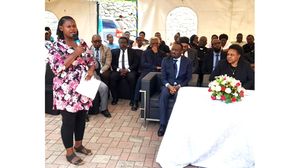
Speaking today, Rombo District Commissioner Raymond Mwangwala said the initiative would bring major relief to residents, noting that more than 200,000 people are expected to benefit.
“One of the biggest challenges in Rombo is water. Now, in partnership with WWF and Coca-Cola, we are going to address the water problem in Rombo, especially at the Rongai water sources,” said Mr Mwangwala.
He said the district loses about 69 percent of its water due to dilapidated infrastructure, adding that outdated water intake systems have been leaking heavily, leaving only a small portion of water reaching households.
“The intake points have been leaking because the infrastructure is old. Once improvements are made, the current water loss of more than 69 percent will be eliminated. Water availability will improve because many leakages will be sealed,” he said.
Mr Mwangwala added that upgrading the infrastructure would help the district withstand the impacts of climate change.
He said that during the dry season, residents access only 42 percent of the water required, while in the rainy season they receive about 69 percent, levels he described as unsatisfactory.
“In the rainy season we have water, but during the dry season we face serious shortages. We are going to put in place infrastructure that will ensure reliable water supply in both seasons,” he said.
He expressed optimism that the upgrades could push water availability to more than 90 percent, ensuring reliable supply for over 200,000 residents throughout the year.
Meanwhile, the project manager for the initiative known as Waterways for Resilience, Novat Kessy, said the project will use water systems to strengthen water resilience in the targeted districts.
He said the three-year project, running from 2025 to 2027, will be funded with $519,000, equivalent to Sh1.3 billion, and is expected to reach 10,000 people.
“We selected these districts because the northern zone has been severely affected by climate change,” said Mr Kessy.
He added that the project will rehabilitate water infrastructure in the Rongai area, which serves the villages of Kikelelwa and Nalemuru, as well as residents of Loitoktok in Kenya.
Residents have welcomed the initiative, saying it could ease long-standing water shortages.
A Rombo resident, Jenista Kawau, said water rationing during the dry season often causes hardship.
“During the dry season we face serious challenges. Water becomes scarce and is distributed on a rationing system. If these improvements are done properly by WWF, we will overcome this problem,” she said.
Another resident, Agatha Temu, said access to adequate water remains a major challenge in Rombo, especially during the dry season when supplies drop sharply.