Dar es Salaam. Young Tanzanians are increasingly turning to agriculture as a route to employment and entrepreneurship, with training, access to markets and business support helping some move from small-scale farming into enterprises that also create jobs.
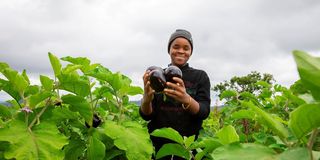
The shift is being demonstrated by young people such as Jessica Lyatuu, 30, a horticulture farmer in Babati, Manyara Region, whose farming enterprise has expanded from a quarter-acre plot into a two-acre business.
Jessica studied agriculture and livestock and initially gained experience as an unpaid intern at an agrovet shop. She later secured employment in Mbeya, earning Sh200,000 a month, but eventually returned home after struggling to establish a sustainable livelihood.
She had rented a quarter-acre plot where she grew tomatoes and cucumbers, but low prices offered by middlemen left her with little income despite promising harvests.
“Watching other youth succeed while I struggled affected my confidence but I still saw farming as something I wanted to pursue,” she says.
Her fortunes changed in 2023 after she joined the Vijana Kilimo Biashara (VKB) programme, implemented by the World Food Programme (WFP) with support from the Mastercard Foundation.
The programme provides young people with agricultural and business skills, financial literacy, entrepreneurship support and links to markets and financial services.
In Tanzania, it operates in eight regions — Arusha, Dodoma, Manyara, Morogoro, Shinyanga, Simiyu, Singida and Tabora — supporting young people in the sorghum, sunflower and horticulture value chains. Through training, mentoring and support from community facilitators, Jessica learnt improved crop management, appropriate application of agricultural inputs, pest control and post-harvest handling.
She also joined collective marketing groups that enabled farmers to pool their produce, negotiate better prices and access larger markets.
Her farm now produces up to 700 crates of tomatoes per acre, compared with about 100 crates from her original quarter-acre plot. The increased income has enabled her to reinvest in the business, support her children’s education and contribute to building her family home. She now employs one permanent worker and up to six young people during peak farming seasons.
“The training has given me technical skills and confidence to dream big and farm with a business mindset,” she says.
But the opportunities are not limited to crop production.
In Ilkiding’a village, Arusha Region, 26-year-old Wema Paulo has built an agribusiness by addressing a problem affecting onion farmers — inadequate storage. After joining VKB in 2024, Wema underwent entrepreneurship and business development training that encouraged participants to identify opportunities across agricultural value chains.
She noticed that many onion farmers were forced to sell their produce immediately after harvesting because they lacked storage facilities, often when market prices were low. She developed a proposal for an onion storage facility and entered it in a VKB youth entrepreneurship competition. Her proposal won first place, allowing her to use the prize money to construct a facility with a capacity of 2,000 kilogrammes.
The facility enables farmers to store onions for up to six months, reducing post-harvest losses and allowing them to wait for more favourable prices.
The experiences of Jessica and Wema come as programmes supporting youth entrepreneurship seek to address persistent barriers to employment, particularly among young women in rural areas.
By July 2026, VKB had supported more than 65,600 young people, with women accounting for nearly half of participants, according to programme data.
The programme reports that 98.5 percent of participants had transitioned into work, while 92.5 per cent had progressed towards or accessed what it describes as dignified and fulfilling employment.
The initiative, which has operated across eight African countries since 2022, combines technical agricultural training with entrepreneurship development, financial inclusion, business coaching and market linkages.
In Tanzania, it is also working with the Bank of Tanzania to strengthen financial inclusion, while partnerships with private-sector companies are intended to improve young people’s access to technology, mechanisation services and markets.