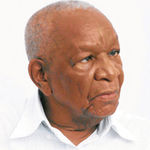
The passing of Edwin Isaac Mbiliewi Mtei at 94, at his Arusha farm, closes the chapter on one of Tanzania’s most distinguished public servants. His life was not only a story of personal achievement but a reflection of the aspirations and challenges of a young nation striving to define its economic and political path.
Born on 12 July 1932 in Marangu, Kilimanjaro, Edwin Mtei emerged from humble beginnings. Raised in a conical grass-thatched hut by his single mother, he tended goats while attending bush school at Ngaruma Lutheran Parish Church. Yet even in these modest circumstances, his intellect and determination were evident. Excelling through Old Moshi Middle School, Tabora Secondary School, and finally Makerere University College—where he graduated with first-class honours in Political Science, History and Geography—Mtei embodied the promise of Tanzania’s post-independence generation.
Mtei’s rise in the civil service was meteoric. By 1964, he was Permanent Secretary to the Treasury at just 32. In 1966, he became the founding Governor of the Bank of Tanzania, a role in which he shaped the country’s central banking system, introduced the national currency, and safeguarded foreign reserves during a critical formative period. His tenure cemented him as a guardian of Tanzania’s financial stability, a man who combined intellectual rigour with a fearless commitment to principle.
His principled stance often brought him into tension with political orthodoxy. As Minister of Finance and Planning from 1977 to 1979, he confronted policy disagreements with President Julius Nyerere over fiscal management, IMF conditionalities, and the direction of economic reforms. Mtei advocated pragmatic solutions, including cautious currency devaluation and restructuring public corporations to improve efficiency. Nyerere, however, resisted measures he saw as compromising national sovereignty or clashing with his socialist vision. Mtei’s resignation in 1979 was not a retreat but an affirmation of integrity—a refusal to implement policies he believed would harm the nation.
Mtei’s contribution extended beyond economics. From 1974 to 1977, he served as Secretary General of the East African Community during a turbulent era, and later represented English-speaking African nations on the IMF Executive Board in Washington (1982–1986). In these roles, he combined technical expertise with moral clarity, helping Tanzania navigate complex international financial negotiations while preserving national interests.
Perhaps most striking was his role in Tanzania’s democratic evolution. In 1992, Mtei founded Chama cha Demokrasia na Maendeleo (Chadema), laying the foundation for a credible multiparty opposition. His leadership emphasized accountable governance, transparency, and respect for democratic norms. Under his stewardship, Chadema transitioned from a nascent movement into a formidable political force, contesting elections, advocating for reforms, and providing citizens an alternative vision to the ruling party. Even as he witnessed both triumphs and setbacks in the political sphere, Mtei’s commitment to democratic principles never wavered.
Beyond public office, Mtei demonstrated versatility and vision. He became a successful coffee farmer at Ogaden Estate, chaired the Tanganyika Coffee Growers’ Association and the Tanzania Coffee Research Institute, and led several presidential commissions on taxation and banking reform. His 2009 autobiography, From Goatherd to Governor, remains an essential window into Tanzania’s post-independence political and economic history.
Edwin Mtei’s legacy is multifaceted: a pioneer in economic policy, a steadfast advocate for prudent governance, and a champion of democratic ideals. His courage in dissent, his dedication to national service, and his intellectual discipline are a model for current and future generations of Tanzanians.
He is survived by his children and grandchildren, who inherit a legacy of integrity and civic responsibility. Predeceased by his wife, Johara, in 2021, Mtei leaves behind a nation shaped in part by his ideas and courage.
In remembering Edwin Mtei, Tanzania honours more than a life well lived; it honours the enduring principles of foresight, independence of thought, and service to country. He was, in every sense, an architect—of the nation’s economy, its institutions, and its democratic journey.
Pumzika kwa amani, Mzee Mtei. Your vision and example remain indelibly etched in Tanzania’s story.
Register to begin your journey to our premium contentSubscribe for full access to premium content